Sea Level Monitoring
TSU/MAB Coastal Hazards Project
Exercise Indian Ocean Wave 2020
In the Indian Ocean region, basin-wide tsunami exercises are held every two years. The next exercise, called Indian Ocean Wave 2020 (IOWave20), is being held during 6-20 October. The Exercise comprises three scenarios with simulated tsunami waves travelling across the ocean basin. The scenarios include Java trench on 6 October, Andaman trench on 13 October, and Makran trench on 20 October.
 Due to the ongoing Covid-19 pandemic, the scale of IOWave20 is reduced in comparison with previous exercises. For each scenario, the Tsunami Service Providers (TSPs) will issue four tsunami bulletins in real-time over a one-hour duration. Member States are encouraged to test communications protocols and conduct a “virtual” tabletop exercise, as a minimum, to assess organisational Standard Operating Procedures, plans and policies for tsunami warning and emergency response in the backdrop of a pandemic. Member States should individually assess any health risks in the backdrop of the pandemic and only then decide on the appropriate level of participation in the Exercise.
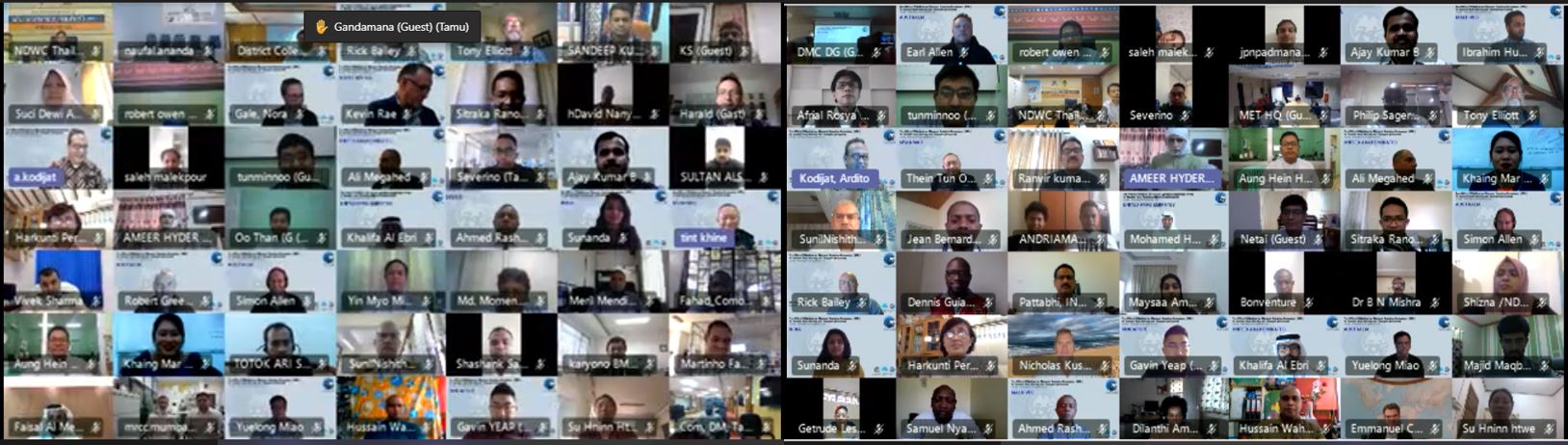
In the lead-up to IOWave20, the Indian Ocean Information Center (IOTIC) and the Secretariat for the Intergovernmental Group for the Indian Ocean Tsunami Warning and Mitigation System (ICG/IOTWMS) held a three-day virtual webinar on Standard Operating Procedures for Tsunami Early Warning and Emergency Response on 28-30 September 2020. The webinar was attended by around 180 national representatives from 24 Indian Ocean Countries. The intent of holding the workshop immediately prior to IOWave20 was so that the Exercise could be used as an opportunity to test and improve the organisational Standard Operating Procedures developed during the workshop. Moreover, it is important to recognise that tsunamis can occur at any time, even during a pandemic, requiring governments and emergency responders to make quick and informed decisions.
For further information on Exercise IOWave20, including important documentation and details of National Exercise Contacts, please view the Exercise webpage here.
Going “Tsunami Ready” in the Indian Ocean: a UNESCO Online Lecture Series
UNESCO launched an Online Lecture Series to highlight how its Tsunami Ready Program is motivating and encouraging communities in the Indian Ocean to reduce to a minimum the risks from future tsunamis on lives and property.
The six-part lecture series targets community leaders, disaster management offices, NGOs and citizens at large to inform about the Tsunami Ready Program and encourage them to implement the program’s risk reduction protocols and indicators to be recognized as Tsunami Ready by UNESCO’s Intergovernmental Oceanographic Commission (IOC).
Entitled “Interactive Expert Sessions on Piloting IOC-UNESCO Tsunami Ready in the Indian Ocean”, the lecture series is organized by the Indian Ocean Tsunami Information Centre (IOTIC) of UNESCO’s IOC, based in UNESCO’s Jakarta Office, and Indonesia’s Agency for Meteorology, Climatology and Geophysics (BMKG).
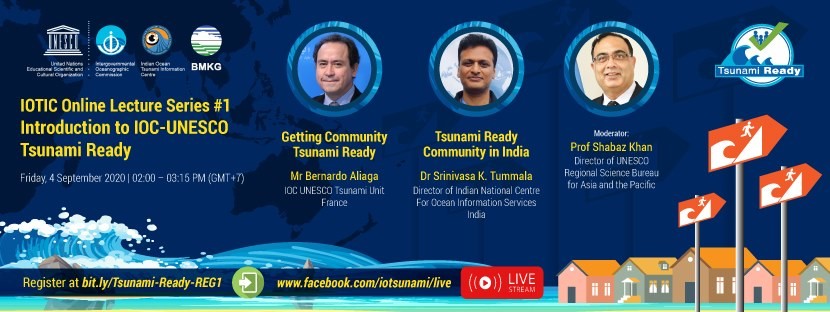
More than simple webinars, the lecture series invites all participants to take part in high level discussion between community members, international experts, and UNESCO representatives about the opportunities and challenges of making vulnerable communities in the Indian Ocean “Tsunami Ready”, in line with international standards set by the UNESCO program. Certificates of completion are awarded for participation on all six sessions.
Throughout six sessions, the lecture series actively calls for more Indian Ocean communities to implement the 12 tsunami preparedness indicators elaborated by UNESCO’s IOC, and to apply for the “Tsunami Ready” recognition. To showcase how this has been successfully done, Invited experts from the region will highlight each of the IOC-UNESCO Tsunami Ready indicators, and share practical experience and examples of communities who have received the IOCUNESCO Tsunami Ready Recognition.
For further information, please contact:
Ardito M Kodijat, Head of the Indian Ocean Information Center (IOTIC)
This email address is being protected from spambots. You need JavaScript enabled to view it. or This email address is being protected from spambots. You need JavaScript enabled to view it.
Communities in Odisha State, India receive Tsunami Ready recognition from UNESCO-IOC
Venkatraipur and Noliasahi in the Odisha State (India) are the first communitiesin the Indian Ocean region to obtain Tsunami Ready international recognition, the golden standard of tsunami preparedness awarded by UNESCO’s Intergovernmental Oceanographic Commission.
On 7 August 2020, UNESCO’s Intergovernmental Oceanographic Commission granted “Tsunami Ready” recognition to the first communities in the Indian Ocean region: Venkatraipur and Noliasahi villages in Odisha State, India. The certification recognizes the two communities’ success at organizing and completing collaborative tsunami preparedness initiatives involving community leaders, national and local emergency management agencies, and citizen groups.
“Our community would like to thank UNESCO-IOC for this recognition, and for enhancing the sustainability of our community against tsunami hazard,” remarked Appa Rao, Community Leader at Venkatraipur Village.
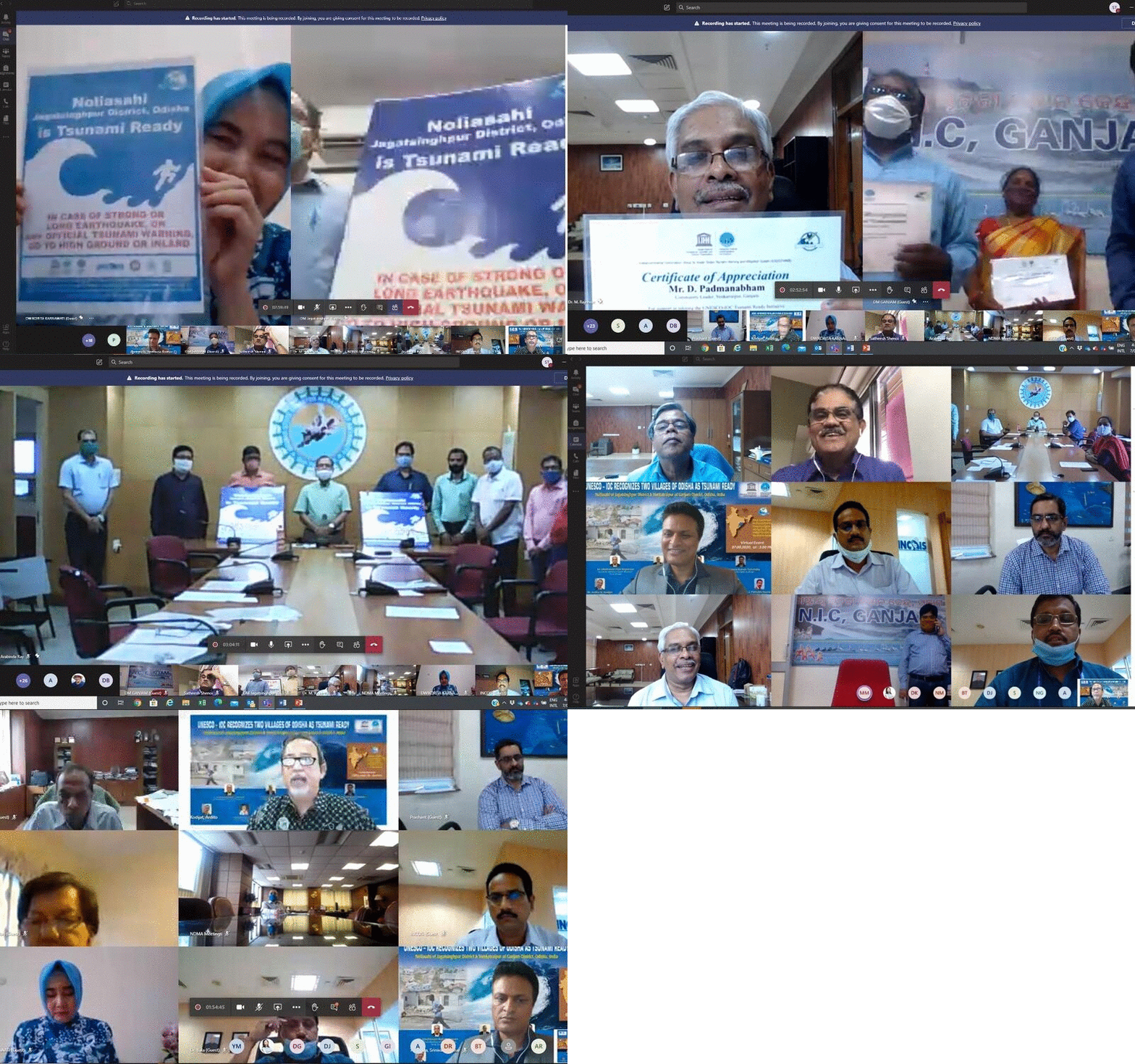
Tsunami Ready recognition is achieved through satisfying multiple initiatives. These include conducting a community tsunami-risk reduction programme, designation and mapping of tsunami hazard zones, public display of tsunami information, easily understood tsunami evacuation maps, outreach and public education materials, participation in mock drills, community emergency plans, and the presence of reliable 24-hour early warning system.
Collectively, the Tsunami Ready certification check-list aims to improve tsunami preparedness in coastal communities, to minimise the loss of life and property, and to ensure a structural and systematic approach to building community preparedness.
The Tsunami Ready Programme is administered by UNESCO’s Intergovernmental Oceanographic Commission (IOC) through its Intergovernmental Coordination Group for the Indian Ocean Tsunami Warning and Mitigation System (ICG/IOTWMS). In order to promote Tsunami Ready piloting, the Indian Ocean Tsunami Information Centre (IOTIC), together with the IOTWMS Secretariat, developed regional guidelines and conducted four regional Trainings on Tsunami Emergency Maps, Plans and Procedures (TEMPP) involving 22 Indian Ocean Member States.
New Information Document Underscores the Growing Coastal Exposure and Need to Continue Building Tsunami Resilience in the North-eastern Atlantic, Mediterranean and Connected Seas region
A new ICG/NEAMTWS Factsheet 2005-2020 is now available to Member States, partners and stakeholders to inform of the current state of Tsunami Early Warning and Mitigation System in the North-Eastern Atlantic, the Mediterranean and Connected Seas (NEAMTWS).
The Fact Sheet describes the development and main elements of ICG/NEAMTWS. In particular, it highlights the achievements, and contributions of NEAMTWS to disaster risk reduction, the upcoming UN Decade of Ocean Science for Sustainable Development and the Sustainable Development Goals. It also captures the overall governance, status, challenges and opportunities in the further development of NEAMTWS.
Mr Denis Chang Seng, the Technical Secretary of the ICG/NEAMTWS highlighted that the new Fact Sheet aims to point out to Member States, partners, stakeholders the increasing tsunami exposure and risk in the Mediterranean and Connected Seas region despite the relatively low occurrence of major tsunamis. New coastal population maps for the entire NEAM region has been produced to emphasize the growing coastal challenges (see figure below). It is estimated that the NEAMTWS Low Elevation Coastal Zone (< 10 m height) is home to about 116 million inhabitants. The numbers increase substantially during the tourist season. In most cases, there may not be sufficient time for warnings to reach all persons at risk, so preparedness and education on recognizing the harbinger tsunami signs and self-evacuation are important and save lives.
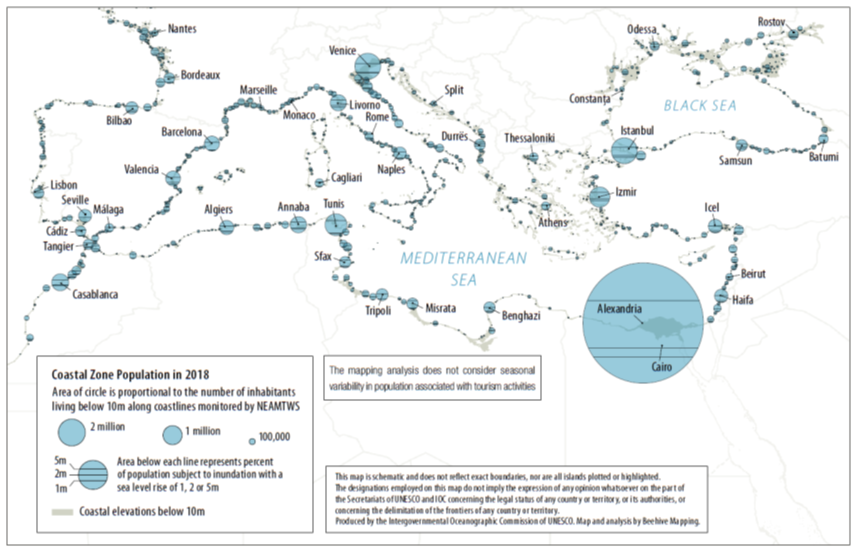
NEAM coastal population map, IOC-UNESCO 2020
Capacity Assessment of Tsunami Preparedness in the Indian Ocean
In 2005, following the Boxing Day tsunami, IOC prepared an initial baseline assessment of capacity building requirements for an effective and durable tsunami warning and mitigation system in the Indian Ocean (IOC/INF-1219). In 2018, thirteen years after the initial assessment, the Intergovernmental Coordination Group for the Indian Ocean Tsunami Warning and Mitigation System (ICG/IOTWMS) undertook a similar assessment with a view to update the status of tsunami preparedness in Indian Ocean countries through an online survey. While the initial assessment provided critical inputs to the eventual design and development of the IOTWMS, the 2018 assessment proved to be extremely valuable in providing a benchmark of the current status, identifying gaps and prioritizing future capacity development needs.
 With enthusiastic responses from 21 IOTWMS Member States, the 2018 assessment results highlighted considerable progress across all components of the IOTWMS, including the operational tsunami service framework in the Indian Ocean comprising of 3 Tsunami Service Providers (Australia, India, Indonesia) and National Tsunami Warning Centres of 25 Member States. Substantive progress has also been made in development of risk assessment guidelines, enhancing monitoring networks, organizing biennial tsunami drills and creating public awareness material. Tsunami response capacities continue to be enhanced through regional capacity development workshops focused on
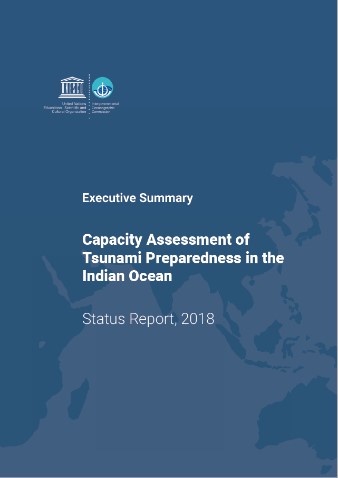 development of tsunami evacuation maps, plans and standard operating procedures, as well as the recent piloting of the Tsunami Ready community recognition programme.
Nonetheless, the IOTWMS is not a static system and must improve, evolve and adapt to serve the needs of its Member States. In this context, the 2018 assessment identified capacity gaps and future support requirements in the broad areas of a) policies, plans and guidelines; b) risk assessment and reduction; c) detection, warning and dissemination; and d) awareness preparedness and response. The detailed Capacity Assessment of Tsunami Preparedness Status Report 2018 together with responses of member States, as well as a succinct Executive Summary have been prepared for wide communication to all stakeholders.
The IOC, through the IOTWMS Secretariat and the Indian Ocean Tsunami Information Center (IOTIC) will continue to coordinate and facilitate the efforts of Member States and Donor agencies to bridge gaps in capacities and strengthen the end-to-end tsunami warning and mitigation system in the Indian Ocean. The IOC would like to congratulate the ICG/IOTWMS, its Task Team on Capacity Assessment of Tsunami Preparedness, and, most importantly, all Member States and experts who contributed to this important assessment.
More Articles...
- New ICGNEAMTWS Officers - A Focus on Capacity Building and Improving Tsunami Public Awareness and Resilience
- How to respond to tsunamis in times of social distancing? Follow the regional guidelines
- INGV, Italy Launches New Tsunami Warning Center Platform
- Winners of Tsunami Ready youth Art Competition in the Caribbean announced
About the Tsunami Programme
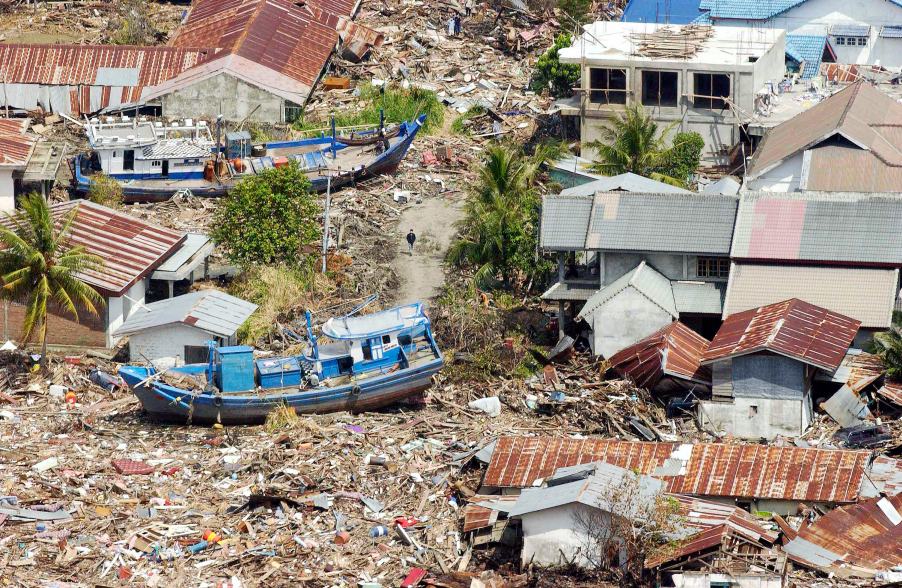
The Indonesian coast, between Banda Aceh and Meulaboh, after the earthquake and the tsunami of 26 December 2004. Photo by Evan Schneider © UN Photo
UNESCO supports Member States in improving capabilities for tsunami risk assessment, implementing early warning systems and enhancing preparedness of communities at risk. UNESCO works closely with national institutions and promotes inter-institutional and regional cooperation. Specialized regional centers provide tsunami information that, together with national analysis, is the basis of the warnings issued for the public. In addition, UNESCO promotes community-based approaches in the development of response plans and awareness campaigns which strongly involve education institutions and end-users.
Upcoming Events
7 August 2024
19 August 2024
19 - 30 August 2024
Chile