Sea Level Monitoring
TSU/MAB Coastal Hazards Project
Closing of the TSU/MAB pilot project in the Savegre Biosphere Reserve, Costa Rica: Tsunami simulation and drill exercise and workshop on nature-based solutions to coastal hazards
Tuesday 22 November 2022
On Wednesday 22 November 2022, a final activity of the TSU/MAB Joint Initiative was held with local and national stakeholders, including the Comision Nacional de Emergencias (CNE), the Comite Municipal de Emergencias (CME) of Quepos, the Parque National Manuel Antonio, the Municipality of Quepos, SINAMOT, the MAB Board for the Savegre Biosphere Reserve, ASANA. The meeting took place in the meeting room of Parque Nacional Manuel Antonio and coincided with celebrations for the 50th anniversary of the park.
A tabletop tsunami simulation exercise has held with the CME to test their Emergency Response Plan and Tsunami Standard Operating Procedures which were updated within the scope of the TSU/MAB pilot project. The exercise scenario was based on hypothetical tsunami arriving to the Pacific coast of Costa Rica, originated from a 8.8 magnitude earthquake in Ecuador. A medium level alert was issue and included evacuation of beaches and away from minor inundations zones. During this exercise, the CME therefore had to respond to this tsunami scenario, following procedures for evacuation of local communities to designated safe areas.
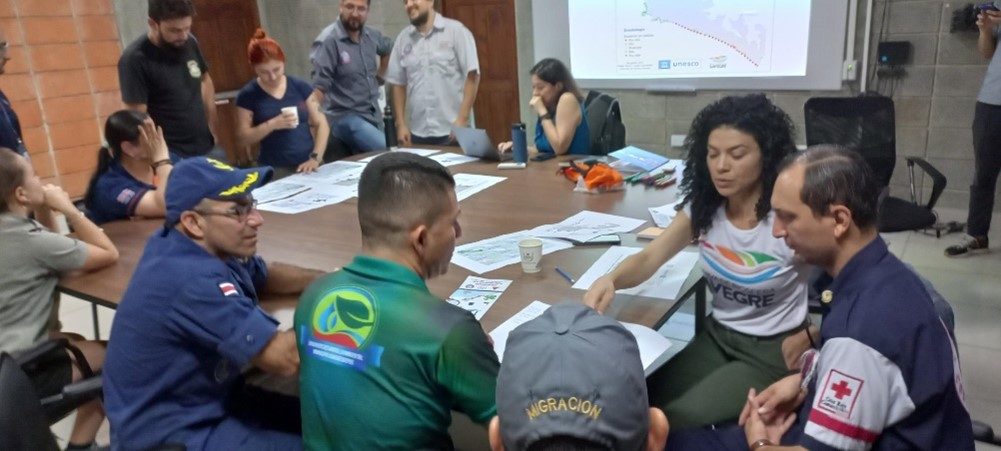
Figure 1. Local stakeholders during tsunami tabletop
simulation exercise on 22 November 2022
A tsunami evacuation drill was also undertaken in the Parque Nacional Manuel Antonio. To trigger this drill, a warning siren was sounded throughout the park, and park rangers practiced evacuation of tourists to assembly points. Within the scope of this exercise, 50 tourists were allowed entry into the park to participate. This drill exercise was able to take place successfully despite heavy rain throughout the morning, demonstrating the importance of practicing and accounting for potential multi-hazard events (here, heavy rainfall and a tsunami). Once again, officials followed revised and updated protocols from their emergency response plans that were updated within the scope of the TSU/MAB pilot project.
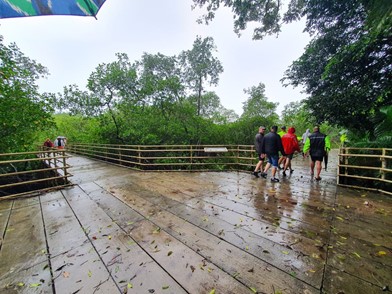
Figure 2. Tourists being evacuated from Parque Nacional Manuel
Antonio during a tsunami evacuation drill, 22 November 2022
In the afternoon, a workshop was held on ecosystem services, nature-based solutions and their relationship to coastal hazards and disaster risk reduction. The session focused on presenting the outcomes of a consultancy undertaken within the scope of the TSU/MAB project. Mr. Esteban Montero, the UNESCO consultant, presented on key findings including a detailed maps of land cover in the coastal area of the Savegre Biosphere Reserve and modelling of coastal protection services provided by ecosystems such as river forests, coral reefs, coastal vegetation and sand dunes and mangrove forest. Next, an interactive exercise on the concept of nature-based solutions was held, highlighting their potential for disaster risk reduction, including for inundation from coastal hazards in the Savegre Biosphere Reserve. Specifically, participants were provided a multi-hazard scenario for flooding in the urban center of Quepos from storm surges and heavy rainfall. The group was tasked with comparing conventional hard solutions to nature-based solutions. Based on this activity, local stakeholders proposed a number of innovative solutions including recovering riverside forest cover, implementing green infrastructure in buildings such as green roofs, rain gardens and raising coral reefs, an innovative solution that involves cultivating and planting new coral reefs in strategic areas, even introducing better adapted species of coral that can survive harsh conditions. They also recognized that, despite higher costs and environmental impacts, conventional, hard solutions might still be needed in some emergency cases.
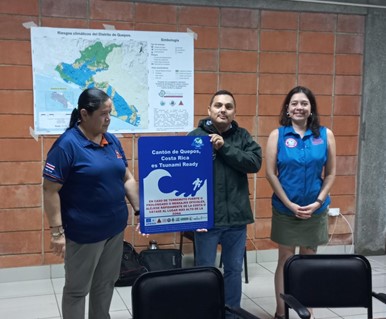
Figure 3. Tsunami Ready plate presented to the Canton
of Quepos (left to right: CNE, CME, and SINAMOT)
The day closed with a presentation of the Tsunami Ready recognition plate to the Canton of Quepos. Low-technology equipment for emergency alert and preparedness was also transferred to the CME and Parque Nacional Manuel Antonio, on behalf of UNESCO. In closing, UNESCO highlighted the key outcomes and achievements under the TSU/MAB pilot project and expressed thanks to the myriad local and national stakeholders that enabled successful implementation of the project through their continued involvement and expertise.
For additional information about the TSU/MAB Joint Initiative, click here.