Sea Level Monitoring
TSU/MAB Coastal Hazards Project
Municipal committees for the prevention, mitigation and response in the coastal municipalities of San Cristobal, Dominican Republic, received training on tsunamis. December 2015.
Representatives of the municipal committees for disaster prevention, mitigation and response (PMR) in the coastal towns of San Cristobal attended the first workshop on "Training and capacity building of and emergency care and response institutions in case of tsunamis" in order to improve the resilience of these communities in response to the seismic and tsunami vulnerability that has the coastal area of the Dominican Republic.
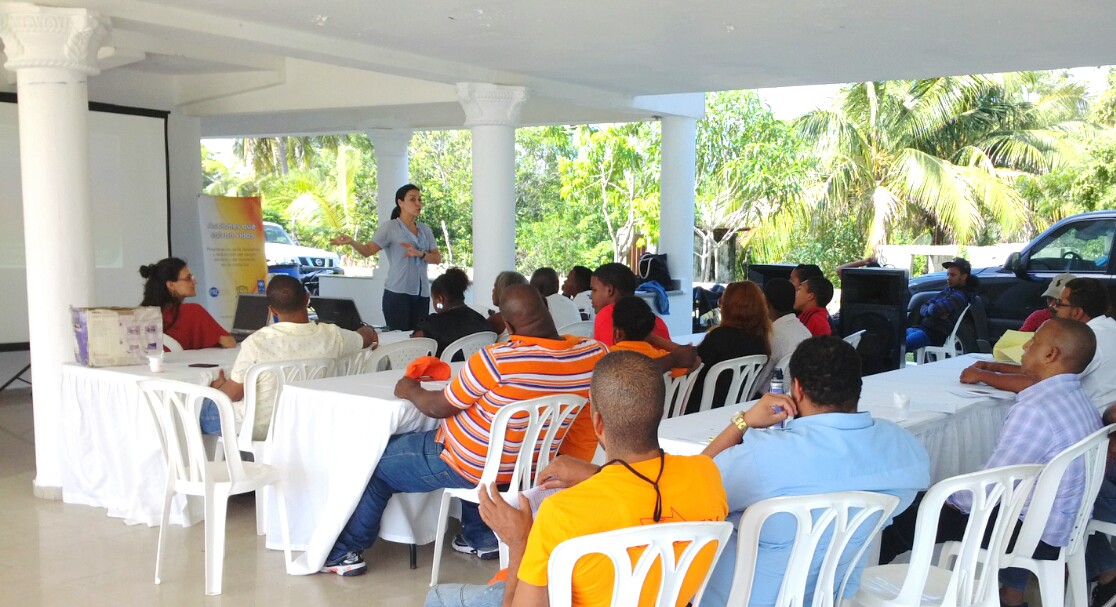
The workshop was organized in separate sessions, from 8 to 10 December in the municiipalities of Sabana Grande de Palenque, Bajos de Haina and San Gregorio de Nigua, under the project "Actions that save lives: disaster preparedness and reduction of seismic and tsunami risk on the south coast ", led the consortium formed by UNDP, UNESCO and the Cooperation Assembly for Peace in Dominican Republic (CAPP), funded by the Disaster Preparedness Programme of the European Commission Humanitarian Aid Department (DIPECHO, for its acronym in English) in the 2015-2016 Action Plan for the Caribbean. This project aims to strengthen prevention, mitigation and response capacities to improve the resilience of communities and institutions in the coastal municipalities of the province of San Cristobal for earthquakes and tsunamis, especially in the towns of Bajos de Haina, San Gregorio de Nigua and Sabana Grande de Palenque.
"Tsunamis are events that may occur in the Dominican Republic and cause loss of life, property damage and have a major impact on the country's economy, so it is necessary to raise public awareness of the institutions and the population in general, so they can respond appropriately to such events. Member institutions of municipal committees for the prevention, mitigation and response work locally to reduce vulnerabilities and on emergency response against all phenomenon that can affect the population, hence the importance of their training"explains workshop facilitator, Jennifer Larreynaga, UNESCO Consultant of the Tsunami Action Team and exercise 2016.