Sea Level Monitoring
TSU/MAB Coastal Hazards Project
CoastWAVE 2.0 Project
Project title: Scaling-Up and Strengthening the Resilience of Coastal Communities in the North-Eastern Atlantic and Mediterranean Regions to the Impact of Tsunamis and Other Sea Level-Related Coastal Hazards (CoastWAVE 2.0 Project)
Brief summary: The CoastWAVE Project Phase-II (CostWAVE 2.0) is aimed at scaling-up and strengthening the resilience of coastal communities in the North-Eastern Atlantic and Mediterranean Regions to the impact of tsunamis and other sea level-related coastal hazards. It will build collective and common capacities in tsunami hazard assessment and evacuation mapping using probabilistic approaches. It will track changes in the level of tsunami awareness and risk perceptions. The project will install additional tsunami detection, monitoring, and alerting systems. It will scale up UNESCO/IOC Tsunami Ready Recognized communities in existing and new countries, as well as synergies actions, where possible within existing coastal resilient initiatives (e.g. Making Cities Resilient 2030, Ocean Decade Challenge 6 on increase resilience to ocean hazards). A key outcome is to engage and create dialogues with multistakeholders and users involved in coastal resilience in a multi-hazard/risk context with the aim to create shared prevention and resilient preparedness for ocean related hazards to reduce their impact through better understanding and integration of tools, strategies and polices.
Implementing partner: Intergovernmental Oceanographic Commission of UNESCO (UNESCO/IOC)
Donor: European Union (EU) - Directorate-General for European Civil Protection and Humanitarian Aid Operations (DG ECHO)
Implementation period: 24 months
Start date: 01/07/2024
Geographical scope: North-Eastern Atlantic and Mediterranean Sea
Hazard/Risk scenarios covered: Tsunamis and Other Coastal Hazards
Implementation partners:
• Tsunami Service Providers (TSPs) and National Tsunami Warning Centres (NTWCs)
• Tsunami detection and sea level monitoring organizations/institutions in participating countries
• Civil Protection Agencies and First Responders and other Members of the National Emergency Management System e.g. National Tsunami Warning Focal Points & National Tsunami Contacts, Ministries of Education, Ministries of Tourism etc.
• Local District/Community Emergency Organizations, Community Emergency Response Teams
• Local government/authorities at Tsunami Ready pilot location
• Community leaders, community members and tourists/visitors at Tsunami Ready pilot locations
Other institutions and stakeholders:
• Scientific/research organisations/institutions in participating countries. The project will solicit the support of scientific/research organisations/universities in participating countries particularly in the field of coastal inundation modelling and evacuation mapping,
• Disaster risk reduction organisations at national and EU UCPM level. National Civil Protection Authorities (CPAs) and the Union Civil Protection Mechanism are expected to be both contributing partners and beneficiaries. The CPAs will be involved in developing the Tsunami Ready Standards and Guidelines for the NEAMTWS region and will benefit from implementation at national level,
• UNESCO field offices will assist with logistics and liaison with national stakeholders in Egypt and Morocco,
• Professional associations, NGOs and media Communication group to raise awareness of the Programme and project objective and expected outcomes,
• Joint Research Centre (JRC), the European Commission's science and knowledge service
• United Nations Office for Disaster Risk Reduction (UNDRR)
Project components:
Component 1: Build and strengthen tsunami hazard assessments and evacuation mapping using probabilistic approaches, risk knowledge, risk communication, and decision-making capacities.
Component 2: Scale-up and expand Tsunami Ready in selected NEAM countries.
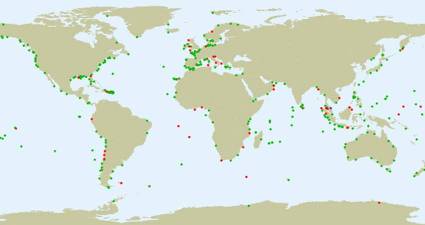
Component 3: Enhance and density early warning, detection, monitoring, and alerting systems.
Component 4: Enhance dialogues with Emergency Responders, Decision Makers on High Impact Low Probability (HILP) tsunami events within a multi-hazard context to improve strategies and effective decision-making capabilities.
Project outcomes:
Outcome 1: Standard and improved tsunami hazard assessments and evacuation mapping based on probabilistic approaches for better planning and improved understanding, effective communication and better decision-making from regional, national to local level of tsunami.
Outcome 2: Enhanced understanding and communication of tsunami and other sea level-related risk in selected communities in the selected NEAM countries.
Outcome 3: More coastal communities and countries in the NEAM region joining the UNESCO-IOC Tsunami Ready Programme to be better prepared to respond to sea-level related hazards.
Outcome 4: Increased/improved access to near real-time seismic and/or sea level detection and alert technology to provide early warning of rapid onset sea level-related hazards in more coastal communities in selected NEAM countries.
Outcome 5: New affordable sea level device to provide early warning of rapid onset sea level-related hazards in NEAMTWS countries enhanced.
Outcome 6: Improved understanding and knowledge of how to address HILP tsunami events, highlighting strategies and procedures to factor and integrate tsunamis in multi-hazard approaches, and enhance real time decision making and long-term planning.