Sea Level Monitoring
TSU/MAB Coastal Hazards Project
Pre-IOWave16 Workshop on Standard Operating Procedures for Tsunami Warning and Emergency Response for Indian Ocean Countries
The ICG/IOTWMS pre-IOWave16 Workshop on Standard Operating Procedures (SOPs) for Tsunami Warning and Emergency Response for Indian Ocean countries was held in Melbourne, Australia, 9-13 May 2016, hosted by the Australian Bureau of Meteorology. The workshop was attended by twenty-eight participants from twelve countries, namely: Australia, Comoros, India, Islamic Republic of Iran, Kenya, Malaysia, Mauritius, Oman, Sri Lanka, Tanzania, Thailand and Timor-Leste. The workshop was conducted by a team of nine trainers from Australia, India, Indonesia, Pakistan, the Indian Ocean Tsunami Information Center and IOC UNESCO.
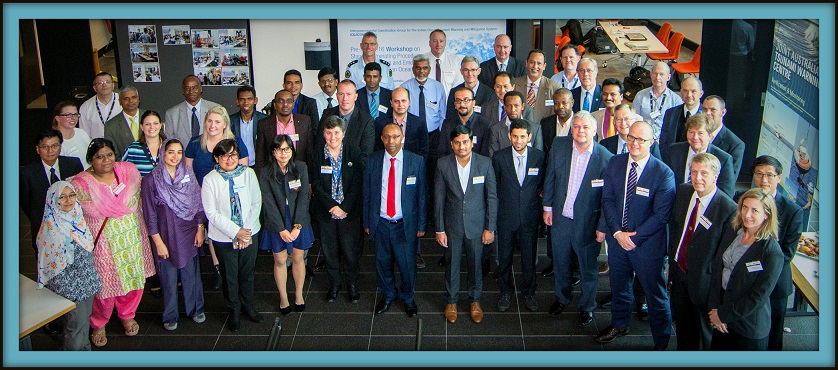
The workshop targeted Indian Ocean countries that intend to participate down to community level in the IOWave16 Exercise, which is scheduled for 7-8 September 2016. The objectives of the workshop were to assist the ICG/IOTWMS Member States to develop integrated end-to-end SOPs for tsunami warning and emergency response; to assist Disaster Management Organisations to develop SOPs for implementing national and local responses to tsunami warnings issued by the National Tsunami Warning Centres; and to prepare Member States to conduct the IOWave16 Exercise.
The workshop programme included lecture sessions, breakout group work, a tabletop simulation exercise and a site visit to the Joint Australia Tsunami Warning Centre, one of the three ICG/IOTWMS Regional Service Providers. Lectures and training material were based on manuals and templates developed by IOC UNESCO in collaboration with the NOAA International Tsunami Information Centre (ITIC) since 2008.
The workshop also marked the start of UNISDR’s programme of activities leading towards the UN-designated World Tsunami Awareness Day on 5th November 2016, the theme of which is “Effective Education and Evacuation Drills”. The IOTWMS will participate in World Tsunami Awareness Day as a means of raising awareness of tsunami hazards in the Indian Ocean and the IOWave16 Exercise in September will form an integral part of IOTWMS’ contribution to the programme of events.
Technical Visit to CENtre d’Alerte aux Tsunamis (CENALT)
Mr Nacer Jabour and Mrs Sabah Benchekroun from the Centre National pour la Recherche Scientifique et Technique in Morocco participated in a four-day technical visit to the CENtre d’Alerte aux Tsunamis (CENALT) from 17-20 May 2016 in Paris. Mr Jabour was recently nominated as the National Tsunami Contact in Morocco. CENALT is the French National Tsunami Warning Center (NTWC) and one of the existing four Candidate Tsunami Service Provider (CTSP) of the North-Eastern Atlantic and Mediterranean Tsunami Warning System (NEAMTWS).
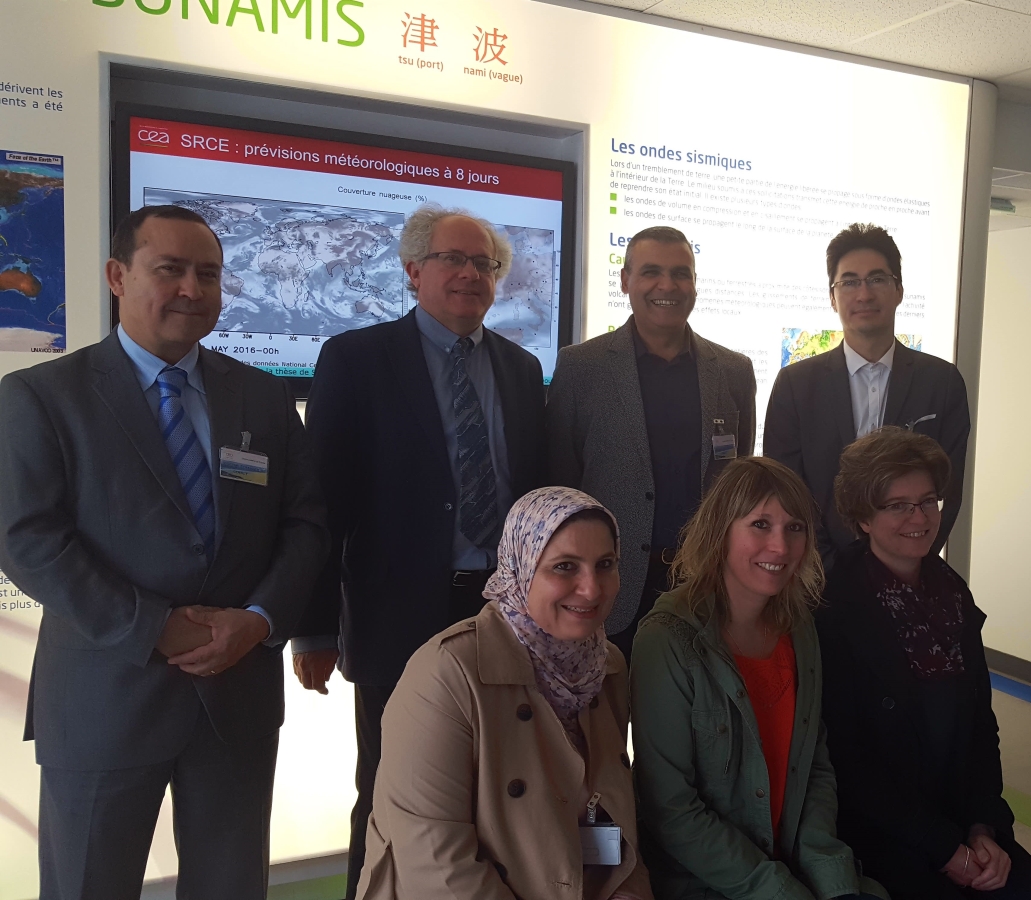
The technical visit provided an opportunity to share experience and expertise related to tsunami warning and mitigation for the North-Eastern Atlantic, the Mediterranean and connected Seas.
Historical tsunami in the western Mediterranean and North-Eastern Atlantic, ongoing research on tsunami hazard and risk though modeling, and how to build an optimal sea level network for tsunami warning in NEAM region were reviewed. Other topics discussed were the functions and operations of CENALT as a National Tsunami Warning Center (NTWC) and NEAM Candidate Tsunami Service Provider (CTSP), the internal governance and procedures with the Civil Protection Agencies, general information on the governance and operation of the NEAMTWS, the NEAMWave12 and NEAMwave14 tsunami exercises; as well as an overview of the other NEAMTWS Candidate Tsunami Service Providers and NTWCs in Italy, Greece, and Turkey.
Mr Jabour and Mrs Benchekroun also visited UNESCO/IOC and discussed areas for potential collaboration.
CARIBE WAVE 2016 Regional Tsunami Exercise
Over one quarter million people from Bermuda thru Brazil and across the entire Caribbean basin participated in the CARIBE WAVE 16 tsunami exercise held on March 17. This represents an increase of 41% from 2015 (191,000 participants). This level of participation makes the CARIBE WAVE 16 exercise the largest international tsunami drill in the world. The participants in the fifth annual regional tsunami exercise hailed from 32 nations and 15 territories and represented a participation rate of almost 100% of all the Members of the UNESCO Intergovernmental Coordination Group for Tsunamis and other Coastal Hazards for the Caribbean and Adjacent Regions (CARIBE EWS).
Registered participants included designated CARIBE EWS Tsunami Warning Focal Points (TWFPs) and National Tsunami Warning Centers (NTWCs), as well as emergency and preparedness organizations, K-12 Schools, government agencies, colleges and universities, healthcare and hotels, among others. According to the registration system hosted by TsunamiZone.org, 270,875 people were registered as of March 18, including over 118,000 in Puerto Rico, 62,000 in Guadeloupe, 37,000 in Venezuela, 21,000 in Martinique, and 14,000 in Grenada. The jurisdiction of the BVI activated 16% or its population with 4613 participants.
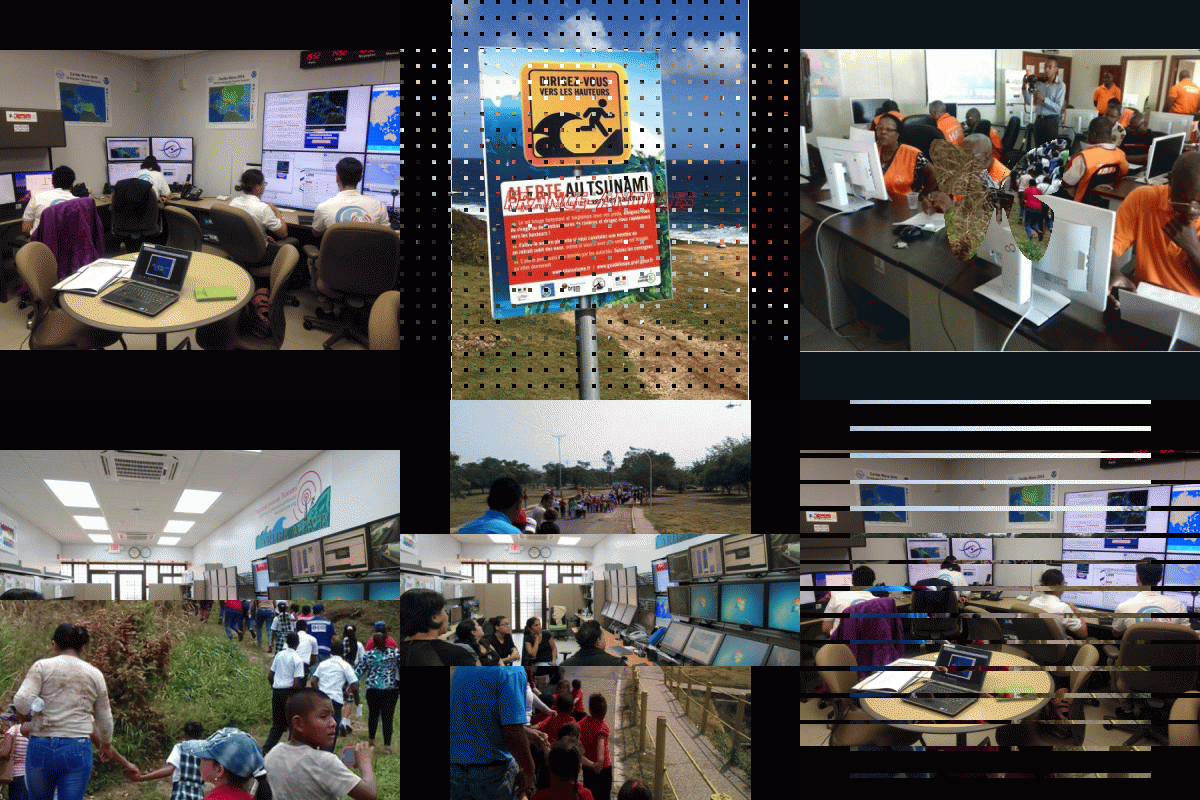
CARIBE WAVE 2016 had two scenarios: Venezuela and Northern Hispaniola. The Venezuela scenario simulated a tsunami generated by a magnitude 8.4 earthquake located adjacent to the northern coast of Venezuela with waves of almost 12 meters. The Northern Hispaniola Scenario was based on a magnitude 8.7 earthquake with waves of almost 17 meters forecasted for the shores of Haiti and Dominican Republic. The simulated tsunami messages were disseminated by US Pacific Tsunami Warning Center (PTWC), the CARIBE EWS Tsunami Service Provider. These messages were disseminated mainly over the Global Telecommunication System and Email. Many countries also generated and disseminated their own domestic tsunami warning products for their areas of responsibility.
Sirens, emails, emergency alert systems, text messages, media outlets, NOAA weather radio, and social media were used by many TWFP to further disseminate the messages. In addition to the communication tests, exercises were conducted at various additional levels of magnitudes and sophistication and included seminars, table top exercises, video/web conferencing and drills.
Planning for CARIBE WAVE 16 has taken over a year and was coordinated by a task team led by Dr. Elizabeth Vanacore of the Puerto Rico Seismic Network and facilitated by the US NWS Caribbean Tsunami Warning Program. For the first time TsunamiZone.org, was used to handle the registration of the participants. Registration was available for the first time for all three major languages used in the Caribbean and adjacent regions, English, French, and Spanish. The Exercise Handbook and other information and supporting documents for the exercise will remain posted on different websites including the CTWP (http://caribewave.info).
The exercise was conducted under the framework of the CARIBE EWS, which was established in 2006 after the devastating Indian Ocean Tsunami and the recognition of the high tsunami threat in the Caribbean. Each of the countries and territories will be providing feedback on the exercise, the Enhanced PTWC products and their individual state of preparedness. The results of CARIBE WAVE 2016 will guide future work for this Intergovernmental Coordination Group.
Prepared by: Christa G. von Hillebrandt-Andrade, Manager, NOAA NWS Caribbean Tsunami Warning Program, Mayagüez, Puerto Rico and Elizabeth Vanacore, Task Team Leader CARIBE WAVE 2016, Puerto Rico Seismic Network, University of Puerto Rico at Mayagüez.
Municipal committees for the prevention, mitigation and response in the coastal municipalities of San Cristobal, Dominican Republic, received training on tsunamis. December 2015.
Representatives of the municipal committees for disaster prevention, mitigation and response (PMR) in the coastal towns of San Cristobal attended the first workshop on "Training and capacity building of and emergency care and response institutions in case of tsunamis" in order to improve the resilience of these communities in response to the seismic and tsunami vulnerability that has the coastal area of the Dominican Republic.
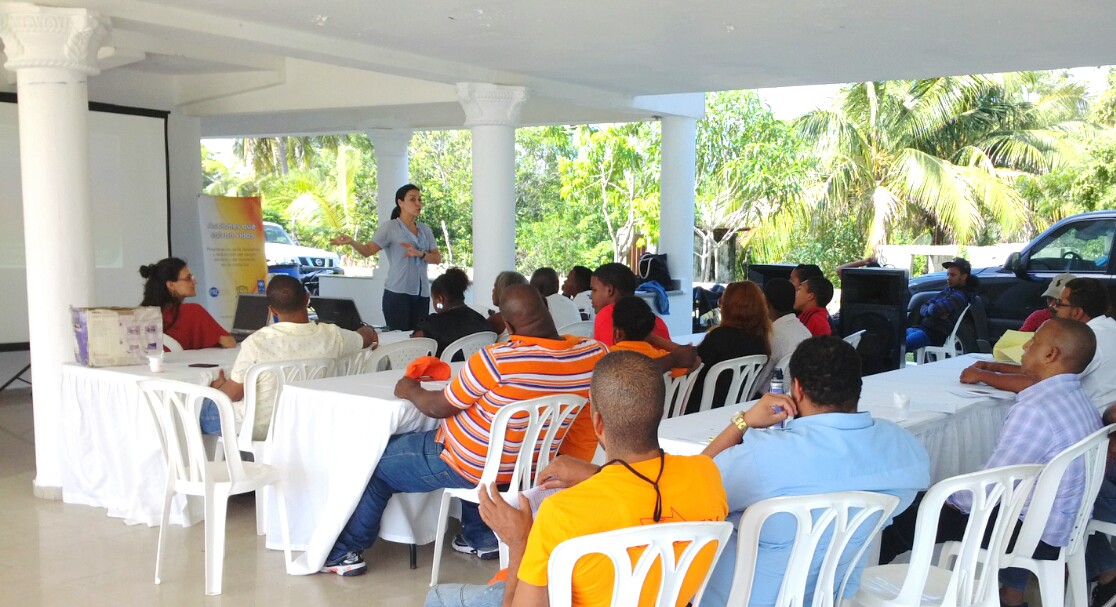
The workshop was organized in separate sessions, from 8 to 10 December in the municiipalities of Sabana Grande de Palenque, Bajos de Haina and San Gregorio de Nigua, under the project "Actions that save lives: disaster preparedness and reduction of seismic and tsunami risk on the south coast ", led the consortium formed by UNDP, UNESCO and the Cooperation Assembly for Peace in Dominican Republic (CAPP), funded by the Disaster Preparedness Programme of the European Commission Humanitarian Aid Department (DIPECHO, for its acronym in English) in the 2015-2016 Action Plan for the Caribbean. This project aims to strengthen prevention, mitigation and response capacities to improve the resilience of communities and institutions in the coastal municipalities of the province of San Cristobal for earthquakes and tsunamis, especially in the towns of Bajos de Haina, San Gregorio de Nigua and Sabana Grande de Palenque.
"Tsunamis are events that may occur in the Dominican Republic and cause loss of life, property damage and have a major impact on the country's economy, so it is necessary to raise public awareness of the institutions and the population in general, so they can respond appropriately to such events. Member institutions of municipal committees for the prevention, mitigation and response work locally to reduce vulnerabilities and on emergency response against all phenomenon that can affect the population, hence the importance of their training"explains workshop facilitator, Jennifer Larreynaga, UNESCO Consultant of the Tsunami Action Team and exercise 2016.
Regional Training Workshop on Pacific Tsunami Warning Center Enhanced Tsunami Products for ICG/CARIBE EWS
This four-day training workshop is being hosted by the Caribbean Tsunami Information Centre (CTIC) in association with UNESCO/IOC, the International Tsunami Information Center (ITIC), Pacific Tsunami Warning Center (PTWC), Caribbean Tsunami Warning Programme (CTWP) and the Coastal Zone Management Unit (CZMU), Barbados. The training targets 40 participants from 20 countries as well as regional organisations such as the Caribbean Disaster Emergency Management Agency (CDEMA), Caribbean Institute for Meteorology and Hydrology (CIMH), CTWP and the Puerto Rico Seismic Network (PRSN).
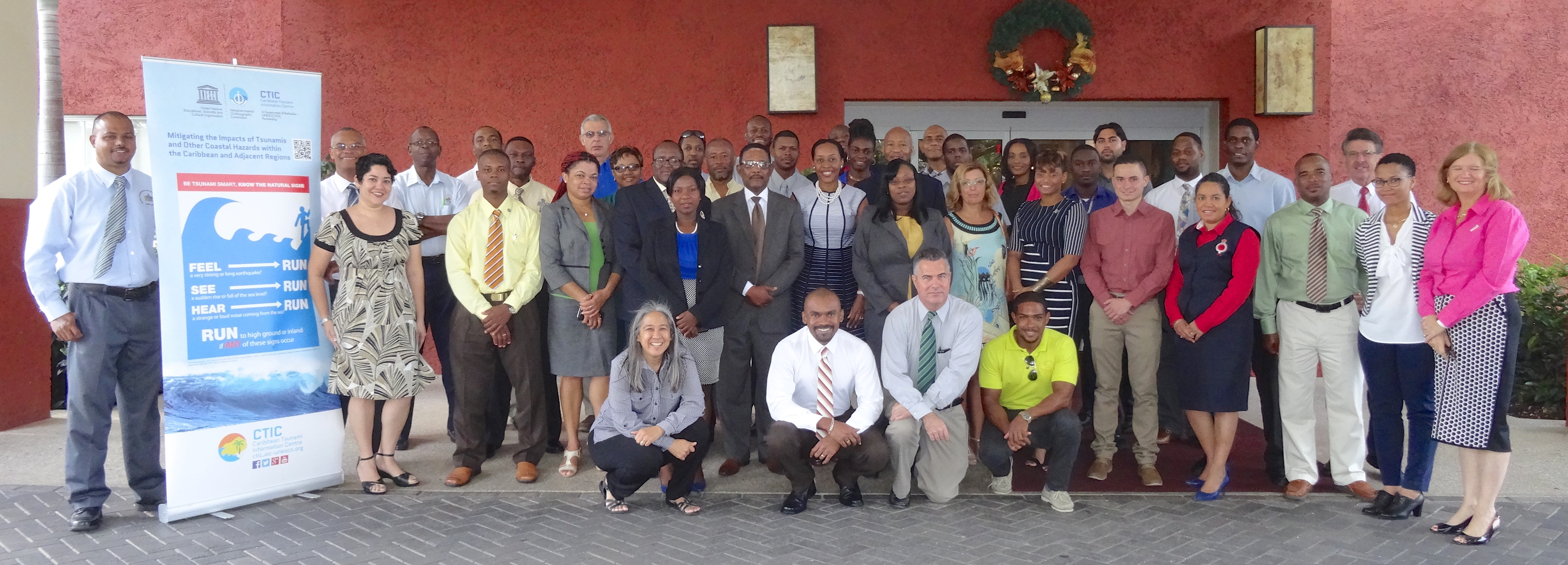
The workshop seeks to enable tsunami warning focal points (TWFPs), national tsunami warning centers (NTWC), and tsunami emergency responders (TERs) to effectively receive, analyse and take appropriate action in response to the Pacific Tsunami Warning Center (PTWC) enhanced tsunami forecast products for the Caribbean and its adjacent regions. This training workshop covers tsunami warning operations and the use of the PTWC Enhanced Products for tsunami threat decision-making, with specific attention on the tsunami warning chain and their standard operating procedures (SOPs). Topics include warning and response SOPs and challenges, warning decision support tools, warning messages and alerting, evacuation concepts and planning, and awareness strategies.
Over the last 10+ years, with improvements in data quality, quantity, and real-time availability, PTWC’s response time has dropped significantly from an hour to 5-10 minutes for tsunami events. At the same time, with each great earthquake and tsunami since the 26 December 2004 Indian Ocean earthquake and tsunami helping to increase scientific understanding, better techniques have been developed to quickly characterize the earthquake and numerically model the tsunami.
In the Pacific, the PTWS adopted use of the PTWC enhanced products based on numerical forecast models on 1 October 2014. For the Caribbean and adjacent regions, the changeover to PTWC’s new enhanced forecast products was approved by the ICG/CARIBE-EWS VIII (2013), introduced in CARIBE WAVE 2013, and since October 26, 2015, are being issued in parallel with the existing products. The changeover to solely the new products is planned to take place on 1 March 2016.
More Articles...
- Remembering the 1945 Makran Tsunami on its 70th Anniversary, 28 November 2015
- Twelfth Session of the Intergovernmental Coordination Group for the Tsunami Early Warning and Mitigation System in the North-eastern Atlantic, the Mediterranean and Connected Seas (ICG/NEAMTWS-XII)
- Workshops on Post-IOWave14 Exercise Assessment and Standard Operating Procedures for Tsunami Warning and Emergency Response for India Ocean Countries
- Revised Guidelines on Tsunami Risk Assessment and Mitigation for the Indian Ocean
About the Tsunami Programme
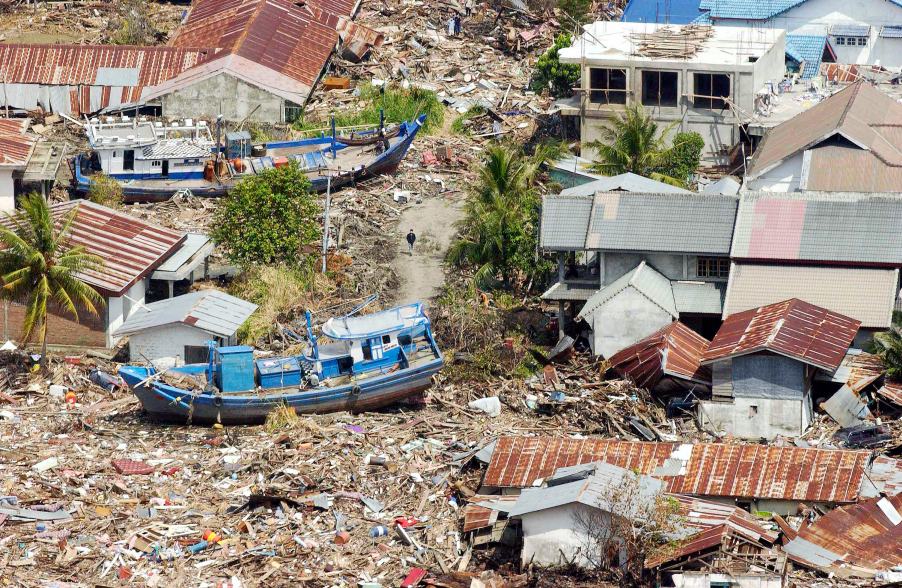
The Indonesian coast, between Banda Aceh and Meulaboh, after the earthquake and the tsunami of 26 December 2004. Photo by Evan Schneider © UN Photo
UNESCO supports Member States in improving capabilities for tsunami risk assessment, implementing early warning systems and enhancing preparedness of communities at risk. UNESCO works closely with national institutions and promotes inter-institutional and regional cooperation. Specialized regional centers provide tsunami information that, together with national analysis, is the basis of the warnings issued for the public. In addition, UNESCO promotes community-based approaches in the development of response plans and awareness campaigns which strongly involve education institutions and end-users.
Upcoming Events
7 August 2024
19 August 2024
19 - 30 August 2024
Chile