Sea Level Monitoring
TSU/MAB Coastal Hazards Project
IOC-UNESCO-ISESCO Workshop Report
We are pleased to announced the release of the workshop report on "Improving Tsunami Warning and Emergency Response in the North-Eastern Atlantic, Mediterranean and Connected Seas" held on 23 and 24 September 2014 in Rabat, Morocco, and organized by the Intergovernmental Oceanographic Commission (IOC) of UNESCO together with the Islamic Educational, Scientific and Cultural Organization (ISESCO), the UNESCO for the Maghreb based in Rabat, and the Centre National pour la Recherche Scientifique et Technique of Morocco.
The workshop gathered representatives of governmental, scientific and emergency management institutions from the Maghreb countries with the aim of presenting the recent developments of the Tsunami Early Warning and Mitigation System in the North-Eastern Atlantic, the Mediterranean and Connected Seas (NEAMTWS), and preparing for the tsunami exercise, NEAMWave 14, which took place from 28 to 30 October 2014.
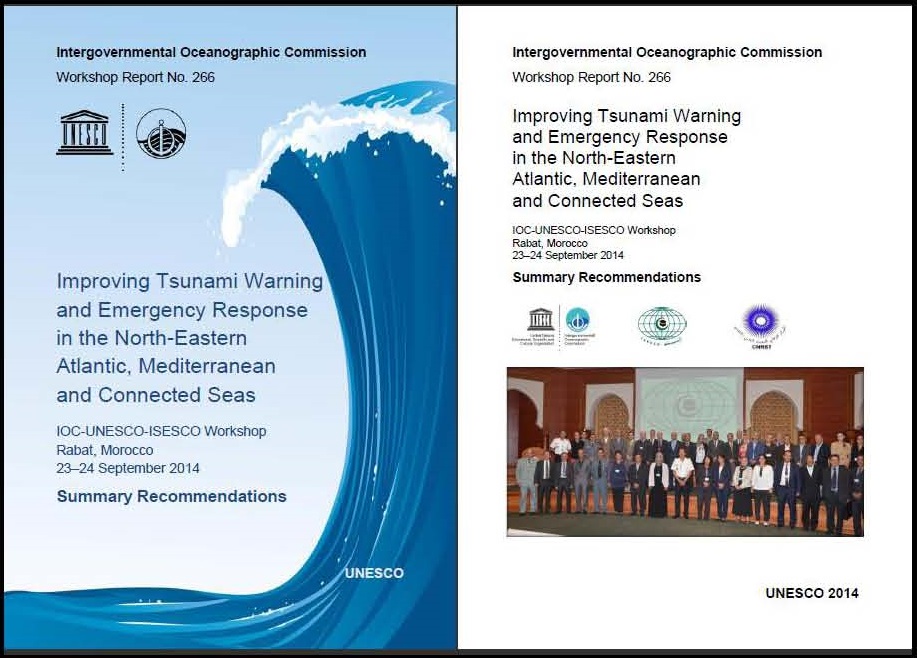
For more information, please visit: http://unesdoc.unesco.org/images/0023/002305/230519m.pdf
El gobierno dominicano pone en vigencia manual de procedimiento en caso de tsunamis
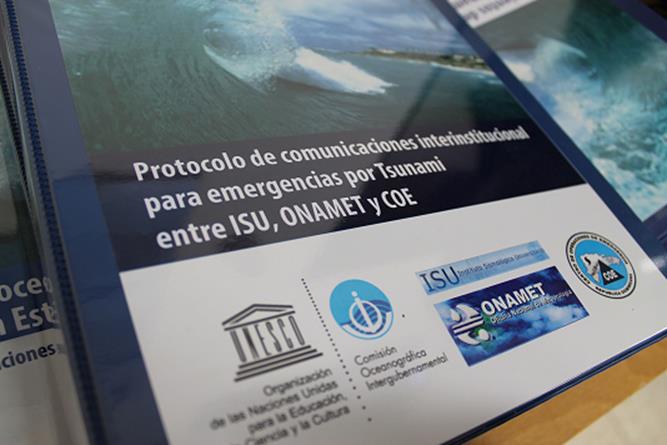
El gobierno dominicano, con el apoyo de Naciones Unidas, puso en vigencia el Manual de Procedimientos Operacionales Normalizados (SOP) para salvar vidas y evitar pérdidas materiales en caso de tsunamis.
Durante un acto celebrado este lunes 27 de octubre en la Casa de Naciones Unidas, representantes del Centro de Operaciones de Emergencias (COE), del Instituto Sismológico Universitario (ISU-UASD) y de la Oficina Nacional de Meteorología (ONAMET) se comprometieron a velar por la implementación del manual que delimita las funciones de cada entidad en caso de tsunamis.
Esta actividad es apoyada por la UNESCO/COI y el Programa de las Naciones Unidas para el Desarrollo (PNUD) en el marco del proyecto “Comunidades Resilientes a Sismos y Tsunamis en Puerto Plata” que cuenta con el financiamiento de la Dirección General de Ayuda Humanitaria y Protección Civil de la Comisión Europea y de la ONG española Anesvad.
La representante residente adjunta del PNUD, Luciana Mermet, anunció que el jueves 30 de octubre se realizará un simulacro de evacuación junto el equipo de “Acción Tsunami” de Puerto Plata y del sector educativo de la provincia. La meta será evacuar a más de dos mil estudiantes de cinco centros escolares de Puerto Plata que se localizan en zonas vulnerables a terremotos y tsunamis.
Mermet compartió la mesa principal con el subdirector del Centro de Operaciones de Emergencia, Edwin Olivares, la directora de ONAMET, Gloria Ceballos, el representante del ISU, Félix Martínez, la oficial de programas de la Comisión Europea, Gina Sosa, la coordinadora de la Unidad de Gestión de Riesgos del Ministerio de Educación, Milagros Yost, el representante de la Comisión Nacional de Emergencia, José Alcántara y el Profesor Miguel Llivina de la Oficina de UNESCO en La Habana.
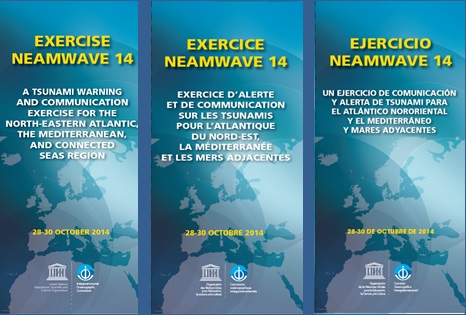
EXERCISE NEAMWave 14
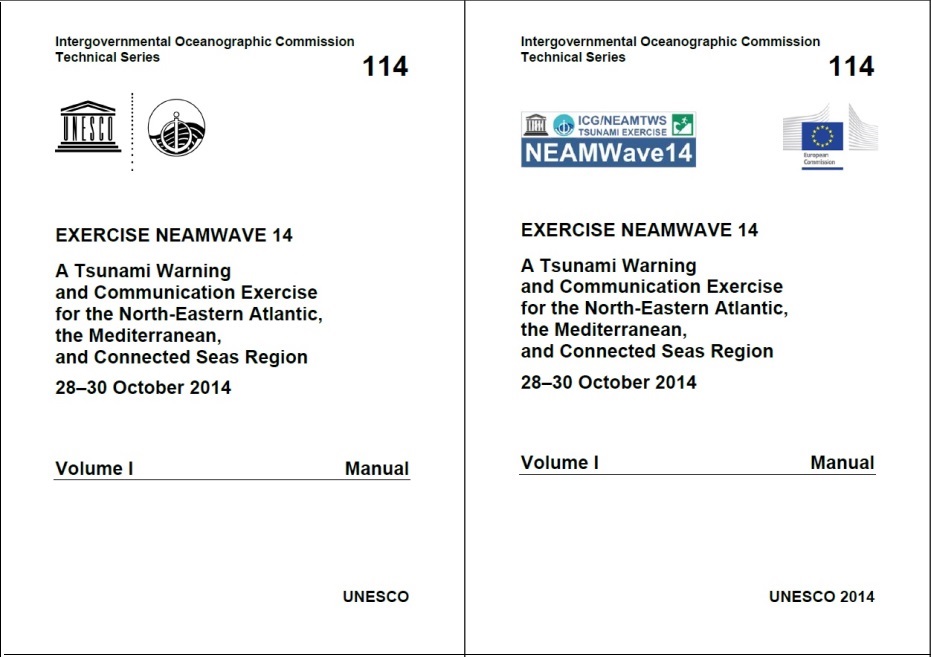
NEAMTWS Secretariat is launching its Second Tsunami Warning and Communication Exercise (NEAMWave 14) for the North-Eastern Atlantic, the Mediterranean, and Connected Seas Region that will take place from 28 to 30 October.
Twenty-one countries out of the 39 involved in ICG/NEAMTWS will participate in the Exercise bringing them the opportunity to test the efficiency of the communication systems in charge of transmitting tsunami alerts and, in some countries, to ensure that the authorities in charge of public safety are prepared to face such a threat.
In order to prepare the participants and to inform the population, the Exercise Team has prepared the Manual Tsunami Warning and Communication Exercise. The NEAMTWS Secretariat has developed the flyer Exercise NEAMWave 14.
For more information, please visit:
International Conference: "The Indian Ocean Tsunami Warning and Mitigation System 10 years after the Indian Ocean Tsunami: Achievements, Challenges, Remaining Gaps and Policy Perspectives"
The Indian Ocean Tsunami on 26th December 2004 resulted in the loss of over 230,000 lives including over 2,500 foreign tourists, and the displacement of over 1.6 million people around the Indian Ocean, with estimated economic losses of $14 billion. The catastrophe brought renewed focus on the need for a regional tsunami warning system in the Indian Ocean. Following the disaster, the Intergovernmental Oceanographic Commission (IOC) of UNESCO was given the mandate to develop and implement an Indian Ocean Tsunami Warning and Mitigation System (IOTWS). An Intergovernmental Coordination Group (ICG) for the IOTWS was established by the IOC Assembly in July 2005.
To commemorate the 10th anniversary of the Indian Ocean Tsunami, IOC UNESCO and the Indonesian Agency for Meteorology for Climatology and Geophysics (BMKG) are sponsoring and organising a conference to recognise the achievements of the last 10 years, to highlight work that still needs to be done, and to seek re-commitment to continued investment in the IOTWS. The conference will be held at the BMKG Auditorium in Jakarta, Indonesia, 24-25 November 2014 and will offer high level perspectives from invited speakers and panel discussions from decision makers and scientists. The 2nd announcement for the conference provides further details of the conference programme.
The conference is open attendance and there is no registration fee. Registration can be completed online at: www.ioc-unesco.org/IOTconference2014. For further information please contact Mr Tony Elliott, Head of ICG/IOTWS Secretariat, at: Esta dirección de correo electrónico está siendo protegida contra los robots de spam. Necesita tener JavaScript habilitado para poder verlo..
The second edition of the Post-Tsunami Survey Field Guide has been realeased
The second edition of the Post Tsunami Survey Manual has been released by UNESCO’s Intergovernmental Oceanographic Commission (IOC).
This new Field Guide addresses developments in the tsunami field since 1998, and the expansion of International Tsunami Survey Team (ITST) efforts into disciplines and technologies not covered in the first Guide. The Guide provides a flexible framework for undertaking post-tsunami surveys, their guiding principles, and protocols and a set of best practices and templates for individuals and groups considering forming, or participating, in post-tsunami surveys.
It can be downloaded at http://unesdoc.unesco.org/images/0022/002294/229456E.pdf
Print copies are available from Patrice Boned (Esta dirección de correo electrónico está siendo protegida contra los robots de spam. Necesita tener JavaScript habilitado para poder verlo.) or Thorkild Aarup (Esta dirección de correo electrónico está siendo protegida contra los robots de spam. Necesita tener JavaScript habilitado para poder verlo.)
Más artículos...
El programa sobre tsunamis
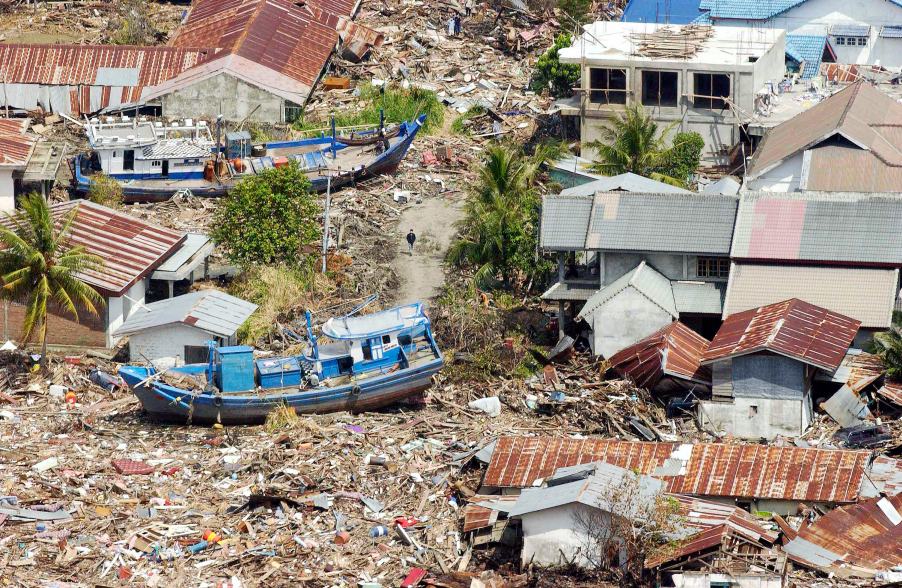
La costa de Indonesia, entre Banda Aceh y Meulaboh, tras el seísmo y tsunami del 26 de diciembre de 2004. Fotografía de Evan Schneider © Foto de Naciones Unidas
La UNESCO presta apoyo a los Estados Miembros con el fin de mejorar sus capacidades de evaluación de riesgos de tsunami, implantar sistemas de alerta temprana y mejorar la preparación de las comunidades amenazadas. La UNESCO colabora estrechamente con instituciones nacionales, y promueve la cooperación interinstitucional y regional. Los centros regionales especializados proporcionan información sobre los tsunamis que, conjuntamente con los análisis efectuados a nivel nacional, sirven para elaborar las alertas al público. Además, la UNESCO promueve metodologías comunitarias mediante el desarrollo de planes de respuesta y campañas de sensibilización, en las que participan en buena medida instituciones docentes y usuarios finales.
Upcoming Events
7 August 2024
19 August 2024
19 - 30 August 2024
Chile