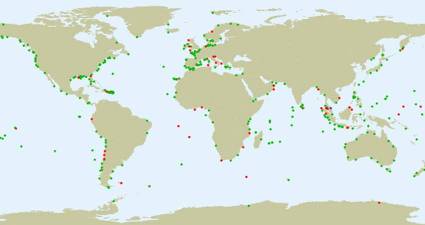
Sea Level Monitoring
TSU/MAB Coastal Hazards Project
FOR ARCHIVE - CARIBE EWS - WG1: Monitoring and Detection Systems
Chair: Dan McNamara (USA, 2019- ),
Vice-Chair (Seismology): Wilfried Strauch (Nicaragua, 2019- )
Vice-Chair (Sea Level): Marcelino Hernandez (Cuba, 2016 ),
Vice-Chair (GNSS): Karl Feaux (USA, 2017-)
|
Working Group One: Monitoring and Detection Systems Purpose: To review and recommend to the ICG priorities and actions required towards the full establishment of a coordinated regional tsunami warning system. Functions: 1. Advise member states on the monitoring and detection capabilities needed for operating national tsunami warning centers. 2. Define the threshold criteria for the monitoring and warning systems. 3. Assure the compliance with the agreed standards for the detection systems. 4. Ensure the effectiveness of the warning system by promoting the open exchange of seismic, sea level and other observational data in real time. 5. Promote the sharing of experience and expertise and capacity building essential to the effective monitoring. 6. Support the establishment of a fully interoperable regional tsunami warning system. |
|
Membership: 1. Gloria Romero, FUNVISIS, Venezuela 2. Daniel E. McNamara - NEIC (USGS), United States of America 3. Christa G. von Hillebrandt-Andrade, Caribbean Tsunami Warning Program (USA) -Invited Expert 4. Lloyd Lynch, Research Fellow-Instrumentation-, Seismic Research Center -Invited Expert 5. Graham Ryan, Seismic Research Center -Invited Expert 6. Jean-Marie Saurel, Engineer, Observatoire de la Martinique, France (Chair). 7. Marta Herrera Jiménez, INETER, Nicaragua –sea level 8. Javier Ramirez, INETER, Nicaragua – seismic stations 9. Ing. Wilder Alvarez, DIMAR, Colombia 10. Emilio Talavera M, Instituto Nicaragüense de Estudios Territoriales, Nicaragua 11. Mr. Venantius Descartes, Deputy Director, Saint Lucia Met. Services 12. Audra Luscher, Center for Operational Oceanographic Products and Services, NOAA, USA 13. Donald Simon, Antigua and Barbuda Meteorological Service 14. Doug Wilson, IOCARIBE-GOOS Regional Project Coordinator 15. Marvin Ryan Forde, Caribbean Institute for Meteorology and Hydrology, Barbados – Invited Expert 16. Marck Oduber, UNESCO National Commission Aruba, Aruba 17. Sébastien Deroussi, Observatoire Volcanologique et Sismologique de la Guadaloupe, France 18. Clairmont Williams, Department of Meteorology, Barbados 19. Bernard Naigre, Conseil Général de la Martinique, France 20. Victor Huerfano, Director, PRSN, Puerto Rico, USA 21. Karl Feaux, UNAVCO/COCONet, Invited Expert 22. Leo Brewster, Director, CZMU, Barbados 23. Reinoud Sleeman, KNMI, Netherlands 24. Gerard Metayer, SEMANA, Haiti 25. Claude Prépetit, Unite Technique de Sismologie, Haiti 26. Stuart Weinstein, PTWC, NOAA/NWS, United States, Invited Expert 27. Rick Benson, IRIS, United States, Invited Expert 28. Federico Duarte, MAE, Venezuela 29. Steeve Symithe, BME, Haiti 30. Jose Vega, UNA, Costa Rica 31. Enrique Arango, CENAIS, Cuba 32. Alejandro Gutierrez, UNA, Costa Rica 33. Marcelino Hernandez, CENAIS, Cuba 34. Gerald Bawden, NASA, USA 35. Héctor Mora Coordinador Grupo Investigaciones Geodésicas Espaciales, GeoRED SGC, Colombia 36. Viviana Dionicio Coordinador Grupo de Evaluación y Monitoreo de la SGC, Colombia 37. Gerald Badwen, Program Manager, NASA Headquarters, USA |
WG1 Meetings
16 Feb – 2 March 2018 ------ Mexico, Mexico
22-25 August 2017 ----- Mayaguez, United States of America
El programa sobre tsunamis
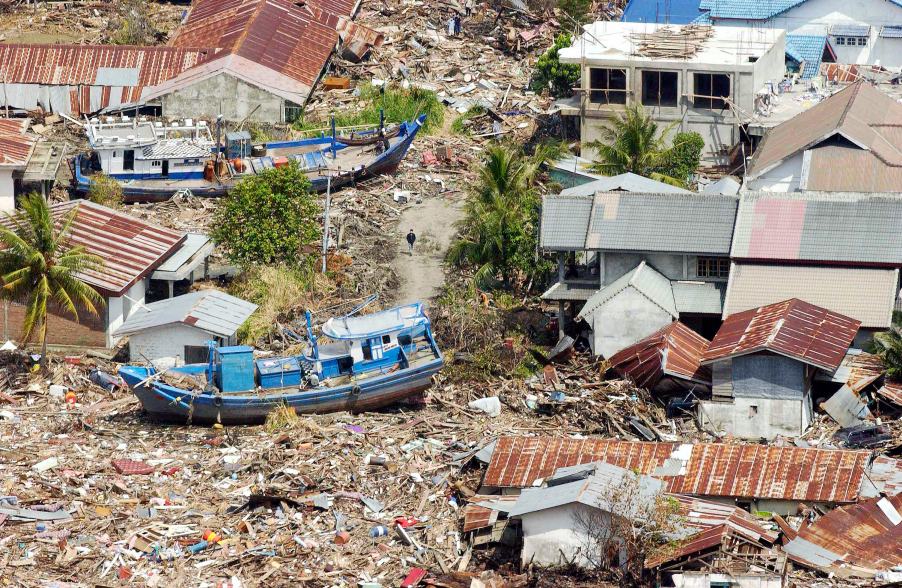
La costa de Indonesia, entre Banda Aceh y Meulaboh, tras el seísmo y tsunami del 26 de diciembre de 2004. Fotografía de Evan Schneider © Foto de Naciones Unidas
La UNESCO presta apoyo a los Estados Miembros con el fin de mejorar sus capacidades de evaluación de riesgos de tsunami, implantar sistemas de alerta temprana y mejorar la preparación de las comunidades amenazadas. La UNESCO colabora estrechamente con instituciones nacionales, y promueve la cooperación interinstitucional y regional. Los centros regionales especializados proporcionan información sobre los tsunamis que, conjuntamente con los análisis efectuados a nivel nacional, sirven para elaborar las alertas al público. Además, la UNESCO promueve metodologías comunitarias mediante el desarrollo de planes de respuesta y campañas de sensibilización, en las que participan en buena medida instituciones docentes y usuarios finales.
Upcoming Events
5 - 9 August 2024
Male
7 August 2024
19 August 2024
19 - 30 August 2024
Chile