Sea Level Monitoring
TSU/MAB Coastal Hazards Project
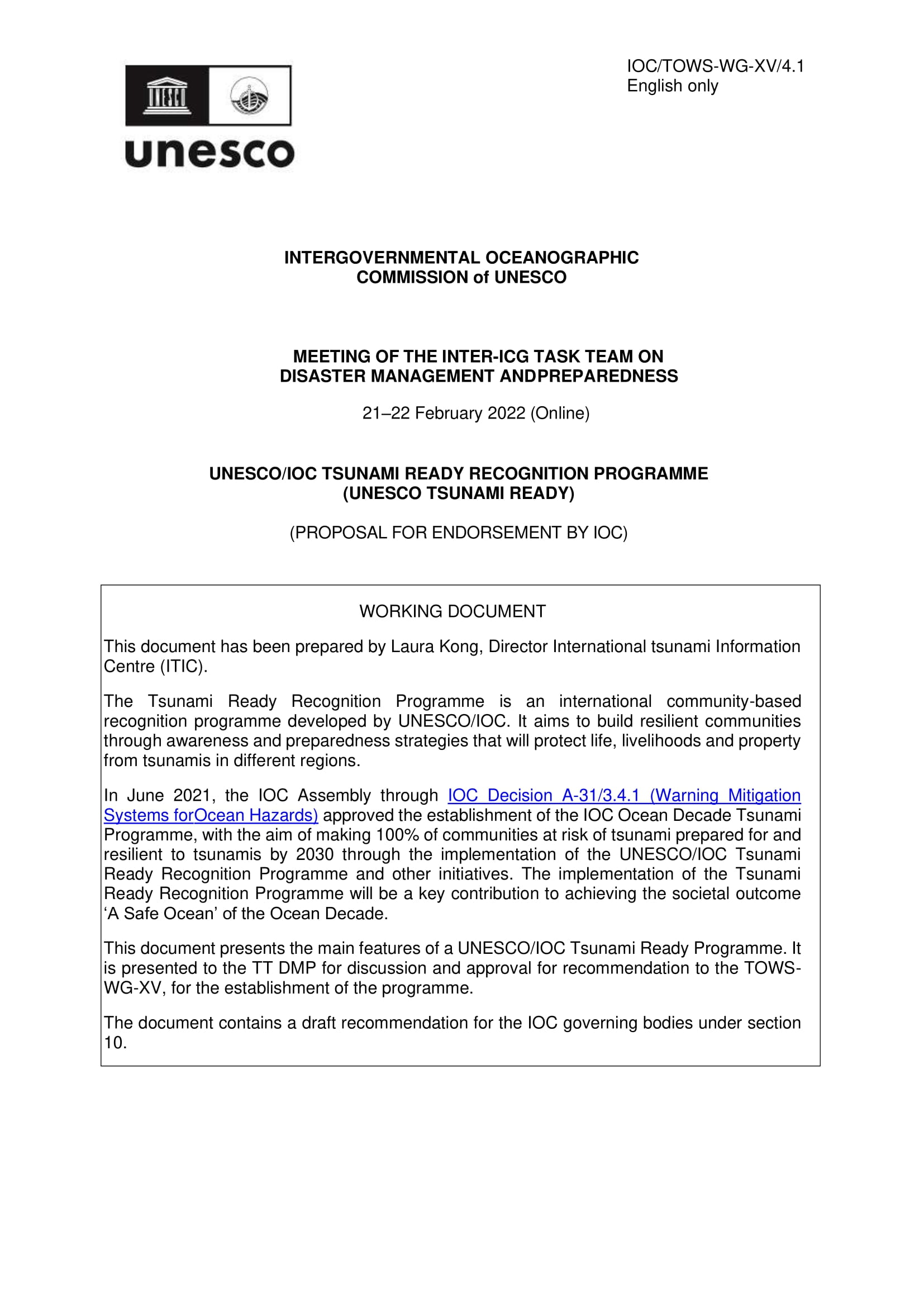
Results of the First Probabilistic Earthquake-Induced Tsunami Hazard Assessment for the Coastlines in the North eastern Atlantic, Mediterranean and Connected Seas Region and Preparations for the Third Regional Tsunami Exercise
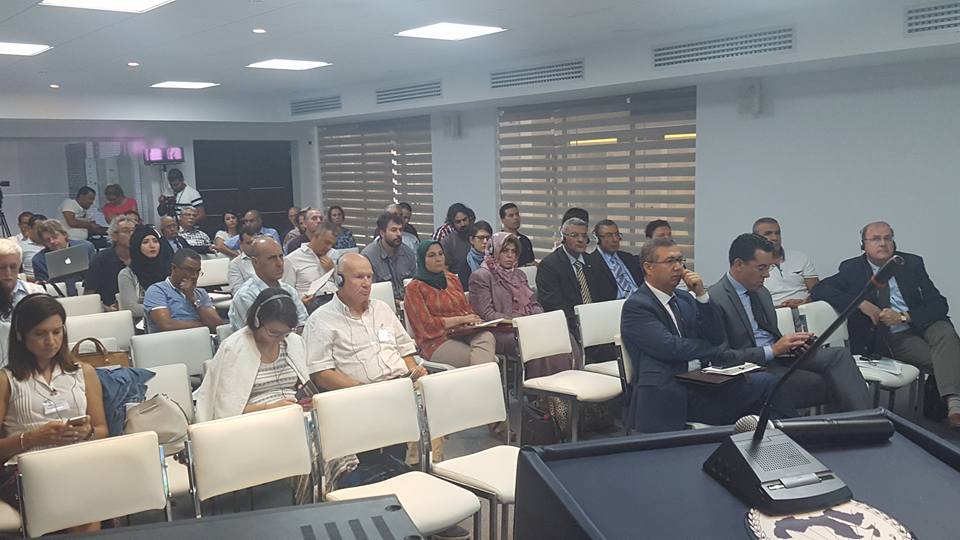
Two tsunami meetings were organized back-to-back in Tunis, Tunisia from 11-14 September by the Institut National de la Météorologie (INM), the Istituto Nazionale di Geofisica e Vulcanologia (INGV, Italy), and the Tsunami Unit of the IOC of. The meetings were hosted at the Headquarters of the Arab League Educational, Cultural and Scientific Organization (ALECSO).
The final meeting of the Probabilistic TSUnami Hazard MAPS for the NEAM Region (TSUMAPS-NEAM) (11-12 September 2017) presented the first homogeneous region-wide long-term Probabilistic earthquake-induced Tsunami Hazard Assessment (PTHA) for the coastlines of the NEAM region. The aim of the project has been to establish a base that can be used to develop a common region wide tsunami-risk management strategy from including development of local and national assessments. TSUMAPS-NEAM is a project funded by the European Commission under the auspices of the Directorate General of the European Civil Protection and Humanitarian Aid Operations (DG-ECHO). More information about TSUMAPS is available at http://www.tsumaps-neam.eu/ .
The information meeting (13-14 September 2017) provided a status and overview of the North-eastern Atlantic, Mediterranean and connected sea Tsunami Warning and Mitigation System (NEAMTWS), the planned NEAMWave 17 Tsunami Exercise and the World Tsunami Awareness Day (5 November 2017). Summary recommendations highlighted the need (i) for several ALECSO countries to designate official tsunami warning focal points (TWFP) and national Tsunami Forecast Points. Meeting participants also highlighted the need for additional Tsunami information workshops among Civil Protection Agencies in the region. The full set of recommendations will be published separately in a workshop report.
The meetings were attended by more than 80 participants from Tunisia, Morocco, Algeria, Mauritania and Egypt as well as several TSUMAPS-NEAM scientific partners, and UNDP.
1st Integrated Intersessional Meetings of ICG/IOTWMS
After several years of international collaboration and development, facilitated and coordinated by IOC-UNESCO, the Indian Ocean Tsunami Warning and Mitigation System (IOTWMS) became operational on 31 March 2013 with Tsunami Service Providers (TSPs) established by Australia, India and Indonesia independently providing tsunami advisory services to the Member States of the region. Current and future work of the Intergovernmental Coordination Group for IOTWMS (ICG/IOTWMS) is focused towards sustenance and improvements to the system, as well as enhancing community awareness and response mechanisms in the IOTWMS member states.
At its 11th session held in Kuala Lumpur, Malaysia, 18-20 April 2017, the ICG/IOTWMS decided to conduct the Indian Ocean Wave 2018 (IOWave18) tsunami exercise, oversee capacity assessment of tsunami preparedness, and pilot the implementation of a Tsunami Ready Programme1 in the Indian Ocean. As part of its work plan, the ICG/IOTWMS held the 1st integrated intersessional meetings during 4–17 September 2017 in Jakarta, Indonesia. These meetings were hosted by the Government of Indonesia through the Agency for Meteorology, Climatology and Geophysics (BMKG) and facilitated by the Indian Ocean Tsunami Information Centre (IOTIC), UNESCO-Jakarta Office and the ICG/IOTWMS Secretariat. On behalf of the Coordinating Minister for Maritime Affairs, the Deputy Minister Mr. Agung Kuswandono inaugurated the meetings. The meetings were attended by more than 75 participants from 18 Member States (Australia, Comoros, India, Indonesia, Iran, Kenya, Malaysia, Maldives, Mozambique, Myanmar, Oman, Pakistan, Seychelles, South Africa, Sri Lanka, Thailand, Timor-Leste and Yemen), 7 invited experts and 3 IOC-UNESCO staff.
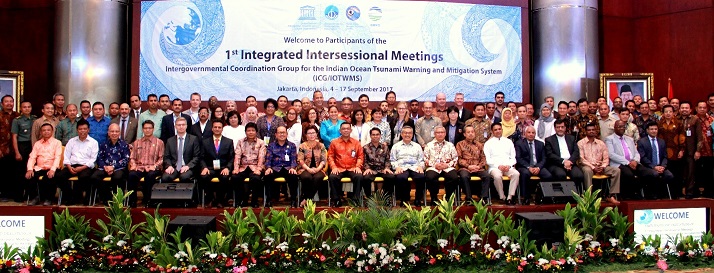
The meetings comprised of the following back-to-back events:
• Task Team on Capacity Assessment of Tsunami Preparedness Intersessional Meeting
• Indian Ocean Tsunami Ready (IOTR) Workshop
• Working Group 1 on Tsunami Risk, Community Awareness and Preparedness Intersessional Meeting
• Standard Operating Procedures (SOP) for Tsunami Warning and Emergency Response Regional Workshop
• Working Group 2 on Tsunami Detection Warning and Dissemination Intersessional Meeting
• IOWave18 Task Team Intersessional Meeting
• Steering Group Intersessional Meeting
The SOP workshop assisted the National Tsunami Warning Centres (NTWCs) and the Disaster Management Organisations (DMOs) of Member States to understand TSP products, develop integrated end-to-end SOPs for tsunami warning and emergency response, identify potential gaps and possible challenges for warning chains at the national/local levels and prepare for participation in the IOWave18 tsunami exercise.
All participating Member States in the IOTR workshop agreed that the Indian Ocean Tsunami Ready Programme and national recognition is beneficial for enhancing tsunami preparedness in their vulnerable communities, and noted several in-country initiatives that map well with the IOTR indicators. Guidelines for the IOTR Programme and a roadmap for pilot implementation in selected communities of interested Member States were finalised.
The meetings also resulted in finalising the intersessional work plans (2017-19) of the ICG/IOTWMS Working Groups and Task Teams, including implementation plans for Capacity Assessment of Tsunami Preparedness of the IOTWMS Member States and the IOWave18 exercise on 4-5 September 2018. Further details regarding the meetings can be found at www.ioc-tsunami.org/iotwms-integratedmeetings1.
__________________________
1 A community performance-based programme that facilitates a structural and systematic approach in building community tsunami preparedness through an active collaboration of the public (community), community leaders, and local and national emergency management agencies.
Plans and Procedures for Tsunami Warning and Emergency Management
National tsunami warning and emergency management authorities must have aligned and robust tsunami warning and response plans and procedures to ensure timely and effective tsunami warnings are issued and impacted communities respond effectively to them. While significant improvements have been made in this regard, the Intergovernmental Coordination Groups (ICGs) of the four Tsunami Warning and Mitigation Systems acting under the aegis of the UNESCO-Intergovernmental Oceanographic Commission have all identified that gaps still remain. Collectively, they have agreed that a guideline that sets a standard for tsunami warning plans and procedures is required to guide countries.
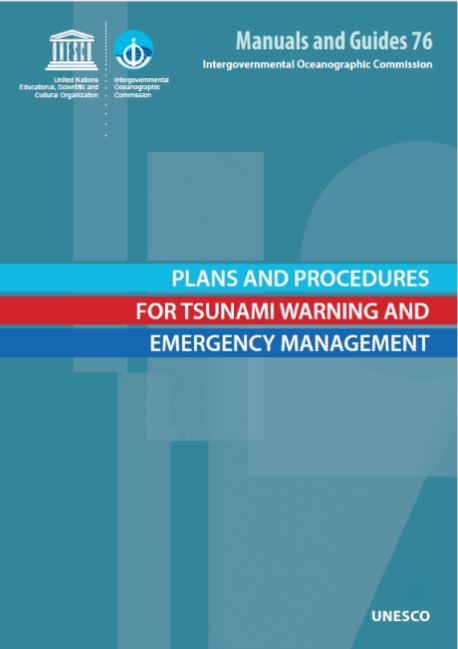 This manual on “Plans and Procedures for Tsunami Warning and Emergency Management” answers the call for guidance from the ICG Member States. It has been developed as an activity of the IOC Working Group on Tsunamis and Other Hazards related to Sea Level Warning and Mitigation System (TOWS-WG) Task Team on Disaster Management and Preparedness with generous support from the United Nations Economic and Social Commission for Asia and the Pacific (UNESCAP) and input from the TOWS-WG Task Team on Tsunami Watch Operations.
It is a product of collaboration between the four ICGs through the TOWS-WG, taking into account training materials and expertise across all the systems. It is therefore relevant to all the ICGs, and it establishes a reference point for global consistency with regard to planning for and responding to tsunamis.
Milestone in the Development of the NEAMTWS: Four Tsunami Service Providers received Certificate of Accreditation at the 29th Session of the Intergovernmental Oceanographic Commission (IOC) Assembly, 27 June 2017
At the 29th Session of the IOC Assembly, the chair of the Intergovernmental Coordination Group for the North-eastern Atlantic, Mediterranean and connected seas Tsunami Warning and Mitigation System (ICGNEAMTWS), Professor Ahmet Yalcine, and Professor Peter Haugan, the Chair of IOC presented certificates of accreditation to CENtre National d'Alerte aux Tsunamis (CENALT,France), Istituto Nazionale di Geofisica e Vulcanologia - Centro Allerta Terremoti (CAT/INGV, Italy), National Observatory of Athens (NOA, Greece) and Kandilli Observatory and Earthquake Research Institute (KOERI,Turkey) for having successfully having become NEAMTWS four operational Tsunami Service Providers (TSPs).
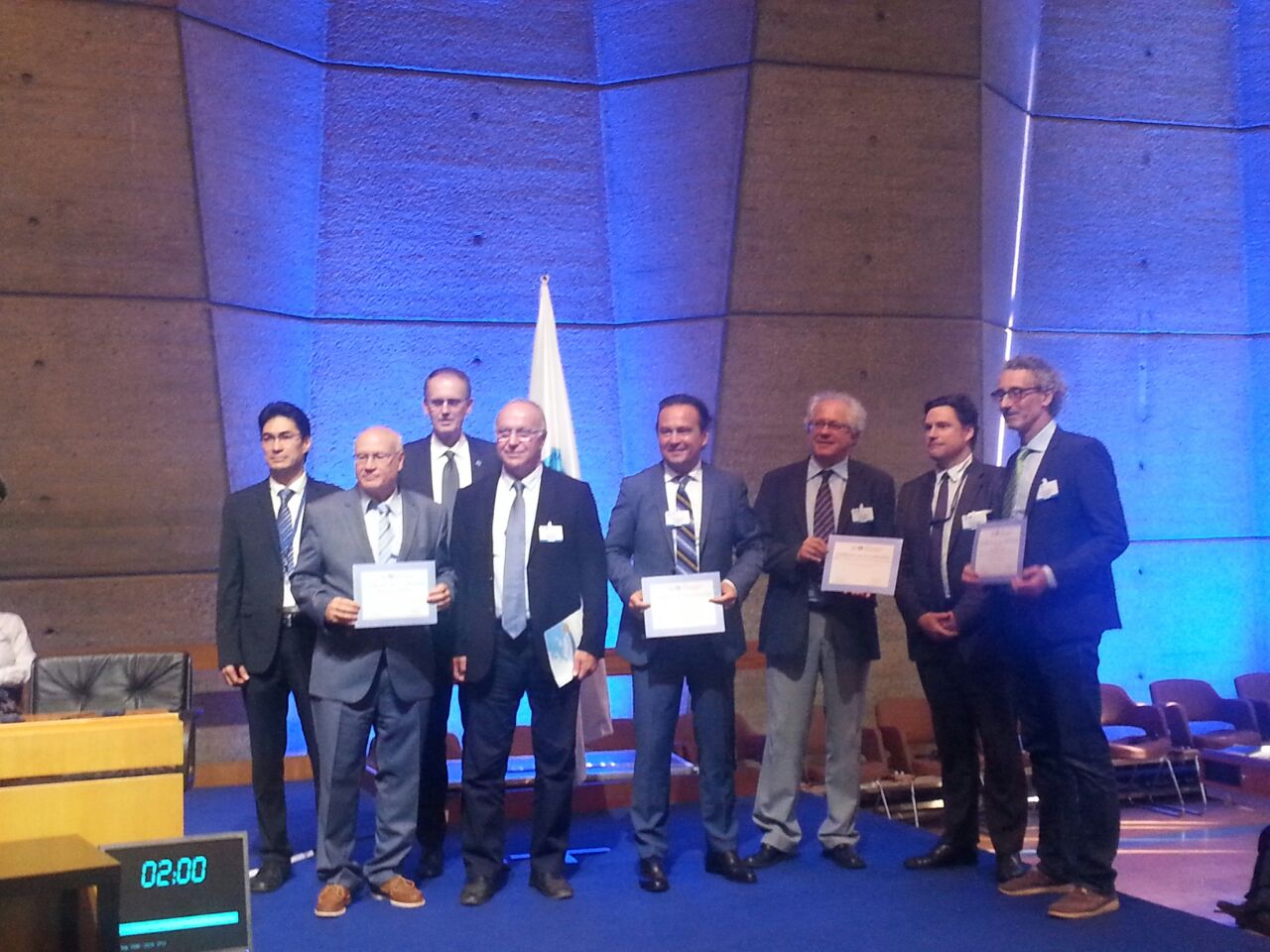
Certificate ceremony with Professor Peter Haugan (IOC Chairperson), Professor Ahmet Yalcine (ICG/NEAMTWS Chairperson), Dr Denis Chang Seng (ICG/NEAMTWS Technical Secretary) and representatives of TSPs
Mr. Hervé Tourmente and Mr François Schindele received the certificate as representatives of the CENALT. Dr Gerassimos Papadopoulos received the certificate on behalf of NOA. Dr Luigi D’Angelo and Dr Alessandro Amato received the certificate as representatives of CAT-INGV, while Professor Haluk Özener received the certificate as the Director of KOERI. Professor Özener said that ‘being a pioneer of earth observations in Turkey since its establishment in 1868, KOERI is proud to have been accredited as a NEAMTWS Tsunami Service Provider, delivering tsunami early warning in the Eastern Mediterranean, Aegean and Black Seas’. Dr Papadopoulos stressed ‘the accreditation of the HL-NTWC in September 2016 represents an important international recognition, but also signifies its increased commitments and responsibilities for the future”.
Mr Denis Chang Seng, the Technical Secretary for the ICG/NEAMTWS pointed out that ‘the accreditation of Tsunami Service Providers is unique among the four IOC coordinated tsunami warning systems (Pacific, Caribbean and Indian Ocean)’. The ICG/NEAMTWS has adopted a procedure whereby TSPs must be accredited, indicating that they comply with a number of requirements agreed upon by ICG/NEAMTWS. Tsunami Service Providers are the primary source of tsunami advisories to member states that subscribe to them.
IOC has provided intergovernmental coordination for the development of the North-eastern Atlantic, Mediterranean and connected seas Tsunami Warning and Mitigation System (NEAMTWS) since 2005 following the adoption of IOC Resolution XXIII-14. Since then there has been steady development of the system and in 2012 three candidate Tsunami Service Providers (in France, Greece and Turkey) started to operate while in 2014 a fourth candidate Tsunami Service Provider (in Italy) began to operate.
The Intergovernmental Coordination Group for the NEAMTWS had decided in 2012 that Candidate Tsunami Service Providers (CTSPs) should undergo an accreditation evaluation before they can formally be named a NEAMTWS Tsunami Service Providers (TSPs). The ICG/NEAMTWS at its twelfth session (16–18 November 2015, Dublin, Ireland) agreed on the process and the procedures for carrying out the ICG/NEAMTWS accreditation of a CTSP. The documentation procedures are based on the operational and organizational functions and requirements of Tsunami Service provider (TSP) adopted by the ICG NEAMTWS. An accreditation evaluation was carried out by the Intergovernmental Coordination Group for NEAMTWS from June–September 2016.The reports of the accreditation evaluations were examined at the ICG/NEAMTWS XIII session (Bucharest, 26-28 September 2016).The ICG session approved the accreditation of the four Tsunami Service Providers.
Risques de Tsunami : Promouvoir les systèmes de surveillance et d'alerte
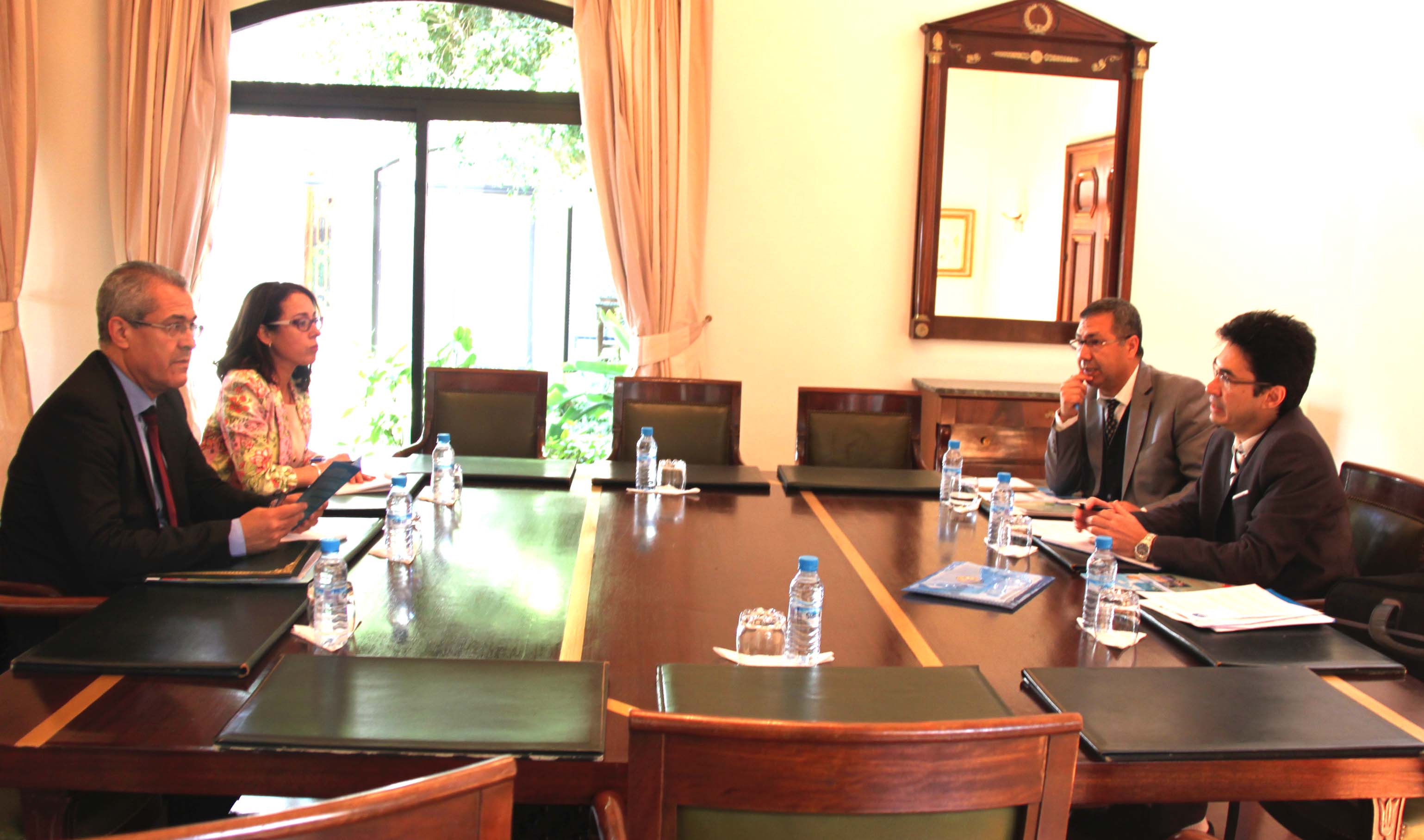
En vue de la prévention, de la préparation aux risques de Tsunamis et aux risques liés aux hausses du niveau de la mer, des consultations avec plusieurs institutions nationales et internationales ainsi qu’avec le groupe de travail restreint du plan de contingence du système des Nations unies ont eu lieu du 24 au 28 avril 2017 à Rabat dans le cadre du programme de Système d'alerte précoce et d'atténuation des tsunamis dans l'Atlantique du Nord-Est, la Méditerranée et les mers liées “Tsunami Early Warning and Mitigation System in the North-eastern Atlantic, the Mediterranean and connected seas (ICG/NEAMTWS)” de la Commission Océanographique Intergouvernementale de l’UNESCO (COI).
- La Commission nationale marocaine pour l’éducation, les sciences et la culture
- La Direction de la Science et de la Technologie à l’ISESCO
- La Direction Générale de la Protection Civile Marocaine
- L’Unité de Gestion des risques de catastrophe au Ministère de l’Intérieur
- La Direction du partenariat, de la communication et de la coopération au Ministère de l’Energie, des Mines et du Développement durable
- Le Centre National de la Recherche Scientifique et Technique (CNRST)
- Le Centre Royal de Télédétection Spatiale
- Le Ministère de l’Aménagement du territoire national, de l’Urbanisme, de l’Habitat et de la Politique de la ville
Cette mission a permis de constater les grands efforts entrepris par les pouvoir publics pour la prévention contre les risques de catastrophes et l’intérêt porté à l’appui de l’UNESCO et de la COI pour la prise en compte du risque Tsunami et des risques liés au niveau de la mer, leur intégration au niveau stratégique et sur le plan territorial
More Articles...
- Eleventh Session of the ICG/IOTWMS
- Booklet - 10 Years of the North-Eastern Atlantic, the Mediterranean and Connected Seas Tsunami Warning and Mitigation System (NEAMTWS): Accomplishments and Challenges in Preparing for the Next Tsunami
- Global Service Definition Document
- Intersessional Meeting of the ICG/IOTWMS Working Group 1 on Tsunami Risk, Community Awareness and Preparedness
About the Tsunami Programme
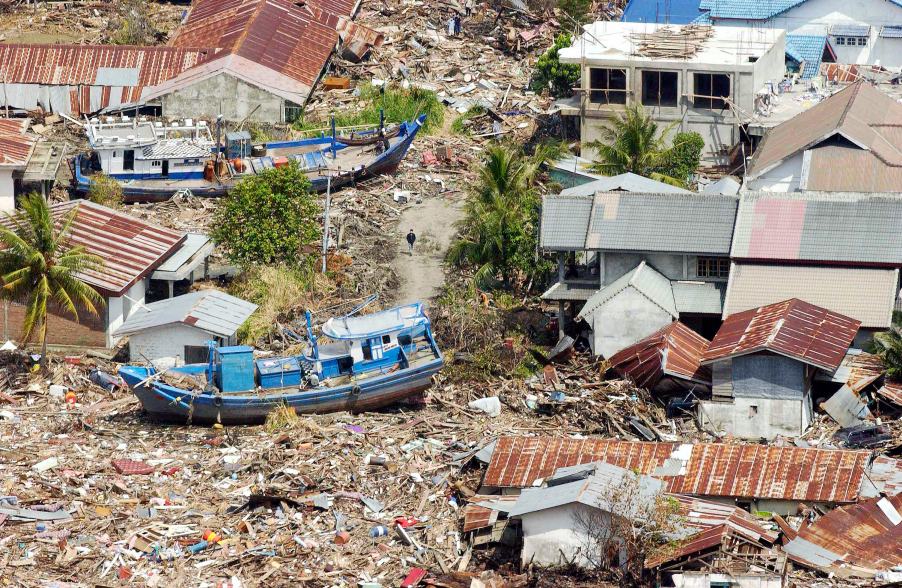
The Indonesian coast, between Banda Aceh and Meulaboh, after the earthquake and the tsunami of 26 December 2004. Photo by Evan Schneider © UN Photo
UNESCO supports Member States in improving capabilities for tsunami risk assessment, implementing early warning systems and enhancing preparedness of communities at risk. UNESCO works closely with national institutions and promotes inter-institutional and regional cooperation. Specialized regional centers provide tsunami information that, together with national analysis, is the basis of the warnings issued for the public. In addition, UNESCO promotes community-based approaches in the development of response plans and awareness campaigns which strongly involve education institutions and end-users.
Upcoming Events
7 August 2024
19 August 2024
19 - 30 August 2024
Chile