Sea Level Monitoring
TSU/MAB Coastal Hazards Project
Preserving the Story of the 1995 Tsunami in Dili, Timor-Leste
In collaboration with the Government of Indonesia, UNESCO has documented eyewitness accounts from the 1995 tsunami in Dili, Timor-Leste, adding to an already vast database of tsunami eyewitness accounts in the Indian Ocean.
On May 14, 1995, a magnitude 6.9 Mw earthquake occurred at 08:33 pm (11:33 UTC) in the Flores Sea, hitting Timor-Leste. Eleven people went missing and 19 were injured. A 1.5-meter tsunami caused considerable damage in the Dili area and Maliana region, destroying several homes, damaging 40 fishing boats, and leaving hundreds of cattle missing.
Timor-Leste is part of the Pacific Ring of Fire, an area with a high degree of tectonic activity with the constant risk of volcanic eruptions, earthquakes, floods, and tsunamis.
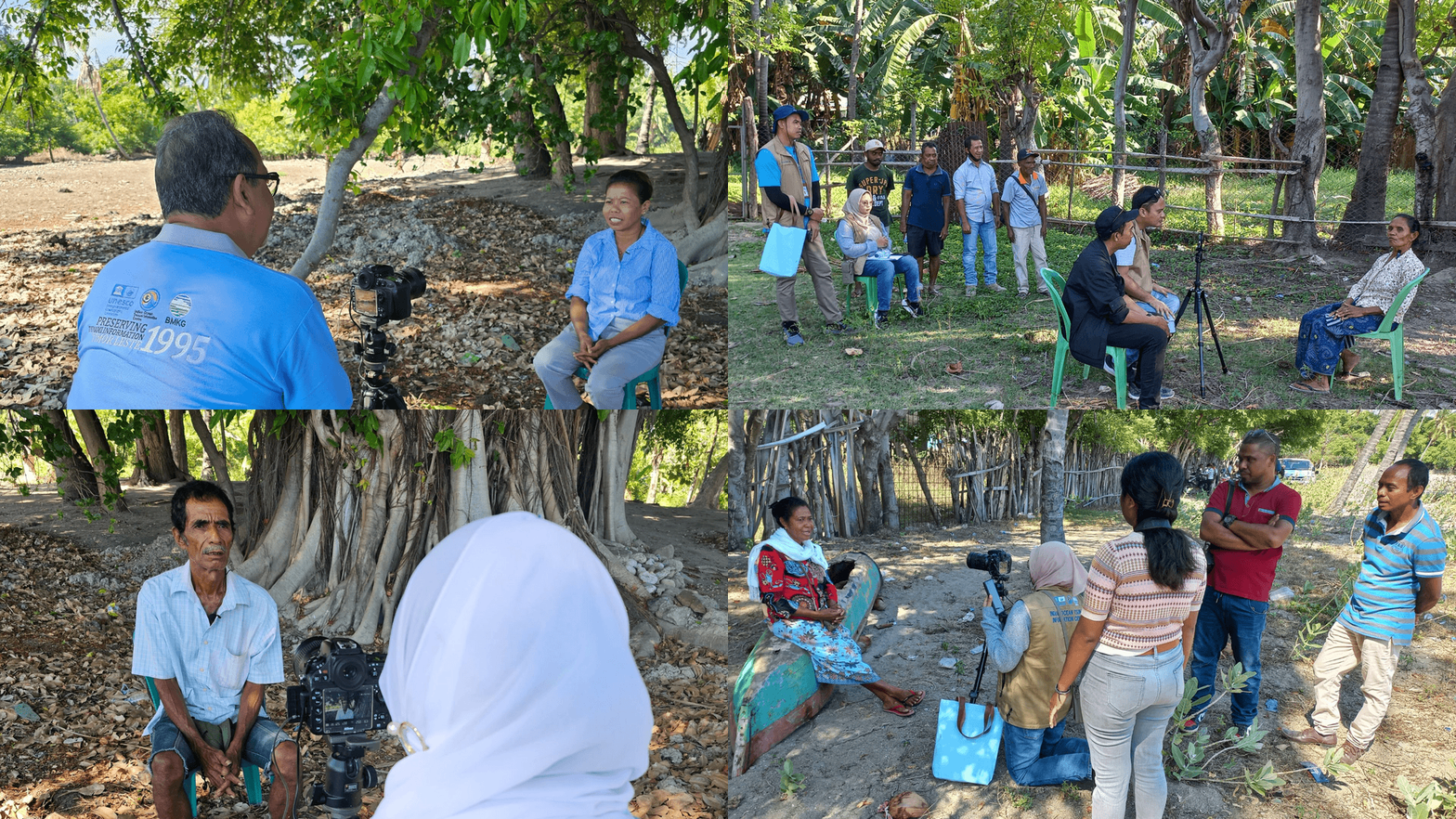
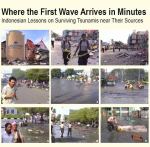
Photos: Interviews with eyewitness of the 1995 Dili Tsunami in Timor-Leste.
Tsunamis can be devastating for the coasts and their communities, often resulting in lasting and damaging effects on marine ecosystems and coastal landscape, causing long-term coastal erosion. On May 14, 1995, a magnitude 6.9 Mw earthquake occurred at 08:33 pm (11:33 UTC) in the Flores Sea. Eleven people were missing and 19 injured. A 1.5-meter tsunami caused considerable damage in the Dili area and Maliana region, destroying several homes, damaging 40 fishing boats, and hundreds of cattle missing.
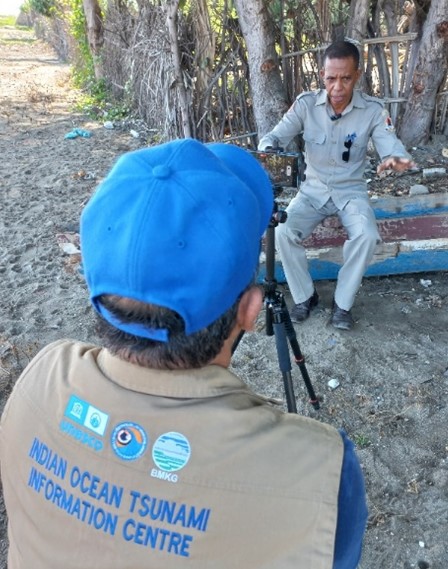
"We were praying when we felt the earth slightly shaking that night. I was 21 years old and lived next to the Marinir village where the tsunami happened. It was a fishermen's village with boats on the beach, several huts, and a lot of cattle. After the shaking stopped, we tried to go to the coast, as my brother, Avril Soares, was there. It was strange, as the sea water seemed to be closer than it used to be, however we could not see anything clearly. As the sun rose, we could not see anything on the beach, no boats, no cattle, no huts, we only saw the top of a coconut tree in the sea. Nine villagers died, including my brother," recounted Abel Maria Soares, eyewitness of the tragic event.
Photo: Abel Maria Soares, eyewitness of the 1995 Dili Tsunami in Timor-Leste.
To preserve the memory of the 1999 Dili Tsunami, the Indian Ocean Tsunami Information Centre (IOTIC) of UNESCO’s Intergovernmental Oceanographic Commission (IOC/UNESCO), in collaboration with the Timor-Leste Civil Protection Authority and the Indonesian Meteorology, Climatology and Geophysics Agency (BMKG), documented 37 eyewitness testimonies from Madohi, Tibar, and Comoro.
“I and four of my friends were on the beach, I went to get a meal and my friends stayed on the beach. After the earthquake I went back to the beach, but everything was gone, including my friends. That time (1995) we did not know anything about tsunamis. What happened was after the earthquake the beach collapsed and the sea water filled in. It is not like the wave rose and people could run away; the sea just filled in the land that was gone,” explains Tobias Lobo, another eyewitness of the 1995 Dili Tsunami.
Demystifying what happens during and after tsunamis strike, these testimonies are crucial not only to preserve past tsunami information, but also to inform future preparedness activities and public awareness.
In the Indian Ocean, these tsunami preparedness activities are funded through the IOTIC-BMKG programme with the objective to document and communicate the effects of past tsunamis, and ensure that the information is available to the public through public awareness, education, and preparedness based on real events.
The IOTIC-BMKG programme has documented 319 eyewitnesses and survivors’ stories of 7 past tsunamis (1945 Makran Tsunami; 1950 Ambon Tsunami; Central Sulawesi Tsunamis (1938, 1968, and 2018); 1992 Flores Tsunami; 1994 Banyuwangi Tsunami; 1996 Biak Tsunami, and 2000 Banggai Tsunami).
The stories are available to the public via education booklets and the IOTIC YouTube channel.