Sea Level Monitoring
TSU/MAB Coastal Hazards Project
NEAMWave14 successfully undertaken
The tsunami alert exercise that took place from the 28 to the 30 October in the Mediterranean, North-eastern Atlantic, and the Black Sea has been marked by a strong participation of the civil protection authorities. This simulation aimed at t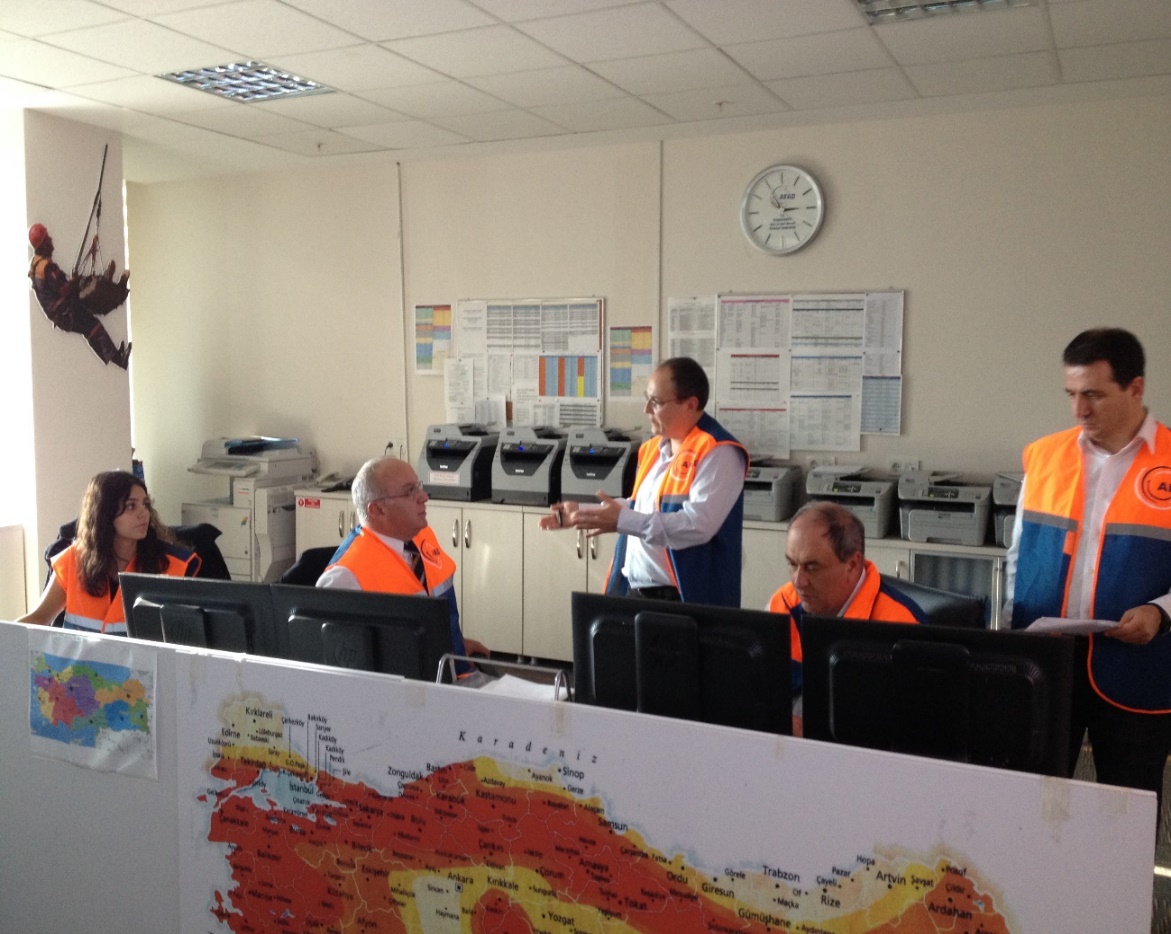 esting the preparedness of the countries participating in the NEAMTWS established by the IOC of UNESCO.
In comparison to the first test organized in 2012, more Civil Protection Authorities (from 5 to 14) took part in the exercise. This exercise has been also the occasion to test the mainstreaming into the NEAMTWS system of the standard operational procedures of the Emergency Response Coordination Centre of the European Commission, which co-funds the exercise, for providing international assistance through the Union civil protection mechanism in case of major disasters.
For certain countries, e.g. Spain, Lebanon, Romania, UK, this exercise was the first occasion to establish contracts among the actors concerned with tsunami risk at national level.For the first time, countries bordering the Black Sea, like Romania and Russia, participated in the exercise.
During the exercise some communication issues has been identified, providing the opportunity to learn some lessons regarding, in particular, the use of some communication technologies.
The exercise, named NEAMWave14, simulated 4 earthquakes generating tsunamis in the Mediterranean, north-eastern Atlantic, and Black Sea. In total 20 countries, Croatia, Cyprus, Egypt, Finland, France, Germany, Greece, Ireland, Israel, Italy, Lebanon, Malta, Monaco, Portugal, Romania, Russia, Spain, Sweden, Turkey, and the United Kingdom out of 39 NEAMTWS Member States took part in the exercise.
IOC-UNESCO-ISESCO Workshop Report
We are pleased to announced the release of the workshop report on "Improving Tsunami Warning and Emergency Response in the North-Eastern Atlantic, Mediterranean and Connected Seas" held on 23 and 24 September 2014 in Rabat, Morocco, and organized by the Intergovernmental Oceanographic Commission (IOC) of UNESCO together with the Islamic Educational, Scientific and Cultural Organization (ISESCO), the UNESCO for the Maghreb based in Rabat, and the Centre National pour la Recherche Scientifique et Technique of Morocco.
The workshop gathered representatives of governmental, scientific and emergency management institutions from the Maghreb countries with the aim of presenting the recent developments of the Tsunami Early Warning and Mitigation System in the North-Eastern Atlantic, the Mediterranean and Connected Seas (NEAMTWS), and preparing for the tsunami exercise, NEAMWave 14, which took place from 28 to 30 October 2014.
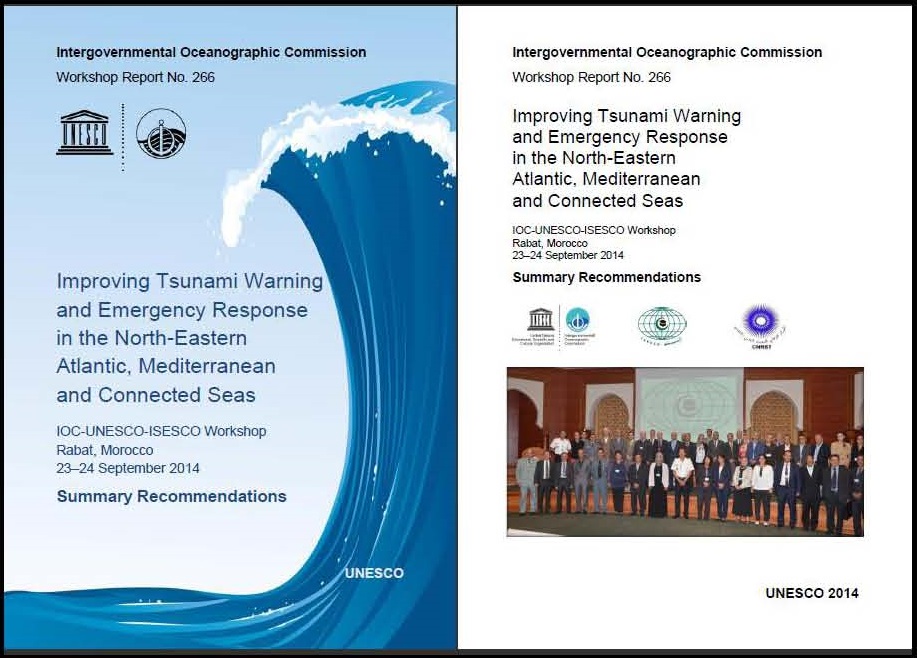
For more information, please visit: http://unesdoc.unesco.org/images/0023/002305/230519m.pdf
The Dominican Republic government, with UN support, put into effect Standard Operating Procedures (SOPs) to save lives and prevent property loss in case of tsunamis.
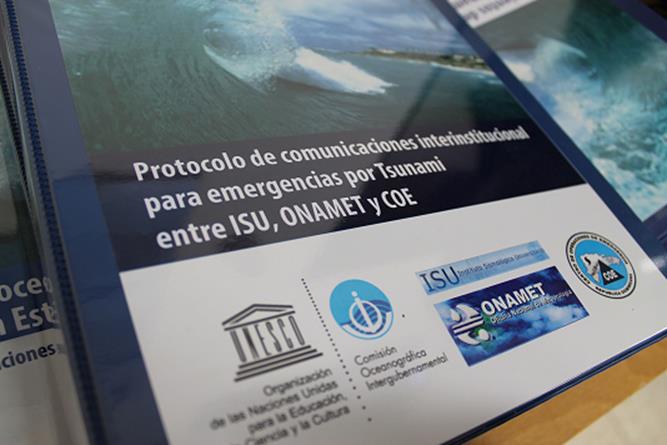
During a ceremony held on Monday October 27 at the United Nations House, representatives of the Center for Emergency Operations (COE), the Seismological Institute University (ISU-UASD) and the National Meteorological Office (ONAMET) committed to ensuring the implementation of the Manual that defines the roles of each entity in the event of tsunamis.
This activity is supported by UNESCO / IOC and the United Nations Development Programme (UNDP) under the project "Communities resilient to earthquakes and tsunamis in Puerto Plata" which is funded by the Directorate General for Humanitarian Aid and Civil Protection of the European Commission and the Spanish NGO Anesvad.
The Deputy Resident Representative of UNDP, Luciana Mermet, announced that on Thursday October 30 an evacuation drill in cooperation with the local team "Tsunami Action" in Puerto Plata and the education sector. The goal will be to evacuate more than two thousand students from five schools in Puerto Plata which are located in areas vulnerable to earthquakes and tsunamis.
Mermet shared the head table with the deputy director of the Emergency Operations Center, Edwin Olivares, director ONAMET Gloria Ceballos, the representative of ISU, Felix Martinez, the program officer of the European Commission, Gina Sosa, the coordinator of the Risk Management Unit of the Ministry of Education, Milagros Yost, the representative of the National Emergency Commission, José Jose Alcantara and Professor Miguel Llivina of UNESCO Office in La Havana.
EXERCISE NEAMWave 14
NEAMTWS Secretariat is launching its Second Tsunami Warning and Communication Exercise (NEAMWave 14) for the North-Eastern Atlantic, the Mediterranean, and Connected Seas Region that will take place from 28 to 30 October.
Twenty-one countries out of the 39 involved in ICG/NEAMTWS will participate in the Exercise bringing them the opportunity to test the efficiency of the communication systems in charge of transmitting tsunami alerts and, in some countries, to ensure that the authorities in charge of public safety are prepared to face such a threat.
In order to prepare the participants and to inform the population, the Exercise Team has prepared the Manual Tsunami Warning and Communication Exercise. The NEAMTWS Secretariat has developed the flyer Exercise NEAMWave 14.
For more information, please visit:
International Conference: "The Indian Ocean Tsunami Warning and Mitigation System 10 years after the Indian Ocean Tsunami: Achievements, Challenges, Remaining Gaps and Policy Perspectives"
The Indian Ocean Tsunami on 26th December 2004 resulted in the loss of over 230,000 lives including over 2,500 foreign tourists, and the displacement of over 1.6 million people around the Indian Ocean, with estimated economic losses of $14 billion. The catastrophe brought renewed focus on the need for a regional tsunami warning system in the Indian Ocean. Following the disaster, the Intergovernmental Oceanographic Commission (IOC) of UNESCO was given the mandate to develop and implement an Indian Ocean Tsunami Warning and Mitigation System (IOTWS). An Intergovernmental Coordination Group (ICG) for the IOTWS was established by the IOC Assembly in July 2005.
To commemorate the 10th anniversary of the Indian Ocean Tsunami, IOC UNESCO and the Indonesian Agency for Meteorology for Climatology and Geophysics (BMKG) are sponsoring and organising a conference to recognise the achievements of the last 10 years, to highlight work that still needs to be done, and to seek re-commitment to continued investment in the IOTWS. The conference will be held at the BMKG Auditorium in Jakarta, Indonesia, 24-25 November 2014 and will offer high level perspectives from invited speakers and panel discussions from decision makers and scientists. The 2nd announcement for the conference provides further details of the conference programme.
The conference is open attendance and there is no registration fee. Registration can be completed online at: www.ioc-unesco.org/IOTconference2014. For further information please contact Mr Tony Elliott, Head of ICG/IOTWS Secretariat, at: This email address is being protected from spambots. You need JavaScript enabled to view it..
More Articles...
- The second edition of the Post-Tsunami Survey Field Guide has been realeased
- Community drill exercise for tsunami in the district of Petit Anse-Cap Haitian, Haiti
- Third Session of Community Workshops on Tsunami Preparedness and Response for Dominican Republic
- Workshop on Standard Operating Procedures for Tsunami Warning and Emergency Response for Northern and Western Indian Ocean Countries
About the Tsunami Programme
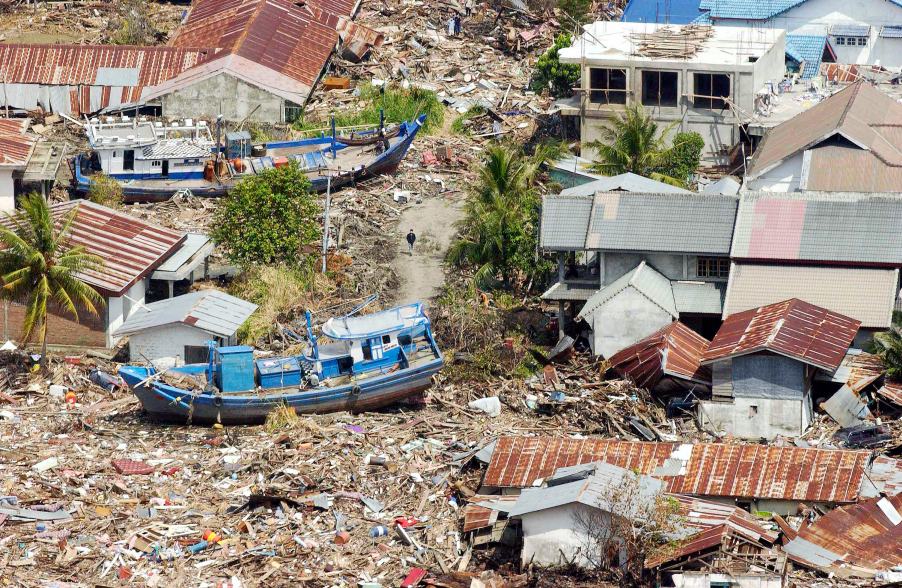
The Indonesian coast, between Banda Aceh and Meulaboh, after the earthquake and the tsunami of 26 December 2004. Photo by Evan Schneider © UN Photo
UNESCO supports Member States in improving capabilities for tsunami risk assessment, implementing early warning systems and enhancing preparedness of communities at risk. UNESCO works closely with national institutions and promotes inter-institutional and regional cooperation. Specialized regional centers provide tsunami information that, together with national analysis, is the basis of the warnings issued for the public. In addition, UNESCO promotes community-based approaches in the development of response plans and awareness campaigns which strongly involve education institutions and end-users.
Upcoming Events
7 August 2024
19 August 2024
19 - 30 August 2024
Chile