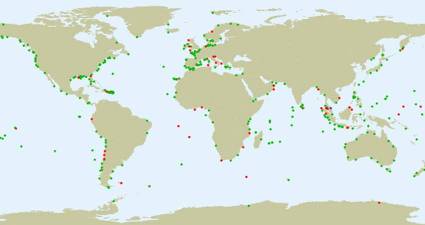
Sea Level Monitoring
TSU/MAB Coastal Hazards Project
2nd Integrated Intersessional Meetings of ICG/IOTWMS
At its 11th session, held in Kuala Lumpur, Malaysia, 18-20 April 2017, the Intergovernmental Coordination Group (ICG) for the Indian Ocean Tsunami Warning and Mitigation System (IOTWMS) decided to hold integrated intersessional meetings of the Working Groups, Standard Operating Procedure (SOP) workshops, post-Indian Ocean Wave (IOWave) workshops and Indian Ocean Tsunami Information Centre (IOTIC) workshops to optimise resources. The first integrated meetings were held in Jakarta, Indonesia during September 2017 and the second integrated meetings were held in Hyderabad, India during June 26 - July 14, 2018.
The second Integrated intersessional meetings were hosted by the Government of India through the Indian National Centre for Ocean Information Services (INCOIS) and facilitated by IOTIC, UNESCO-Jakarta Office and the ICG/IOTWMS Secretariat. The Secretary to the Government of India, Ministry of Earth Science, Dr. Rajeevan M. Nair inaugurated the meetings. The meetings were attended by 66 participants and experts from 16 Countries (Australia, Bangladesh, Comoros, Germany, India, Indonesia, Iran, Kenya, Madagascar, Myanmar, Oman, South Africa, Sri Lanka, Tanzania, Thailand and United Kingdom) and 1 UN agency.
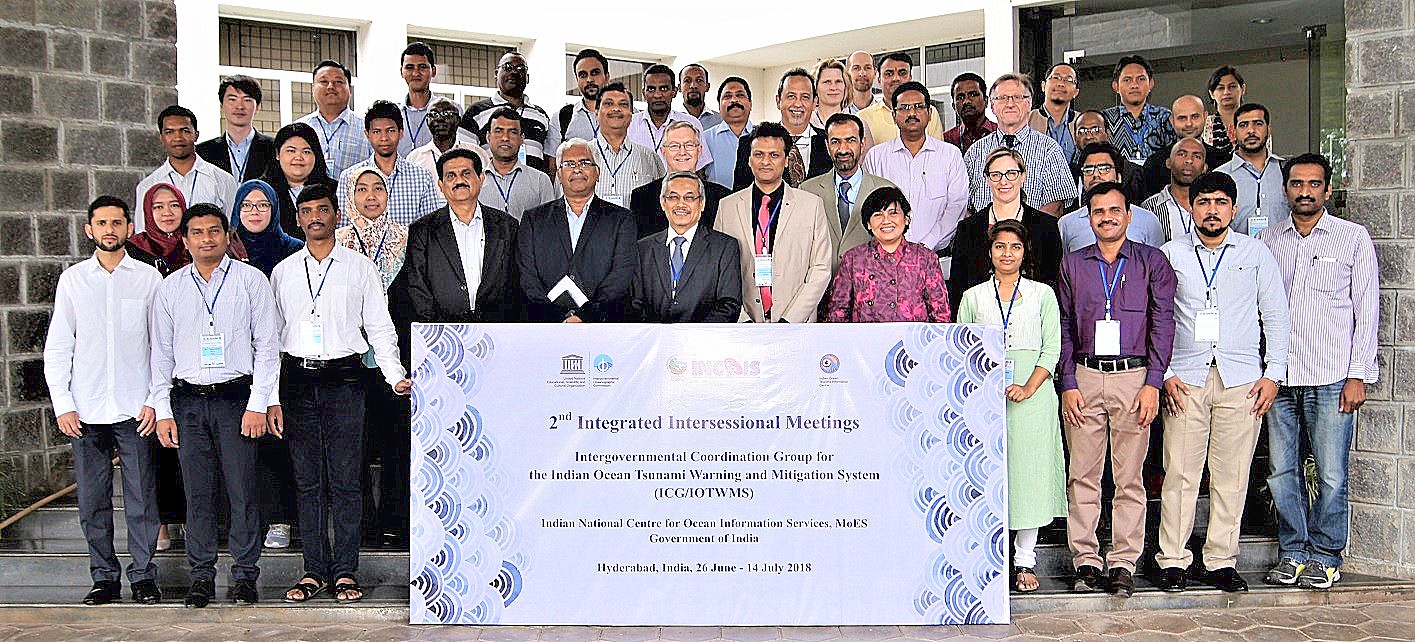 Partcipants and experts at the 2nd Integrated Intersessional Meetings of the ICG/IOTWMSIndian National Centre for Ocean Information Services (INCOIS), Hyderabad, 26 June - 14 July 2018.
The meetings comprised the following back-to-back events:
• Training on Tsunami Emergency Maps, Plans and Procedures (TEMPP-2)
• Intersessional Meeting of the Working Group 1 on Tsunami Risk, Community Awareness and Preparedness
• Intersessional Meeting of the Working Group 2 on Tsunami Detection, Warning and Dissemination
• Intersessional Meeting of the Task Team on Indian Ocean Wave 2018 (IOWave18)
• Intersessional Meeting of the Task Team on Capacity Assessment for Tsunami Preparedness
• Intersessional meeting of the Subregional Working Group for the North West Indian Ocean
• Training on Tsunami Warning Centre Operations and Standard Operating Procedures for Tsunami Warning and Emergency Response
TEMPP-2 training, held during 26 June to 5 July 2018, is the second in a series of trainings organised by the IOC at the request of IOTWMS Member States to facilitate piloting the Indian Ocean Tsunami Ready programme. Participants of TEMPP-2 were trained on evacuation planning based on inundation models and were responsible for the development of the tsunami evacuation maps, plans and procedures.
The training on Tsunami Warning Centre Operations and Standard Operating Procedures (SOPs) for tsunami warning and emergency response was held on 10–14 July 2018. The training enabled ICG/IOTWMS Member States to develop integrated end-to-end SOPs for tsunami warning and emergency response and Disaster Management Organisations to develop SOPs for implementing national and local responses to tsunami warnings issued by the National Tsunami Warning Centres.
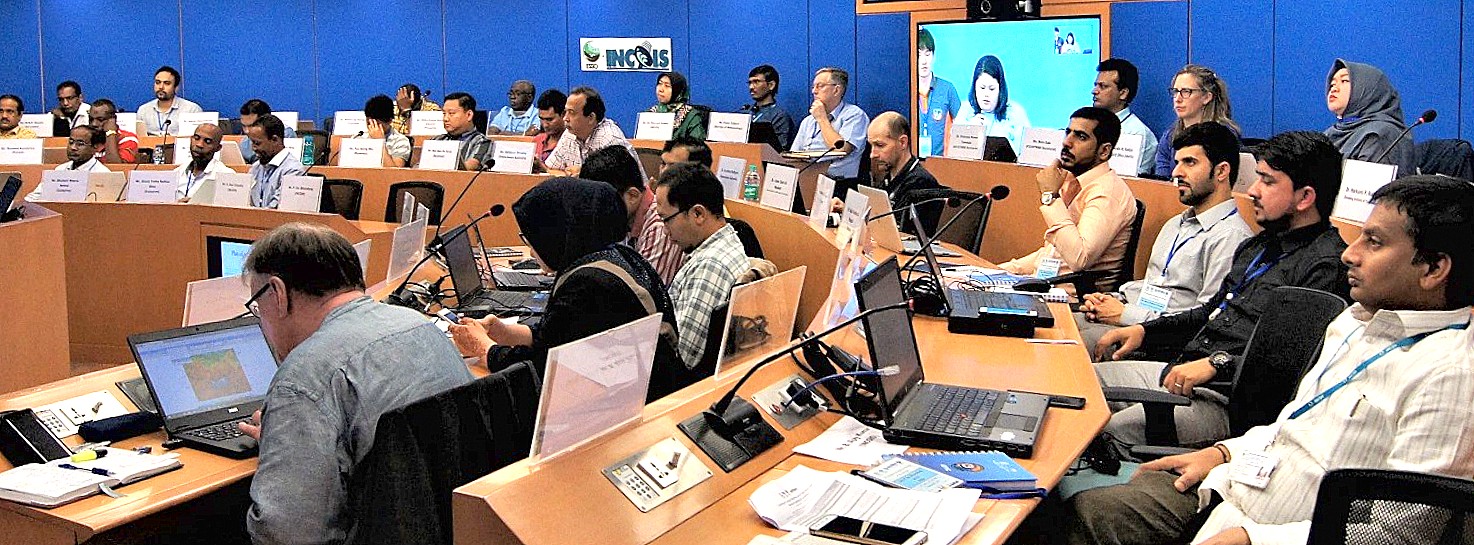
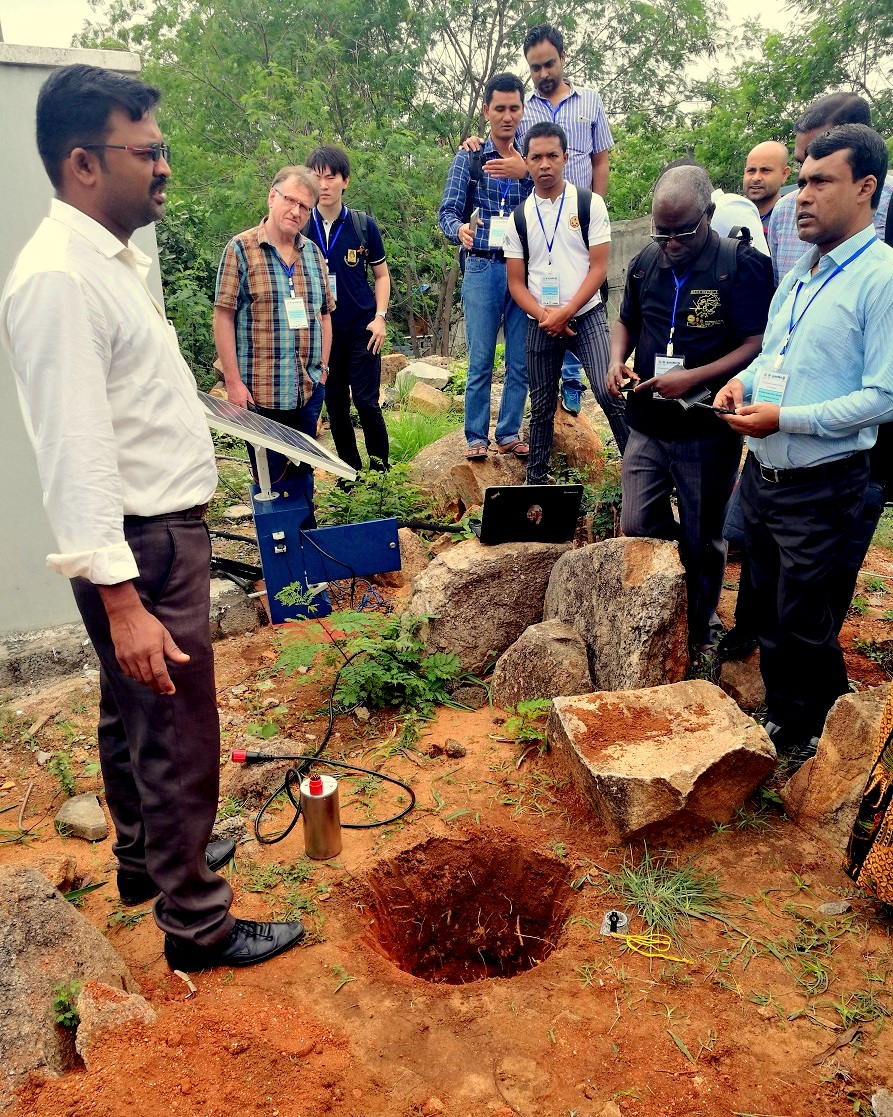 Training on Tsunami Warning Centre Operations and Standard Operating Procedures for Tsunami Warning and Emergency Response. Left-hand-side: Participants learning at the International Training Centre for Operational Oceanography, INCOIS; Right-hand-side: On-site field instruction on seismometer installation.
Furthermore, both trainings enhanced capacities of Member States to participate in the IOWave18 Exercise scheduled for 4–5 September 2018.
The Working Group and Task Teams had the opportunity to assess achievements during the intersessional period and outstanding activities against their work plans leading up to ICG/IOTWMS-XII, to be held at Kish Island, Iran during 03-06 March 2019. Key activities included drafting the online Capacity Assessment Survey questionnaire, updating TSP Service definition document, formulating the IOTWMS Medium term strategy, and progressing seismic data sharing in the North West Indian Ocean region.
More information is available on the meeting website.
The Pacific Tsunami and Warning System Steering Committee meets in Hawai‘i
The Steering Committee for the Pacific Tsunami and Warning System (PTWS) and its various working groups met in Honolulu, Hawaii, USA from 4th to 8th June to discuss progress of work assignments and activities since the 27th Session of the Intergovernmental Coordination Group (ICG) for PTWS held in Tahiti, French Polynesia in March 2017, and to plan for the next ICG Session in 2019.

The meetings were attended by the chairs and co-chairs of PTWS working groups and its task teams, as well as a number of national representatives including heads of tsunami warning centres and disaster management offices from the Republic of Fiji, Solomon Islands and Tonga,
The three PTWS technical working groups – WG 1 – Understanding Tsunami Risk, WG 2 – Tsunami Detection, Warning and Dissemination, and WG 3 – Disaster Management, Preparedness and Reduction, met on 4th and 5th June followed by a meeting of the Regional Working Group on Tsunami Warning and Mitigation in the Pacific Islands Countries & Territories (PICTs) on 6th June. Reports of these meetings along with reports received from other regional WGs and their task teams were presented to the PTWS Steering Committee that met on 7th and 8th June. The outcomes and reports of the meetings are available from the UNESCO - Intergovernmental Oceanographic Commission (IOC) website. It was very encouraging to see Pacific Island Countries and Territories (PICTs) very actively participating and contributing to PTWS programmes and activities, both at regional and Pacific levels.
(Note taken from the UNESCO Office for Pacific States Newsletter April-June 2018, contact: Ms Yi SHi This email address is being protected from spambots. You need JavaScript enabled to view it. )
The Symposium: Advances in Tsunami Warning to Enhance Community Responses
Coming from 25 countries and six international organizations, 105 physical and social scientists, warning system operators, emergency and response managers, attended the UNESCO/IOC Symposium on Advances in Tsunami Warning to Enhance Community Responses from 12 to 14 February 2018 at UNESCO, Paris. The symposium was organized by the Intergovernmental Oceanographic Commission of UNESCO.
The aim of the symposium was to:
1) Review the latest and potential new technologies and procedures for estimating tsunami threat and test their suitability and feasibility for providing more timely and accurate warnings. 2) Consider ways of estimating uncertainties associated with threat assessments and optimal ways of conveying these uncertainties to decision-makers. 3) Examine ways of utilising enhanced tsunami threat information in making decisions with regards to emergency responses. 4) Provide information on the latest technologies for disseminating tsunami warning information to responders and communities. 5) Formulate roadmaps for developing and implementing new technologies, procedures and their application to enable more effective community responses to tsunami threats.
Welcoming remarks were provided by Vladimir Ryabinin, Executive Secretary of IOC and Assistant Director-General of UNESCO.
Summary statement of the symposium is available at:
Kingdom of Netherlands supports community preparedness and tsunami awareness in the Caribbean
They say it takes a village to raise a child, but what does it take to raise a village into a tsunami-ready community? In 2017, the Caribbean Tsunami Information Centre (CTIC) of UNESCO’s Intergovernmental Oceanographic Commission (IOC) made considerable progress to improve early warning systems, public awareness and preparedness in the region thanks to a €80,000 contribution from the Kingdom of Netherlands.
Located in Barbados, CTIC is an organ of the UNESCO/IOC-led Intergovernmental Coordination Group for the Tsunami and Other Coastal Hazards Warning System for the Caribbean and Adjacent Regions (ICG/CARIBE EWS), with the mission to mitigate the impact of tsunamis and coastal hazards in the region through tsunami awareness, training and educational activities.
The funding contributed mainly to the organization of the Caribbean Safe School Ministerial Forum (3-4 April 2017, Antigua and Barbuda) and the Regional Training Workshop on Pacific Tsunami Warning Center Enhanced Tsunami Products for ICG/CARIBE EWS (31 October-2 November 2017, Cartagena, Colombia).
To support the development of an enhanced collaborative and coordinated approach around school safety among the region’s education sector, the Ministerial Forum launched the Caribbean Safe School Initiative (CSSI). This Initiative will strengthen the framework put forward by UNISDR’s Worldwide Initiative for Safe Schools and more globally contribute to the Samoa Action Plan for SIDS, the Global Action Programme on Education for Sustainable Development, the Sendai Framework for Disaster Risk Reduction and the 2030 Agenda for Sustainable Development.
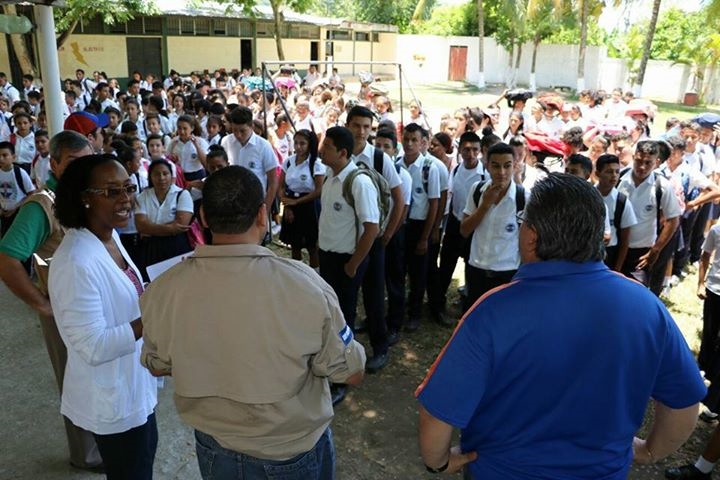 A Regional Road Map for School Safety is also under development to outline the actions required to successfully create an enabling environment and safe learning facilities, as well as implement school disaster management and risk reduction education.
On a more technical level, the Regional Training Workshop sought to improve tsunami preparedness and the capacity of tsunami warning focal points, national tsunami warning centres and tsunami emergency responders to effectively receive, analyse and take appropriate action in response to tsunami forecast products for the Caribbean and its adjacent regions. The event covered topics such as warning messages and alerting, evacuation concepts and planning, awareness strategies and lessons learned from the extremely active 2017 hurricane season. Over 84% of respondents found the training and resource materials to be very effective.
The contribution was also used to advance the development of the CTIC website, which aims to be a regionally focused digital platform for accessing CTIC resources and tsunami and other coastal hazards information, and the planning of the annual CARIBE WAVE exercise for 2018, which saw the participation of at least 383,510 people. This regional exercise provides an opportunity for national disaster management officials and hundreds of thousands of the region’s population to test their national plans and procedures. The 2017 exercise is the largest international tsunami exercise to date, with over 740,000 participants from 32 nations and 15 territories.
Furthermore, the funding from the Kingdom of Netherlands helped strengthen community preparedness and awareness through CTIC’s support to the implementation and promotion of the UNESCO/IOC Tsunami Ready Programme, a performance-based community recognition programme, in Omoa, Honduras; St. Patrick’s, Grenada; and Fort-Liberté, Haiti.
Response times key to reducing tsunami deaths
Speaking at the Symposium on Advances in Tsunami Warning to Enhance Community Responses, François Schindelé, from the French National Tsunami Center (CENALT) said: “Since the creation of the Indian Ocean Tsunami Early Warning in 2005, considerable progress has been made in terms of tsunami detection and monitoring technologies, awareness and education. But much more needs to be done to reduce the time response and the accuracy of messages delivered to the civil protection agencies and emergency responders. We also need to better predict the height of tsunami waves, their run up and how far inland they would flood to save more lives in the future.”
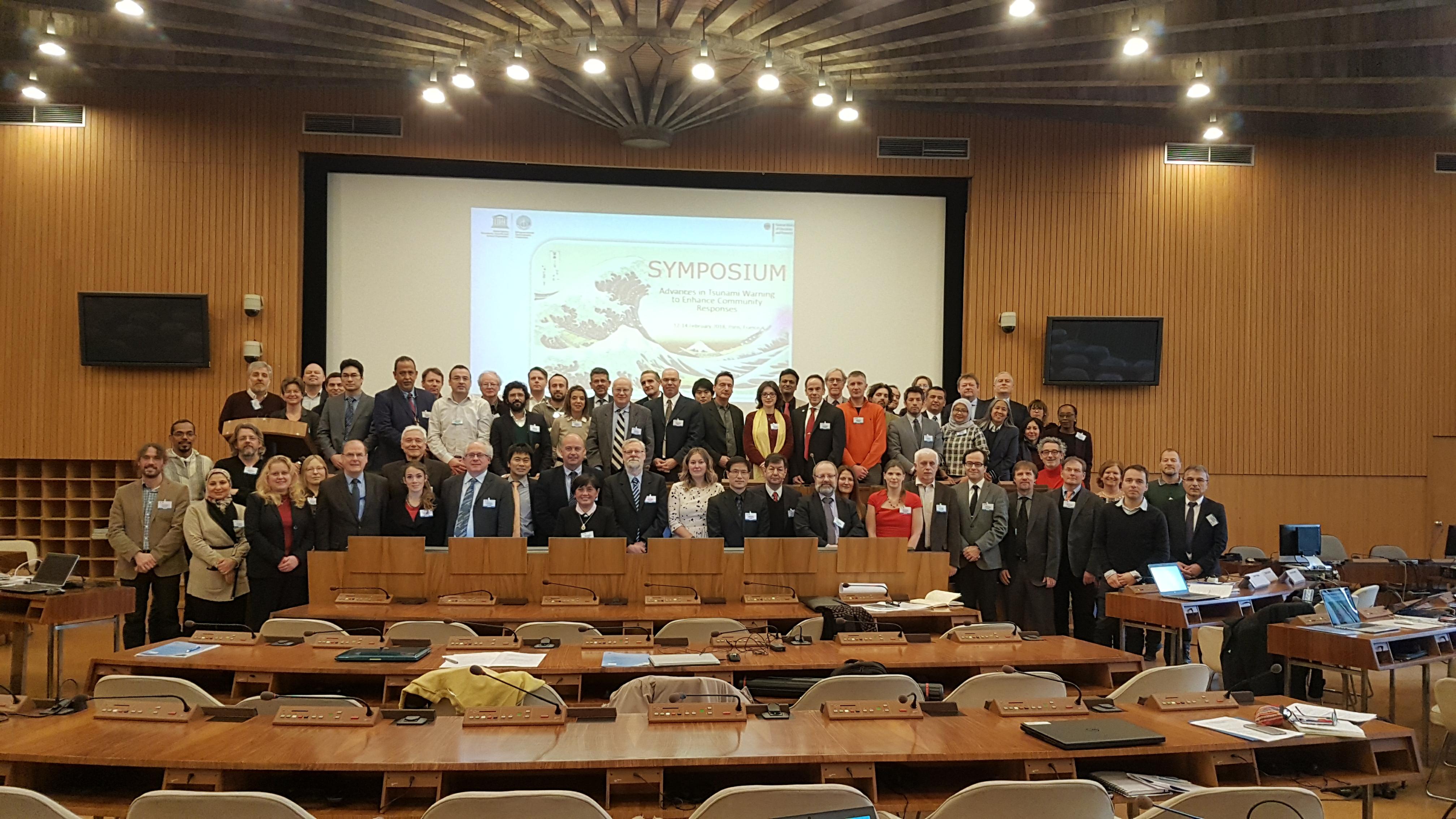
The symposium was hosted by UNESCO’s Intergovernmental Oceanographic Commission (IOC) to discuss the latest developments in tsunami early warning research and technologies to better protect millions of people at risk of tsunamis.
Since the year 2000, more than 11 million people have been affected by tsunamis and more than 250,000 persons lost their lives.
Over 100 seismologists, researchers, representatives of civilian protection authorities, operational centres, national monitoring and prevention services assessed the successes and limitations of current warning systems in past tsunamis, the role of traditional media and social media in alerting the public and what information is needed for effective community response.
Participants highlighted the need for science to work more closely with emergency responders and policy makers, and how education and public awareness are essential to better protect coastal communities, noting that many communities will be at even greater risk of tsunami and floods with sea-level rise.
Vladimir Ryabinin, IOC Executive Secretary, opened the symposium and referenced the global plan for reducing disaster losses, the Sendai Framework for Disaster Risk Reduction, adopted three years ago by UN member States.
“We still have a long way to go before achieving Target G of the Sendai Framework, which aims at substantially increasing the availability of multi-hazard early warning systems and disaster risk reduction policies by 2030, but we are moving ahead and making considerable progresses,” said Mr. Ryabinin.
He highlighted the importance of rethinking early warning systems in the lead up to the UN Decade of Ocean Science for Sustainable Development (2021-2030).
“We often congratulate ourselves on saving lives which is deeply important, but saving infrastructure and reducing economic losses is much more complicated. Here is where coastal zone management can help, allowing us to effectively determine risk zones and come up with preventive development plans,” said Mr. Ryabinin.
Compared to 2004, when there was only one Early warning System in place in the Pacific (Hawaii), the planet is safer. The Global Early Warning System now comprises four major Early Warning Systems in the Pacific Ocean (1965), Indian Ocean (2005), the Caribbean Sea and adjacent regions (2006), and the Mediterranean and Northeastern Atlantic (2012), covering all regions of the world.
These systems have been key to reducing loss of life from tsunamis in recent years.
“No matter if you have the best advanced technologies, people need to trust the system and understand locally what to do to save their lives,” said Laura Kong, Director of the UNESCO-IOC International Tsunami Information Center, based in Honolulu, Hawaii.
Participants recognized the need for even more timely and accurate tsunami warnings than currently available and for adequate procedures to enable more effective and inclusive community and local responses to tsunami threats. Scientists also agreed that more funds and research should be invested in areas that are not yet so developed.
“At the moment, we are well prepared to alert on tsunami triggered by an earthquake magnitude 8 or more, but we do require more research and science for tsunamis triggered by earthquake magnitudes between 6 to 8, which are more frequent and can have great negative impacts on local communities,” added François Schindelé.
The tsunami early warning community expressed hopes that the UN Decade of Ocean Science could act as a global hub for rallying national commitments and related investments to fill such technical gaps and improve decision-making.
“When it comes to tsunami warnings,” added Rick Bailey, former Chair of the Intergovernmental Coordination Group for the Indian Ocean Tsunami Warning and Mitigation System, “we’re talking about a lot of decisions to take with very little information.”
The UN Decade of Ocean Science for Sustainable Development is a 10-year global initiative proclaimed by the UN General Assembly for the years 2021-2030. It seeks to ensure scientific knowledge and technology can assist countries in achieving international agreements such as the Sendai Framework for Disaster Risk Management and more broadly the 2030 Agenda for Sustainable Development.
World Tsunami Awareness Day, organized by UNISDR, will be celebrated for the third year on November 5.
Source: UNISDR // More needs to be done to reduce response times to tsunami alerts and to improve wave height measurement if progress is to be made on reducing mortality from tsunamis, an international gathering of experts declared this week.
More Articles...
- Fourteenth Session of the Intergovernmental Coordination Group for the Tsunami Early Warning and Mitigation System in the North-eastern Atlantic, the Mediterranean and Connected Seas (ICG/NEAMTWS-XIV): Third Successful Tsunami Exercise
- Tsunami Evacuation Maps, Plans, and Procedures (TEMPP) Training in the Indian Ocean
- Dealing with tsunamis in the Caribbean - Practical workshops
- 2 March 2016 Southwest of Sumatra Earthquake and Tsunami Event
About the Tsunami Programme
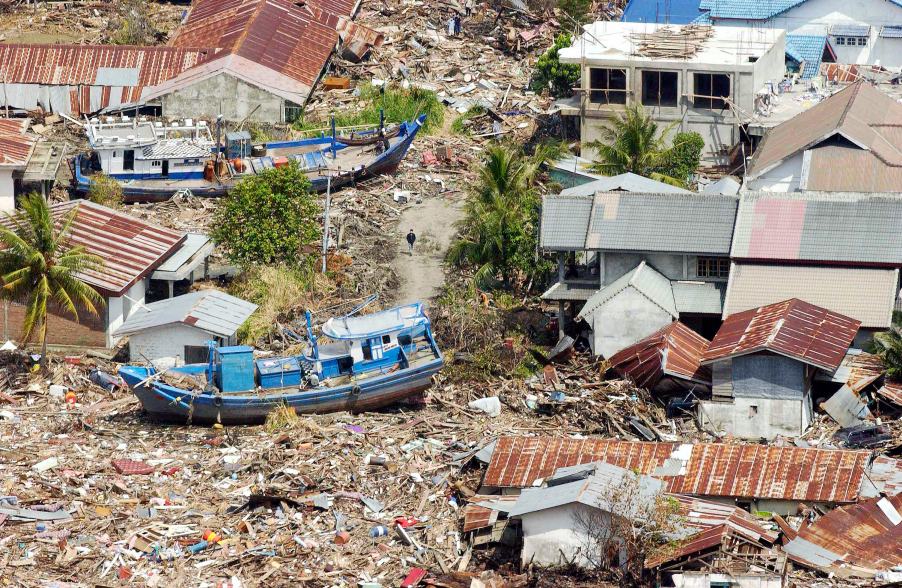
The Indonesian coast, between Banda Aceh and Meulaboh, after the earthquake and the tsunami of 26 December 2004. Photo by Evan Schneider © UN Photo
UNESCO supports Member States in improving capabilities for tsunami risk assessment, implementing early warning systems and enhancing preparedness of communities at risk. UNESCO works closely with national institutions and promotes inter-institutional and regional cooperation. Specialized regional centers provide tsunami information that, together with national analysis, is the basis of the warnings issued for the public. In addition, UNESCO promotes community-based approaches in the development of response plans and awareness campaigns which strongly involve education institutions and end-users.
Upcoming Events
7 August 2024
19 August 2024
19 - 30 August 2024
Chile