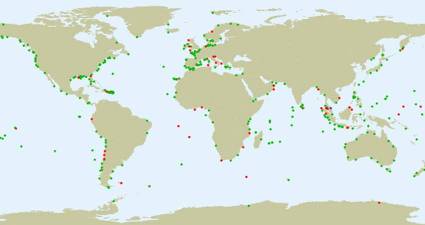
Sea Level Monitoring
TSU/MAB Coastal Hazards Project
2022 United Nations Ocean Conference Side Event: Coastal alert - tackling tsunami risks together: partnerships and solutions for a safe ocean resilient to tsunamis
Tsunamis are rare events but can be extremely deadly. In the past 100 years, 58 of them have claimed more than 260,000 lives, or an average of 4,600 per disaster, surpassing any other natural hazard. This side event showcased leading efforts on reducing tsunami risk as a key contribution to UN Ocean Decade and scaling up action on ocean science and innovation. The event launched the 2022, the World Tsunami Awareness Day communications campaign, which cumulates on 5 November each year and is organised by UNDRR, will focus on the importance of investing in early warning systems. At the same time, the 31st Session of the Intergovernmental Oceanographic Commission of UNESCO (UNESCO-IOC) held in June 2021 noted that the UN Ocean Decade provides “a once-in-a-generation opportunity” to improve tsunami detection and early warning systems “even from the near instant they form, and to enhance the preparedness of coastal communities for tsunamis through the UNESCO/IOC Tsunami Ready Programme.”
In this context, UNESCO-IOC in partnership with UNDRR organized the "Coastal alert - tackling tsunami risks together: partnerships and solutions for a safe ocean resilient to tsunamis" side event at the 2022 United Nations Ocean Conference that took place on 27 June 2022 at Lisbon in Portugal.
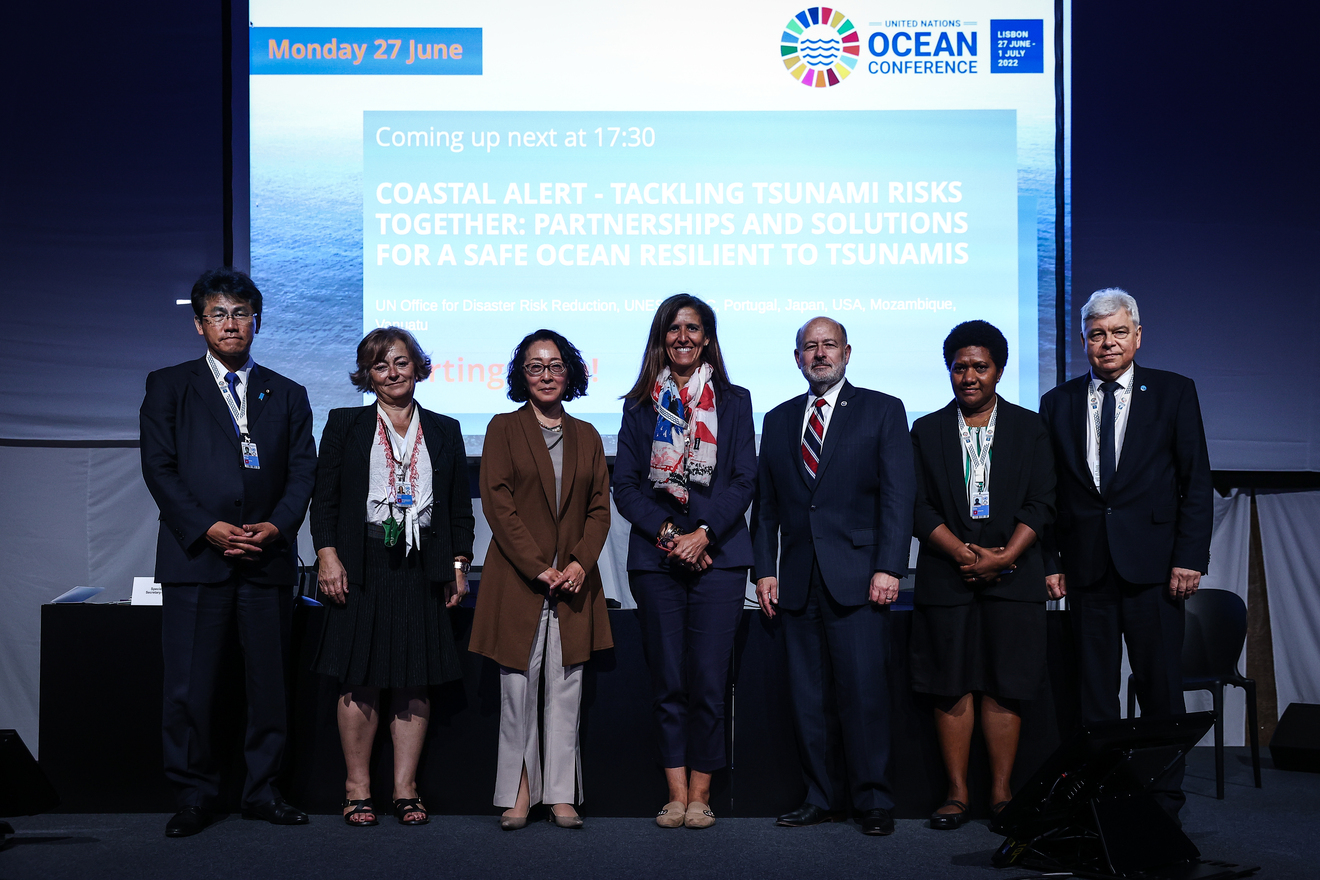
The key issues discussed were:
- - Tsunamis are rare events but can be extremely deadly. Climate change is increasing the risk of tsunamis and we need to step up action on reducing the risk from all disaster related ocean hazards, as an essential contribution to a safe ocean.
- - This includes Multi-hazard Early Warning systems incorporating tsunami risk, in support of achieving the United Nations Secretary-General’s call for protecting every person on within five years from extreme weather events. Early warning systems must be multi-hazard and should be inclusive of communities most at risk with adequate institutional, financial and human capacity to act on early warnings.
- - Countries and regions are taking steps to reduce tsunami risk including USA, Japan, Portugal, and Vanuatu that shared their initiatives to tackle tsunami risk as a contribution towards a Safe Ocean. Mozambique highlighted the need to ensure community level multi-hazard solutions.
- - Prevention and Preparedness Saves Lives. The Tsunami Ready Program of the Intergovernmental Oceanographic Commission of UNESCO which aims to protect all communities at risk from tsunami by 2030, and the World Tsunami Awareness Day Campaign, which in 2022 focuses on the Sendai Target of substantially increasing multi‑hazard early warning systems, are core contributions to achieving this.
- On another note, the United Nations Secretary-General’s called for an action plan to protect every person on within five years from extreme weather events is an important goal also for tsunami risk and we should explore collaboration with relevant organizations including WMO to integrate this risk.
- It is important to take forward the Political Declaration of the 2022 UN Ocean Conference highlights the importance of “reducing the risk of and preparing for ocean-related extreme weather events, including the development of multi-hazard early warning systems and integrating ecosystems-based approaches for disaster risk reduction at all levels and across all phases of disaster risk reduction and management”. Finally, The UN Decade of Ocean Science for Sustainable Development is a once in a lifetime opportunity to fill capability gaps to speed up the detection and warning for tsunamis even from the near instant that they form.