Sea Level Monitoring
TSU/MAB Coastal Hazards Project
Eleventh Session of the ICG/IOTWMS
The eleventh session of the Intergovernmental Coordination Group for the Indian Ocean Tsunami Warning and Mitigation System (ICG/IOTWMS-XI) was held in Putrajaya, Malaysia, 18-20 April 2017 under the Chairmanship of Dr. Juma Al-Maskari. The Session was attended by 30 delegates from 6 Member States in the Indian Ocean region, 2 UN agencies and other organisations, and 13 observers. Two additional UN agencies participated through Skype. The ICG/IOTWMS is grateful to the Government of Malaysia for the excellent host arrangements.
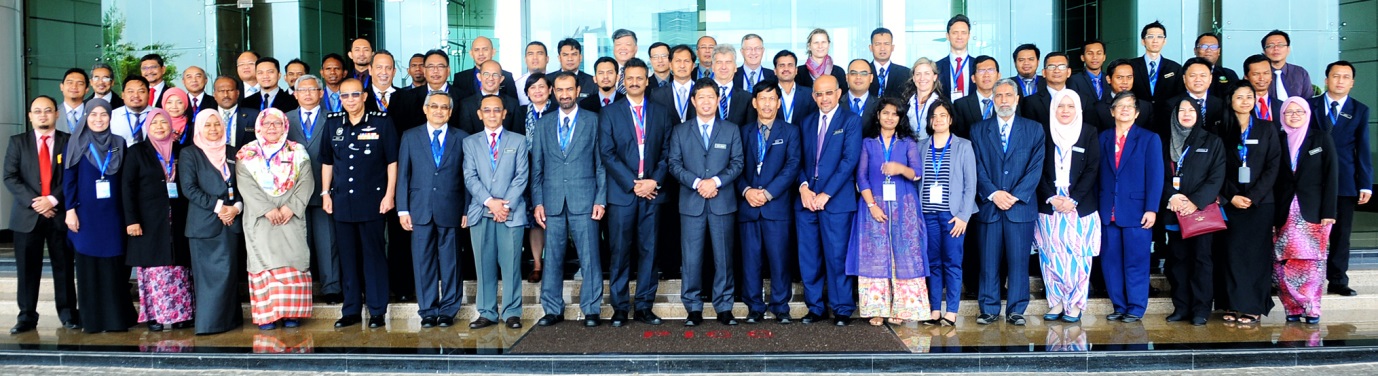
The elected officers for the next intersessional term are Chair Dr. Andi Eka Sakya (Indonesia) and Vice Chairs Dr. Juma Al-Maskari (Oman) and Prof. Sam Hettiarachchi (Sri Lanka).
The ICG/IOTWMS decided to continue to place greater emphasis on community awareness and preparedness to help ensure more appropriate responses to tsunami warning information. To this end, the ICG established a new inter sessional Task Team on “Capacity Assessment of Tsunami Preparedness” to oversee capacity assessment of tsunami preparedness, develop guidelines and pilot implementation of a Tsunami Ready programme in the Indian Ocean. It decided to continue Working Group 1 on Tsunami Risk, Community Awareness and Preparedness; Working Group 2 on Tsunami Detection, Warning and Dissemination; and the Sub-Regional Working Group for the North West Indian Ocean. A Task Team on Exercise Indian Ocean Wave 2018 (IOWave18) was also established to plan for and organise an Indian Ocean wide tsunami exercise in September 2018.
In order to optimise resources, the ICG/IOTWMS decided to hold integrated meetings including intersessional meetings of the Steering Group, Working Groups and Task Teams as well as Workshops on Standard Operating Procedures (SOPs) and Indian Ocean Tsunami Information Centre (IOTIC) training initiatives. The ICG noted with appreciation Indonesia’s kind offer to host the first integrated meeting in July 2017 and India’s kind offer to host the second integrated meeting in April 2018.
The ICG/IOTWMS decided to hold its twelfth session in early 2019 and accepted with appreciation the offer from the Islamic Republic of Iran to host it.
Meeting documents and presentations are available at www.ioc-tsunami.org/iotwms-11.
Booklet - 10 Years of the North-Eastern Atlantic, the Mediterranean and Connected Seas Tsunami Warning and Mitigation System (NEAMTWS): Accomplishments and Challenges in Preparing for the Next Tsunami
 Following the 26 December 2004 tsunami in the Indian Ocean, the IOC Member States requested at the 23rd IOC Assembly (June 2005) that warning systems be developed in the Indian Ocean (IOTWS), the Caribbean (CARIBE-EWS) and the North-Eastern Atlantic, the Mediterranean and Connected Seas Tsunami Warning and Mitigation System (NEAMTWS) similar to the Pacific Tsunami Warning System (PTWS). The year 2015 marked the 10th anniversary of the establishment of the Intergovernmental Coordination Group (ICG) for NEAMTWS.
IOC is pleased to release this anniversary booklet.
The booklet provides an overview of major achievements and highlight challenges and gaps to be addressed in the coming years in order to achieve full implementation of NEAMTWS.
It describes 1) tsunamis in the NEAM region (past events) and current risk assessments; 2) the detection system and the four Tsunami Service Providers; 3) awareness raising and education; and 4) key achievements, future challenges and opportunities in the NEAM region.
The booklet was prepared by several members of the ICG/NEAMTWS with the support from the technical secretariat. Click here to download
Global Service Definition Document
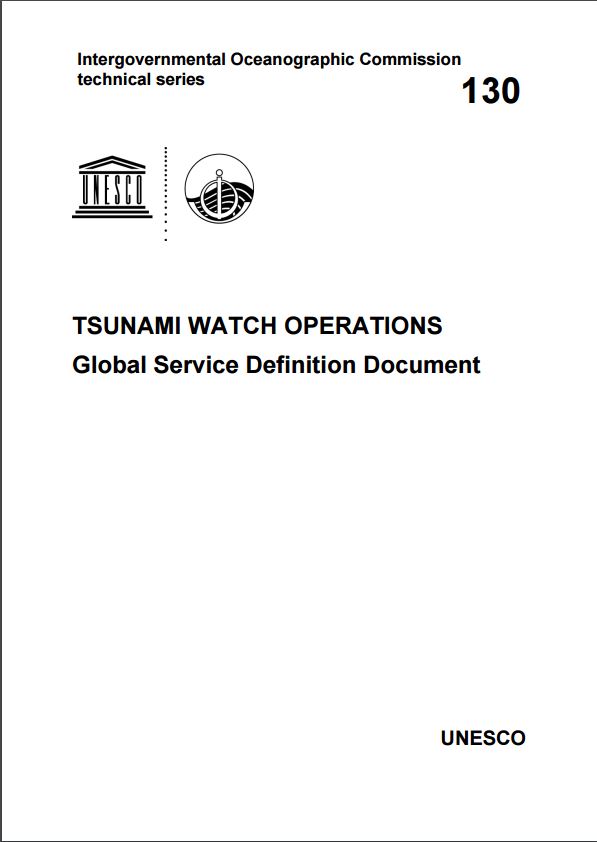 The Global Service Definition Document (GSDD) describes global tsunami warning services that are provided by regional tsunami warning systems operating in different ocean basins as a global system of systems and coordinated by the Intergovernmental Oceanographic Commission of UNESCO (UNESCO-IOC). The document also provides guidance for global harmonisation of tsunami watch operations.
This document is prepared by the Task Team on Tsunami Watch Operations (TTTWO) established by the Working Group on Tsunamis and Other Hazards related to Sea-Level Warning and Mitigation Systems (IOC/TOWS-WG). This is intended to be a living document that will undergo additions and modifications as finalized by the TTTWO from time to time as it works towards global harmonization of tsunami watch operations.
The recommendations put forth in this document are based on best-practice and intend to serve as a broad guidance to the to the Intergovernmental Coordination Groups (ICGs) in different ocean basins in planning and development of their systems. While the specific requirements of each region will continue to drive the evolution of each regional tsunami warning system, following a common framework as put forth in this document will ensure that operations within and among different regional systems become seamless and interoperable.
Intersessional Meeting of the ICG/IOTWMS Working Group 1 on Tsunami Risk, Community Awareness and Preparedness
The intersessional meeting of the ICG/IOTWMS Working Group 1 (WG1) on tsunami risk, community awareness and preparedness was held in Bandung, Indonesia on 7-8 December 2016. This meeting was hosted by the Institute of Technology Bandung (ITB) at the Grand Tjokro Hotel. In total fourteen Member State representatives from eleven countries including Australia, Comoros, India, Indonesia, Iran, Kenya, Mauritius, Oman, Pakistan, Seychelles and Timor Leste, one RIMES representative, one GIZ representatives and four UNESCO-IOC associates participated in this meeting.
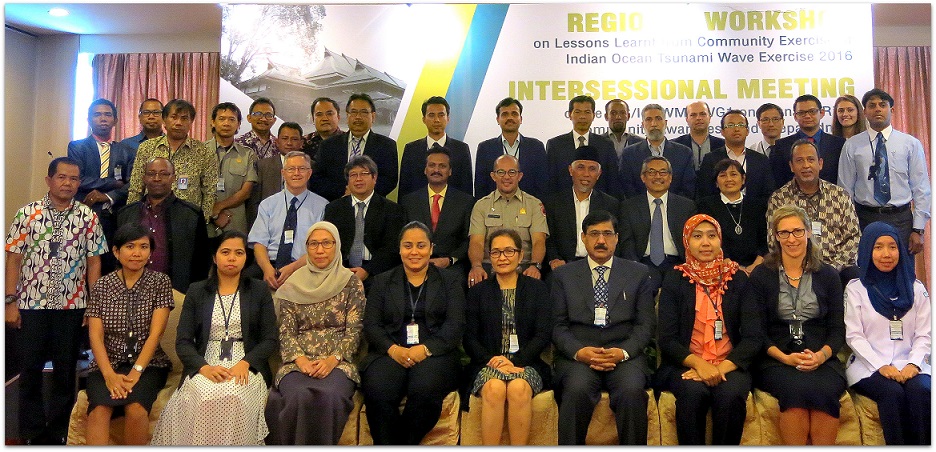
Photo:
Participants and Trainers of the Workshop on Lessons Learnt from Community Exercise of IOWave16, 5-6 December 2016, and Intersessional Working Group 1 Meeting on Tsunami Risk, Community Awareness and Preparedness, 7-8 December 2016, Bandung, Indonesia.
The WG1 meeting had a full agenda, which included reports on achievements and a review of the workplan. WG1 will take several recommendations forward to the ICG/IOTWMS-XI, Kuala Lumpur, 18-20 April 2017. These include,
1. Conducting a baseline assessment survey on each Member State's tsunami preparedness
2. Conducting integrated capacity development workshops
3. Implementing Tsunami Ready in the Indian Ocean region
4. Enhancing community participation in future IOWave exercises
5. Aligning activities with World Tsunami Awareness Day to increase community awareness and preparedness
6. Setting up of inter-sessional task team for updating the questionnaires for baseline assessments, future IOWave exercises and ICG member-state national reports and conducting the baseline assessment
Furthermore, WG1 will investigate collaborative opportunities with other organisations (e.g. UNESCAP, UNISDR, RIMES, GIZ) to implement tsunami preparedness initiatives in the Indian Ocean region.
The WG1 meeting was held back-to-back with the Workshop on Lessons Learnt from Community Exercise of Indian Ocean Wave 2016 (IOWave16), also in Bandung on 5-6 December 2016. This workshop was organized by the Indian Ocean Tsunami Information Centre (IOTIC) and hosted by ITB with funding from UNESCAP and UNESCO-IOC. In total ~60,000 people from 12 countries participated in community evacuations during IOWave16. This marked a transition from what primarily used to be an upstream technical exercise to a more comprehensive end-to-end exercise. The workshop provided a platform for Member States to share their experiences in IOWave16 and came up with specific recommendations towards enhancement of community participation in future IOWave exercises.
IOC/UNESCO to co-organise a special session for the World Tsunami Awareness Day during the upcoming Asian Ministerial Conference on Disaster Risk Reduction
The Intergovernmental Oceanographic Commission (IOC) of UNESCO, along with UNISDR and Government of Japan will be co-organising a Special Session for the World Tsunami Awareness Day during the Asian Ministerial Conference on Disaster Risk Reduction (AMCDRR) scheduled to be held in New Delhi, India during November 2-5, 2016. Details of AMCDRR are available at http://www.amcdrrindia.net/ . Designation of November 5th by the United Nations General Assembly as the World Tsunami Awareness Day has provided a great means of raising public awareness of the risk caused by tsunamis.
While Tsunami Early Warning Systems have been improving over the past several years, precious human lives continue to be at risk due to the fact that vulnerable coastal communities, especially those in the near source regions, are not fully aware and prepared well enough to respond to such low-frequency, high-impact disasters. IOC/UNESCO has been coordinating the establishment of Tsunami Warning Systems in all the ocean basins through the intergovernmental coordination groups in the Caribbean, Indian, North East Atlantic and Mediterranean and Pacific Ocean basins. In the recent years, there has been renewed focus on enhancing community awareness and response mechanisms by regular conduct of ocean-wide tsunami drills.
The latest such drill named IOWave16 was conducted under the auspices of IOC/UNESCO during September 07-08, 2016 wherein 24 countries bordering the Indian Ocean participated. 13 countries took the drill down to the community level and evacuated about 50000 participants. Photographs and videos of Exercise IOWave16 are available at iowave16.org. While the drill has been successful in raising public awareness, lessons learnt from the drill collated through structured evaluation forms and observers will be useful in identifying the gaps in the system and improve them. UNISDR has deputed two observers in Seychelles and India during the IOWave16.
This special technical session will provide an opportunity for experts to deliberate on the progress made in tsunami warning systems in the past decade and discuss the lessons learnt from the recent IOWave16. This session is expected to contribute to enhancement of tsunami awareness and also to the recommendations of the high-level AMCDRR.
More Articles...
- International Day for Disaster Reduction 2016: Live to Tell
- Thirteenth Session of the Intergovernmental Coordination Group for the Tsunami Early Warning and Mitigation System in the North-eastern Atlantic, the Mediterranean and Connected Seas (ICG/NEAMTWS-XIII): Four Tsunami Service Providers Accredited
- Indian Ocean Countries Test Tsunami Preparedness down to Community Level during Exercise IOWave16
- Madame Irina Bokova met with the Vice Chairman of ICG/IOTWMS in Sri Lanka
About the Tsunami Programme
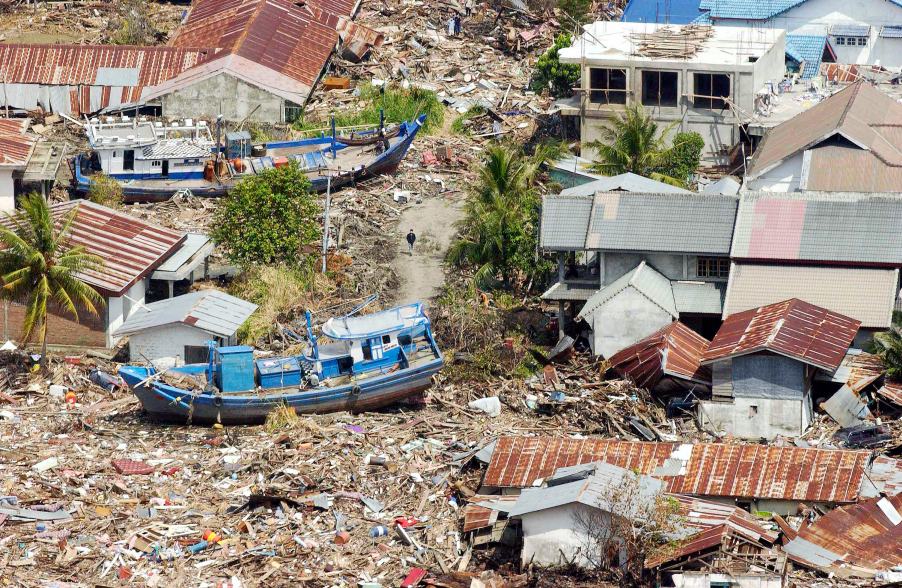
The Indonesian coast, between Banda Aceh and Meulaboh, after the earthquake and the tsunami of 26 December 2004. Photo by Evan Schneider © UN Photo
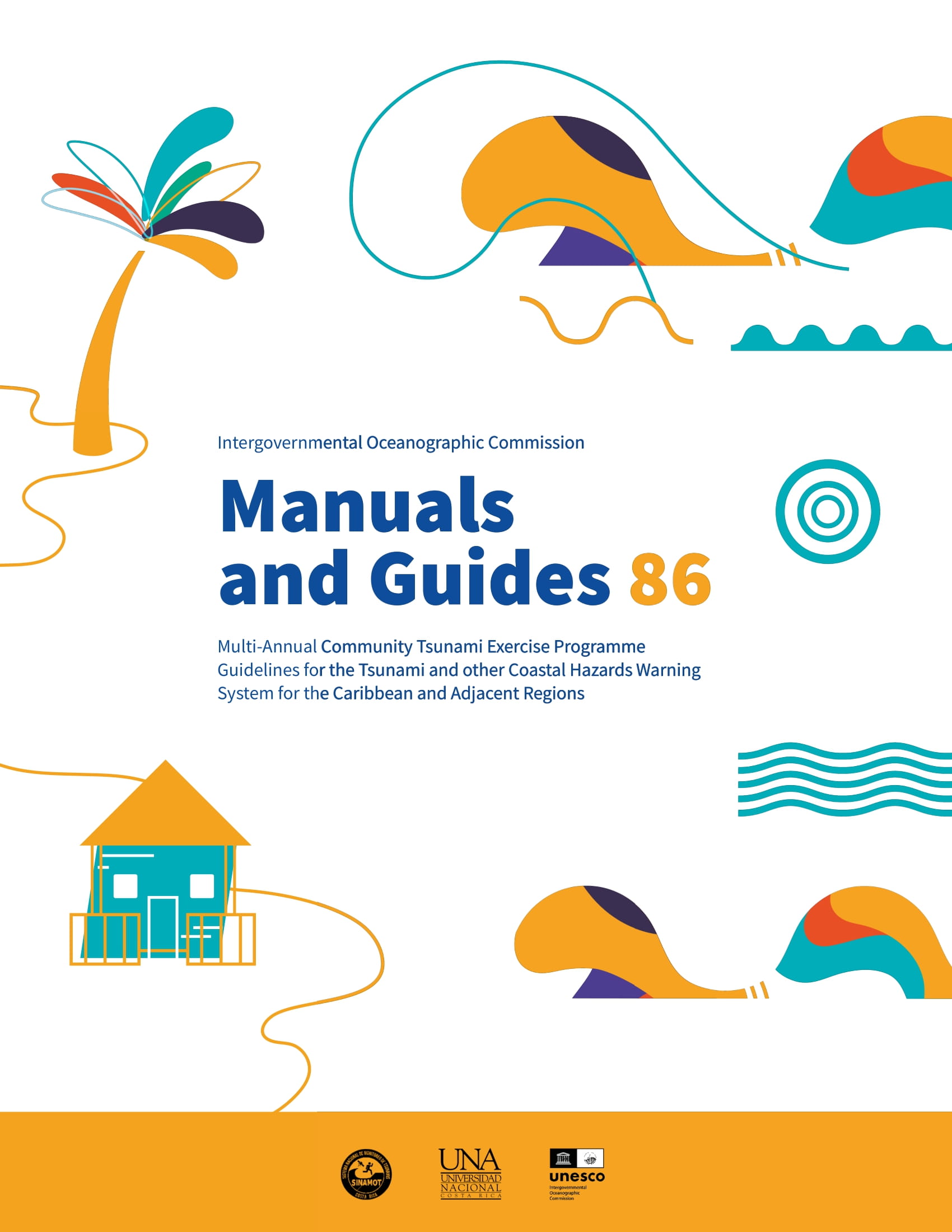
UNESCO supports Member States in improving capabilities for tsunami risk assessment, implementing early warning systems and enhancing preparedness of communities at risk. UNESCO works closely with national institutions and promotes inter-institutional and regional cooperation. Specialized regional centers provide tsunami information that, together with national analysis, is the basis of the warnings issued for the public. In addition, UNESCO promotes community-based approaches in the development of response plans and awareness campaigns which strongly involve education institutions and end-users.
Upcoming Events
7 August 2024
19 August 2024
19 - 30 August 2024
Chile