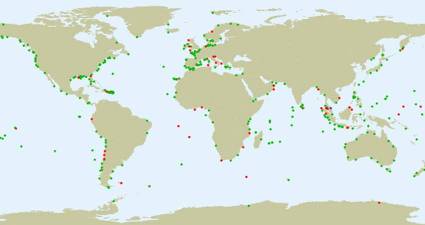
Sea Level Monitoring
TSU/MAB Coastal Hazards Project
Greek Tsunami Service Provider Announces the Deployment of New Tsunami Information Products
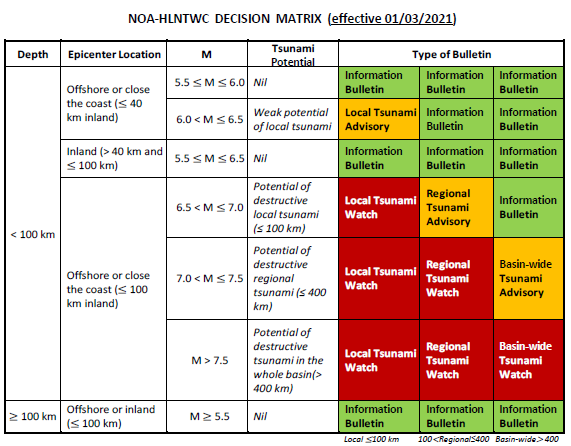
The Greek Tsunami Service Provider NOA-HLNTWC has recently announced that, starting in March, they will be providing enhanced tsunami products to their subscribers in the form of maps. Tsunami Service Providers (TSPs) in the North-Eastern Atlantic, Mediterranean and connected seas (ICG/NEAMTWS), in particular KOERI-TSP (Turkey), have piloted tsunami enhanced products since 2017 in addition to text tsunami bulletins shared to their subscribers. Following the ICG/NEAMTWS developments, NOA-HLNTWC, the Greek TSP, will also provide enhanced tsunami products based on an updated Decision Matrix (DM).
The new DM is a modified version of the official NEAMTWS DM. In the event of an earthquake, the DM defines the alert level at each forecast point depending on the estimated potential of a possible tsunami. Depending on the alert level, different messages are issued by TSPs. An information bulletin (green) is released at the lowest level, followed by a local, regional or basin-wide Tsunami Advisory (orange). The highest level of alert is the Tsunami Watch (red). The DM's new changes, which came into force on 1 March 2021, concern four earthquake magnitude classes where the threshold values have been elevated by one step and an extra earthquake magnitude class has been added.
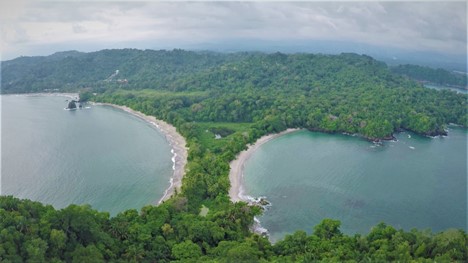
Tamarindo and Sámara, Costa Rica, recognized Tsunami Ready
On February 8th, 2021, Tamarindo and Sámara were recognized as Tsunami Ready by the UNESCO Intergovernmental Oceanographic Commission. They joined Ostional and El Coco as Tsunami Ready communities in the Pacific coast of Costa Rica. Their main activities are tourism activities in connection with nature.
Tamarindo is subject to tsunami hazard and at the same time is a high spot of national and international tourism. That is why the touristic sector, grouped at the Integral Development Association (Asociación de Desarrollo Integral de Tamarindo, ADI-Tamarindo), took a very active role during the process of Tsunami Ready recognition. They organized their staff, lead the evacuation plan development, put the evacuation route signs, created a English/Spanish video for tourists and organized the tsunami exercise. Tamarindo performed an online tabletop due to pandemics, on September 2020
In Sámara, all neighborhoods participated, created their own warning dissemination system, and supported the deployment of the tsunami evacuation signs donated by the International Migration Organization (IMO). Sámara Elementary School performed a tsunami evacuation drill as part of the National Earthquake Drill in 2019.
Countries in NEAM region Prepare for the fourth Regional Tsunami Exercise (NEAMWave21)
Countries in the North-eastern Atlantic, Mediterranean and Connected Seas (the NEAM region) will participate in a tsunami test and response exercise from 8 to 10 March 2021. NEAMwave21 will coincide with the 10th commemoration of 11 March 2011 Tohoku Earthquake and Tsunami. The purpose of this exercise is to evaluate local tsunami response plans, increase tsunami preparedness, and improve coordination throughout the region. It is the fourth such international exercise in this region after NEAMWave12 (2012), NEAMWave14 (2014) and NEAMWave17 (2017).
Coping with Covid19: Gauging sea level rise in Karachi
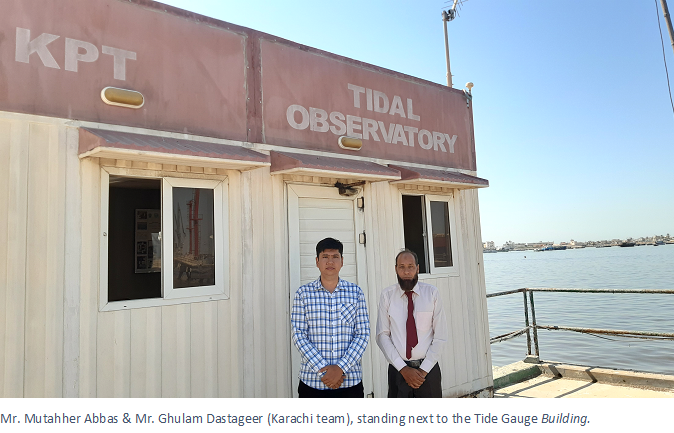
Despite Covid-19 restrictions, UNESCO together with the UK National Oceanography Centre enabled Pakistan to repair the Karachi tide gauge, key instrument to monitoring sea level data for Pakistan and the region.
In operation for over 15 years, the Karachi gauge provides valuable sea level data from an under-sampled region of the world to the Global Sea Level Observing System (GLOSS), coordinated by the UNESCO’s IOC. The gauge’s operation was interrupted for a short period during 2019 and 2020, due to hardware failures.
Support from UNESCO’s Intergovernmental Oceanographic Commission (IOC) and from the UK National Oceanography Centre enabled the Pakistan Hydrographic Department to carry out all the necessary repairs to the Karachi tide gauge despite severe Covid-19 restrictions in place, assuring a continuous monitoring of tides and flow of sea level data for national, regional and global sea level rise modelling.
Coping with Covid19 - Awards Ceremony in Puerto Plata, Dominican Republic, for the winners of the “Tsunami Ready Youth Art Competition in the Caribbean”
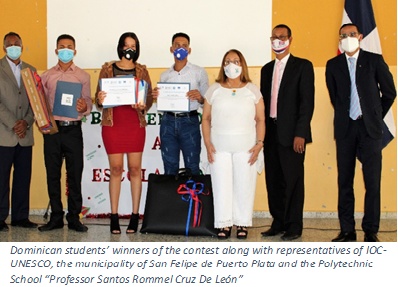
Within the framework of the Union European ECHO funded project "Strengthening Capacities for Early Warning and Response to Tsunamis and other Coastal Threats", the Intergovernmental Oceanographic Commission (IOC) of UNESCO delivered the recognitions and awards to three students from the Polytechnic Professor Santos Rommel Cruz from León of the municipality of San Felipe de Puerto Plata. They were national winners of the Regional Visual Arts Contest for young people “Tsunami Ready”. This activity was postponed due to sanitary measures and restrictions due to Covid-19. With all due measures the activity has now been completed, thans to the perseverance of national and local partners.
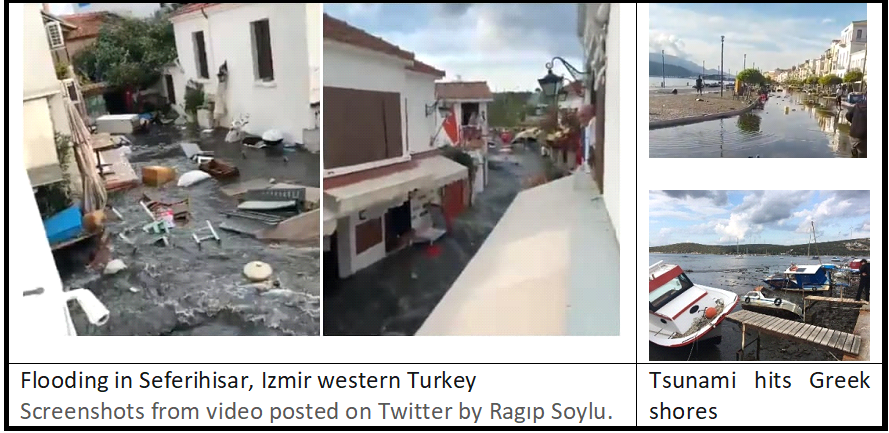
Tsunami hits Greece and Turkey after 7.0 earthquake
On 30 October 2020, a significant tsunami triggered by an earthquake of magnitude 7.0 Mw hit the island of Samos (Greece) and the Aegean coast of the Izmir region (Turkey). The event shed light – once again – on the complexity of warning of locally generated tsunamis of rapid onset which challenged the ability of local authorities and communities at risk to take early action. According to Turkey's Disaster and Emergency Management Authority (AFAD), one of the confirmed victims in Turkey drowned because of the tsunami. This event is a bitter reminder after the wake-up call on 20 July 2017, following the Bodrum (Turkey)-Kos (Greece) tsunami, to increase tsunami preparedness through enhanced sea-level detection networks, education, as well as international cooperation.
More Articles...
- New Information Document Underscores the Growing Coastal Exposure and Need to Continue Building Tsunami Resilience in the North-eastern Atlantic, Mediterranean and Connected Seas region
- New ICGNEAMTWS Officers - A Focus on Capacity Building and Improving Tsunami Public Awareness and Resilience
- Winners of Tsunami Ready youth Art Competition in the Caribbean announced
- Strengthening Ecuador’s preparedness to tsunamis
Subcategories
-
Latest News
- Article Count:
- 83
-
Newsletter
- Article Count:
- 5
-
On focus
- Article Count:
- 5
-
IOTWS News
- Article Count:
- 1