Sea Level Monitoring
TSU/MAB Coastal Hazards Project
New ICGNEAMTWS Officers - A Focus on Capacity Building and Improving Tsunami Public Awareness and Resilience
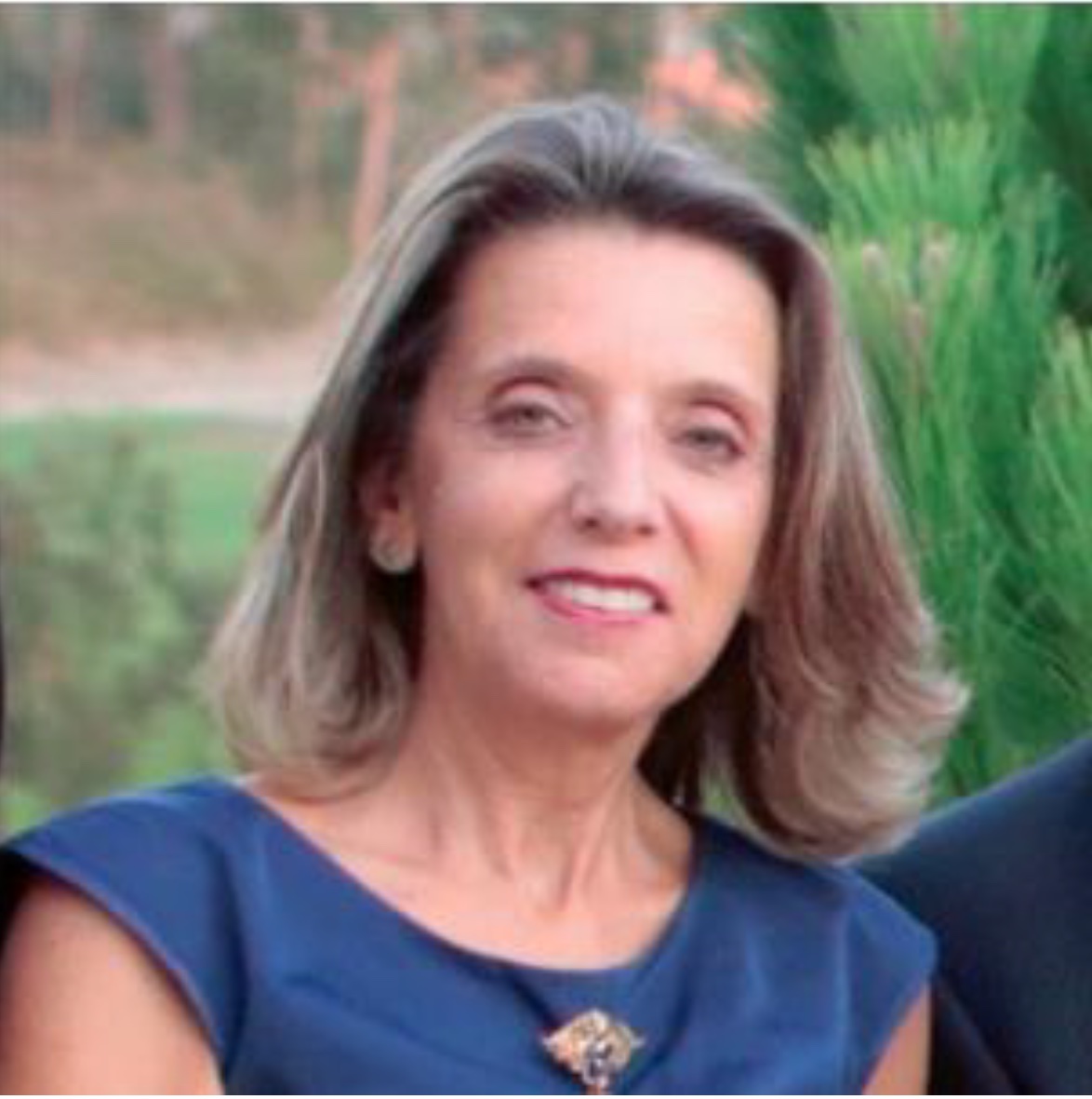
Professor Maria Ana Baptista from Portugal was elected on Friday 29 May 2020 as the new Chairperson for the Intergovernmental Coordination Group for North-Eastern Atlantic, the Mediterranean and Connected Seas Tsunami Warning and Mitigation System (ICG/NEAMTWS). Professor Costas Synolakis becomes the new ICG/NEAMTWS vice-chair. The organization of the vote was by correspondence conducted at the UNESCO Headquarters. The IOC Executive Secretary, Mr Vladimir Ryabinin congratulated Professor Maria Ana Baptista and Professor Costas Synolakis, the new ICG/NEAMTWS Officers for the period 2020-2021.
The Programme Specialist and Technical Secretary of ICG/NEAMTWS, Dr Denis Chang Seng thanked the outgoing ICG/NEAMTWS Officers, Dr Gerassimos Papadopoulos (Greece), Dr Stefano Lorito (Italy) and Dr Anna von Gyldenfeldt (Germany) for their leadership and valuable contributions to the ICG/NEAMTWS.
 |
 |
| Professor Maria Ana Baptista | Professor Costas Synolakis |
The Officer's goal is to: foster the involvement and the implementation of National Tsunami Warning Centers in Maghreb countries; focus on capacity building goal of the UN Ocean Science Decade for Sustainable Development, and the further improvement of tsunami public awareness and resilience in the NEAM region by creating Tsunami Ready Communities.
How to respond to tsunamis in times of social distancing? Follow the regional guidelines
Regional guidelines for tsunami warning services, evacuation and sheltering during the COVID-19 pandemic are now available to ensure the safety of vulnerable coastal communities from ocean hazards while minimizing the risk of viral contagion.
Prepared by UNESCO’s Intergovernmental Oceanographic Commission (IOC), in consultation and collaboration with expert working groups within the Intergovernmental Coordination Groups (ICGs), the COVID-19 tsunami response guidelines provide specific instructions for each of the four regions covered by tsunami early warning systems: the Pacific Ocean, the Caribbean, the Indian Ocean, and the North-eastern Atlantic and Mediterranean (and connected seas).
These guidelines aid to clarify possible confusion generated by COVID-19 sanitary priorities and regulations in regard to response actions during a tsunami warning such as evacuation and sheltering.
INGV, Italy Launches New Tsunami Warning Center Platform
The Istituto Nazionale di Geofisica e Vulcanologia (INGV) has launched a new website for their Tsunami Warning Center (CAT). The site is for the general public and the media and it contains information to understand the tsunami risk in Italy and in the Mediterranean. Several aspects of the tsunami phenomenon are described, from their causes and propagation, the warning and mitigation system, over to how to act in case of a Tsunami, and the coordination and liaison with the civil protection system.
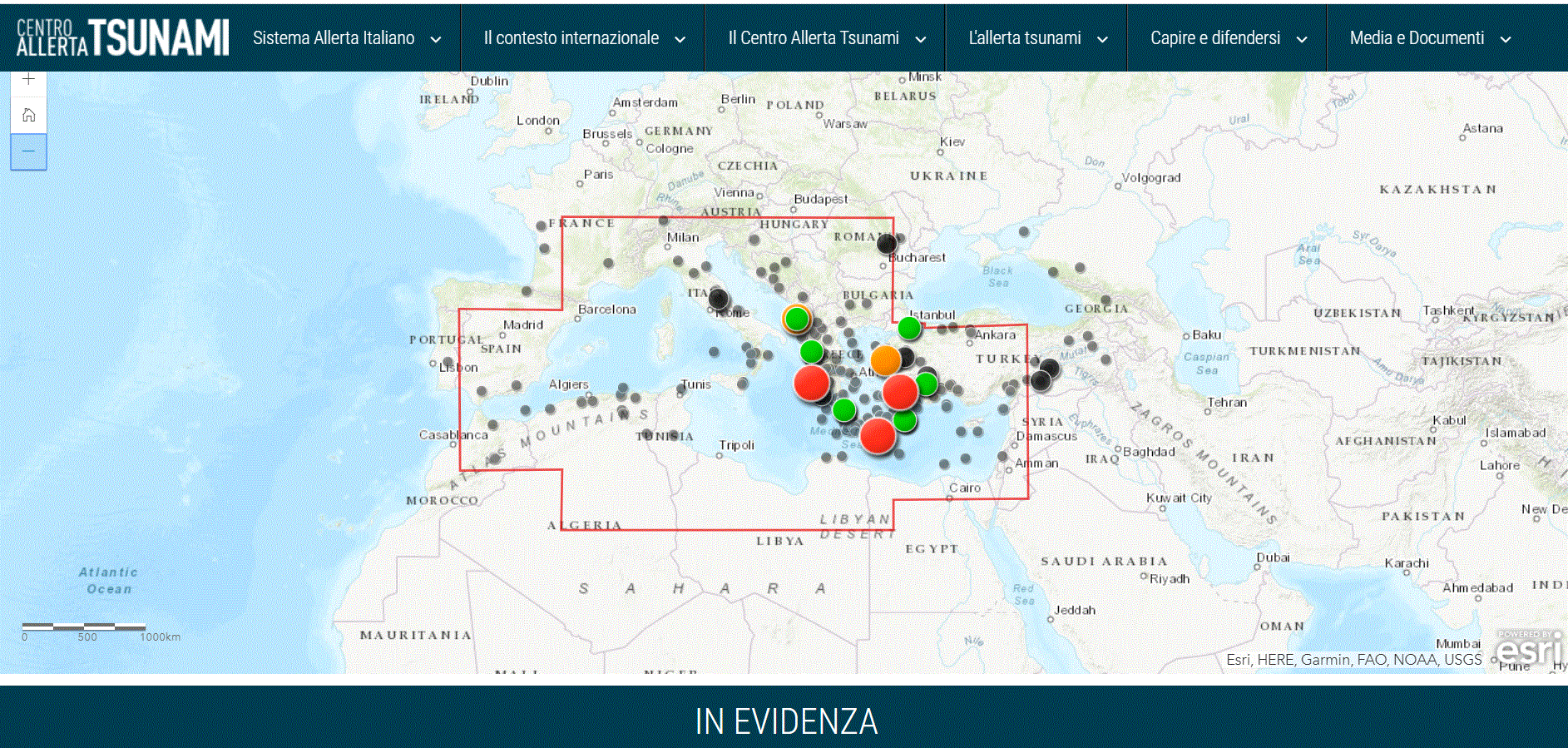
The map on the Home page shows seismic events since January 2017 that have activated the national tsunami warning system. The colors of the symbols indicate the alert level: 1) Green: no alert / INFORMATION; 2) Orange alert / ADVISORY; 3) Red alert / WATCH. Mr Alessandro Amato, Head of INGV CAT informs that real-time alerts do not currently appear on the map. Presently alerts are transmitted both to the National Civil Protection Department, which distributes them in real time to the local and national authorities, and to the countries of the Euro-Mediterranean area that are subscribers of the CAT services (Spain, Portugal, France , Germany, Egypt, Israel, Greece, Turkey, Cyprus, Malta, Lebanon, the United Kingdom).
The new INGV Tsunami Warning Platform is available at the following link:www.ingv.it/cat
The NEAMTWS community and the Technical Secretary of ICG/NEAMTWS Mr Denis Chang Seng welcomed the new tsunami information platform. He also noted that there is a continuous effort among all NEAM Tsunami Service Providers in France; Greece, Italy, Portugal, and Turkey to upgrade their Tsunami Information Platforms to better serve the public in general.
The Tsunami Information Centre (NEAMTIC) website supports the development of the NEAMTWS and acts as the central platform in the NEAM region for information on warning systems, risks and good practices in respect of tsunamis and other sea-level related hazards for civil protection agencies, disaster management organizations, decision makers, schools, industries and the general public.
Winners of Tsunami Ready youth Art Competition in the Caribbean announced
The competition was organized as a key output of a project aimed at strengthening tsunami early warning and response capacities in Caribbean countries, sponsored by the European Commission DIPECHO and coordinated by UNESCO’s Intergovernmental Oceanographic Commission. The contest targeted arts students aged 14-16 from Antigua and Barbuda, Barbados, Dominican Republic, St. Vincent and the Grenadines and Trinidad and Tobago.
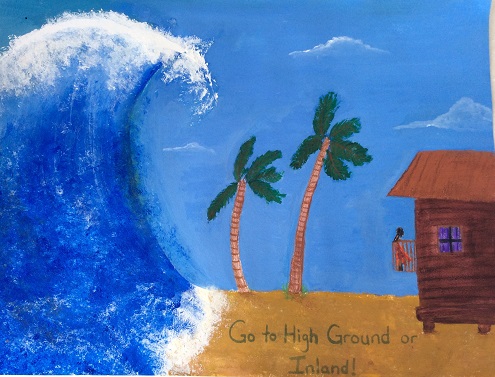
The visual art competition’s goal was to raise awareness of the tsunami hazard and promote an improved understanding of geologic phenomena and emergency response systems in the participating countries to the project: Antigua and Barbuda, Barbados, Dominican Republic, St. Vincent and the Grenadines, and Trinidad and Tobago. Officially launched in October last year, this competition contributed to the 2019 World Tsunami Awareness Day (5 November).
The prizes were to be presented to the top three art pieces in each country at the joint ceremony for the recognition of the Tsunami Ready community and art competition awards. However, due to travel and gathering restrictions in light of COVID-19, this ceremony has been postponed and will be virtual, when implemented. Featured: 1st Price Antigua and Barbuda/Miss Sapphire Percival of Sir Novelle Richards Academy
CARIBE WAVE 20 Exercise
The annual tsunami exercise for the Caribbean and Adjacent Regions, CARIBE WAVE, has been improving and validating tsunami readiness since 2011. The 2020 exercise took place on March 19, 2020 under very different circumstances than previous years. After months of regional and national preparation and planning, given the COVID-19 pandemic, the UNESCO IOC Intergovernmental Coordination Group for Tsunami and Other Coastal Hazards for the Caribbean and Adjacent Regions (ICG/CARIBE EWS) agreed to only test the communication lines at a regional level. It was left up to the Member States and Territories to decide if any additional activity would be carried out and whether to use the simulated messages for one of two tsunami scenarios: Jamaica and Portugal.
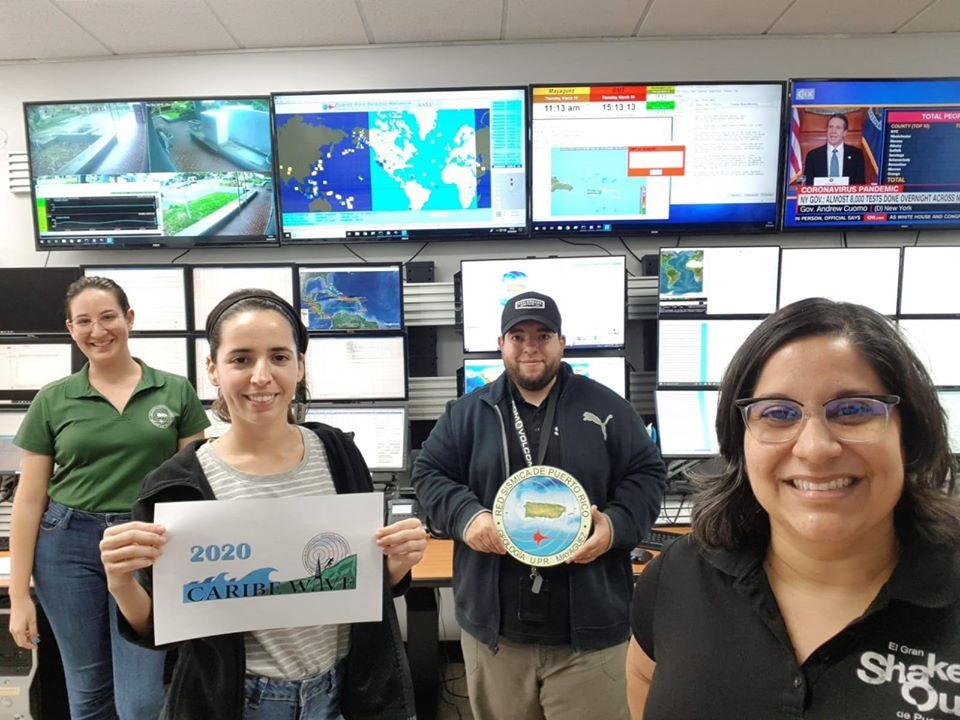
Despite the sudden change in scope of the exercise, CARIBE WAVE 20 was held successfully. The Regional Tsunami Service Provider, the Pacific Tsunami Warning Center, issued a “Dummy” message at 14h00 UTC to all officially designated Tsunami Warning Focal Points (TWFP) and National Tsunami Warning Centers (NTWC). Many methods of communication were used to disseminate the message: the World Meteorological Organization Warning Information System (Global Telecommunication Systems), the Aeronautical Information Replacement System (AISR), NOAA Weather Wire, AWIPS, Fax, Email and Social Media. According to feedback as well as social media and web posts, the dummy message was successfully received, validating the communication platforms.
More Articles...
- Strengthening Ecuador’s preparedness to tsunamis
- Summary Statement from the International Symposium on Lessons Learnt from the 2018 Tsunamis in Palu and Sunda Strait
- Indian Ocean Tsunami Warning and Mitigation System Factsheet (2019)
- 26 December 2019 marks the 15th Anniversary of 2004 Indian Ocean Tsunami
About the Tsunami Programme
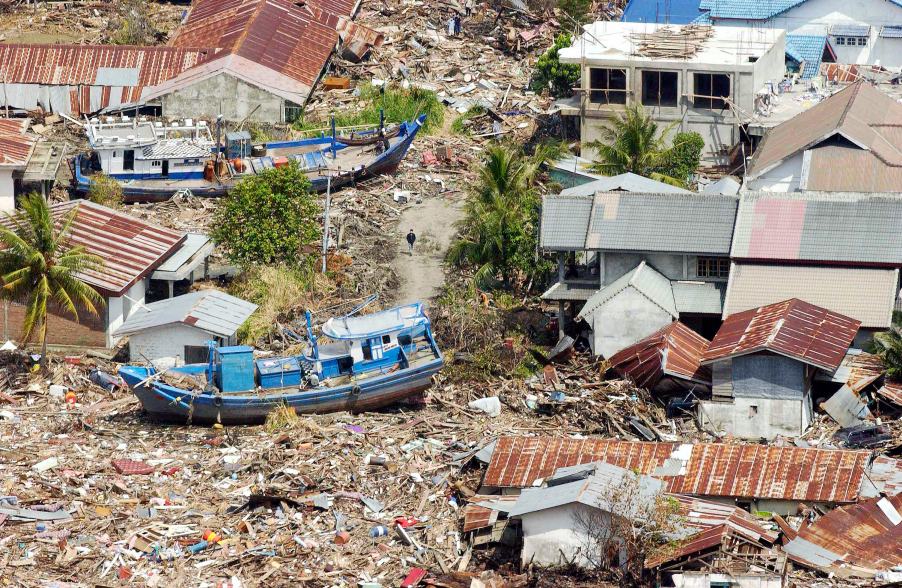
The Indonesian coast, between Banda Aceh and Meulaboh, after the earthquake and the tsunami of 26 December 2004. Photo by Evan Schneider © UN Photo
UNESCO supports Member States in improving capabilities for tsunami risk assessment, implementing early warning systems and enhancing preparedness of communities at risk. UNESCO works closely with national institutions and promotes inter-institutional and regional cooperation. Specialized regional centers provide tsunami information that, together with national analysis, is the basis of the warnings issued for the public. In addition, UNESCO promotes community-based approaches in the development of response plans and awareness campaigns which strongly involve education institutions and end-users.
Upcoming Events
7 August 2024
19 August 2024
19 - 30 August 2024
Chile