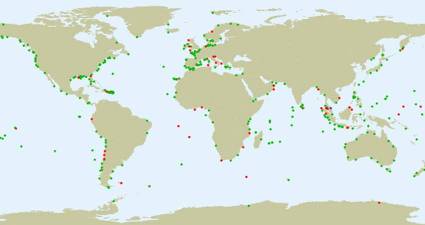
Sea Level Monitoring
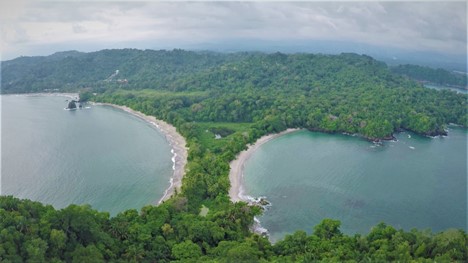
TSU/MAB Coastal Hazards Project
Comités Municipales de Prevención Mitigación y Respuesta de municipios costeros de San Cristóbal, Republica Dominicana, reciben capacitación sobre tsunamis. Diciembre 2015
Representantes de los Comités Municipales de Prevención, Mitigación y Respuesta (PMR) de los municipios costeros de San Cristóbal participaron en el primer taller de “Formación y fortalecimiento de capacidades de las instituciones de respuesta y atención a la emergencia en caso de tsunamis” en busca de mejorar la resiliencia de estas comunidades atendiendo a la vulnerabilidad sísmica y ante tsunamis que posee la zona costera de la República Dominicana.
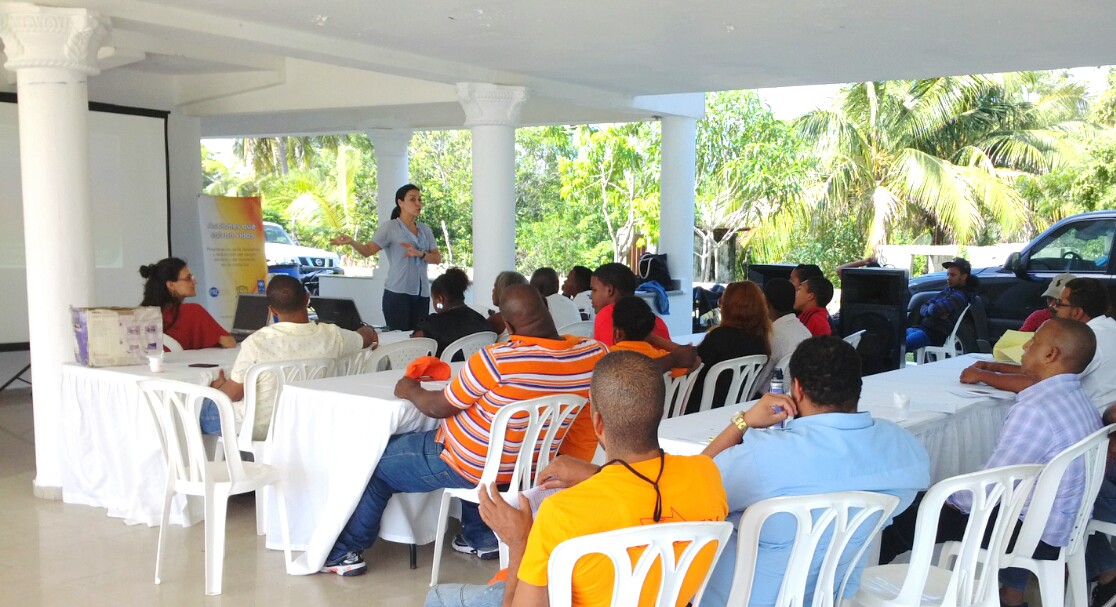
El taller se impartió en sesiones separadas, entre el 8 y el 10 de diciembre, en los municipios Sábana Grande de Palenque, Bajos de Haina y San Gregorio de Nigua en el marco del proyecto “Acciones que salvan vidas: Preparación ante desastres y reducción del riesgo sísmico y por tsunamis en la costa sur”, que ejecuta el consorcio formado por PNUD, UNESCO y la Asamblea de Cooperación por la Paz en República Dominicana (ACPP) financiado por el Programa de Preparación para Desastres de la Comisión Europea (DIPECHO, por sus siglas en inglés) en el marco del Plan de Acción 2015-2016 para el Caribe. Este proyecto busca fortalecer las capacidades de prevención, mitigación y respuesta para mejorar la resiliencia de las comunidades e instituciones de los municipios costeros de la provincia de San Cristóbal frente a sismos y tsunamis, en particular en los municipios Bajos de Haina, San Gregorio de Nigua y Sábana Grande de Palenque.
"Los tsunamis son eventos que pueden ocurrir en la República Dominicana y ocasionar la pérdidas de vidas humanas, cuantiosos daños materiales y tener un impacto importante en la economía del país; por lo que es necesario mejorar la sensibilización sobre el tema, tanto de las instituciones como de la población en general, para que puedan responder de manera adecuada ante la ocurrencia de este tipo de eventos. Las instituciones integrantes de los Comités Municipales de Prevención, Mitigación y Respuesta trabajan en el ámbito local en la reducción de las vulnerabilidades y la atención de emergencias frente a cualquier fenómeno que pueda afectar a la población, de ahí la importancia de su formación” explica la facilitadora del taller, Jennifer Larreynaga, Consultora UNESCO del Equipo Acción Tsunami y Ejercicio 2016.
Taller Regional de Formación de los Centros de Alerta contra los Tsunamis en el Pacífico de ICG / CARIBE EWS
Este taller de capacitación de cuatro días ha sido organizado por el Centro de Información sobre los Tsunamis en el Caribe (CTIC) en asociación con la UNESCO/COI, el Centro Internacional de Información sobre los Tsunamis (ITIC), Centro de Alerta contra los Tsunamis en el Pacífico (PTWC) , Programa de Alerta contra los Tsunamis en el Caribe (CTWP) y la Unidad de Gestión de las Zonas Costeras (CZMU), Barbados. La formación se dirige a 40 participantes de 20 países, así como organizaciones regionales, como la Agencia Caribeña de Manejo de Emergencias de Desastres (CDEMA), el Instituto Caribeño de Meteorología e Hidrología (CIMH), CTWP y la Red Sísmica de Puerto Rico (RSPR).
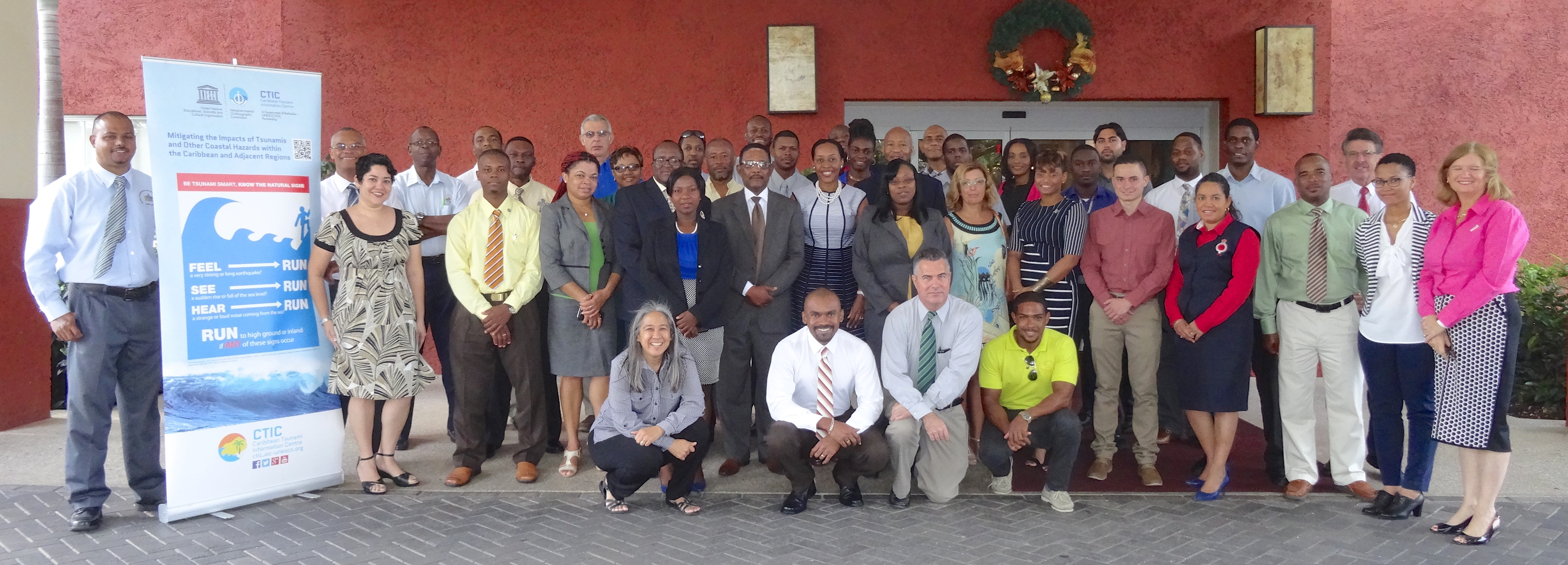
El taller tiene por objeto capacitar a los Puntos focales de alerta contra los tsunamis (TWFP), los Centros nacionales de alerta contra los tsunamis (NTWC) y los servicios de emergencia de tsunami (TER) para recibir de manera efectiva, analizar y tomar las medidas adecuadas en respuesta a los productos mejorados de predicción de tsunami para el Caribe y regiones adyacentes del Centro de Alerta contra los Tsunamis en el Pacífico (PTWC), . Este taller de capacitación abarca las operaciones de alerta contra los tsunamis y el uso de los productos mejorados del PTWC para la toma de decisiones por amenaza de tsunami , con una atención especial en la cadena de alerta de tsunami y su Procedimiento normalizado de operaciones (SOP). Los temas incluyen la alerta, SOP de respuesta y desafíos, herramientas de apoyo a decisiones de alerta , mensajes de advertencia y de alerta, los conceptos de evacuación y de planificación y estrategias de sensibilización.
En los últimos 10 años, con un perfeccionamiento de la calidad de los datos, la cantidad y disponibilidad en tiempo real, el tiempo de respuesta del PTWC ha disminuido significativamente de una hora a 5-10 minutos para eventos de tsunami. Al mismo tiempo, con cada gran terremoto y tsunami desde el terremoto y el tsunami del 26 de diciembre 2004 en el Océano Índico ha aumentado la comprensión científica y mejores técnicas se han desarrollado para caracterizar rápidamente el terremoto y modelar numéricamente el tsunami.
En el Pacífico, el PTWS adoptó el 1 de octubre de 2014 el uso de los productos mejorados de PTWC basado en modelos numéricos de predicción. Para las regiones del Caribe y adyacentes, el cambio a nuevos productos mejorados de predicción PTWC fue aprobado por el ICG/CARIBE-EWS VIII (2013), introducido en CARIBE WAVE 2013, y desde el 26 de octubre del 2015, están siendo emitidos en paralelo con los productos existentes. El paso a los nuevos productos exclusivamente está previsto para el 1 de marzo de 2016.
Remembering the 1945 Makran Tsunami on its 70th Anniversary, 28 November 2015
A magnitude 8.1 earthquake on the morning of 28 November 1945 generated a devastating tsunami that resulted in a loss of life of up to 4,000 people in Pakistan. Archival research has revealed at least five tsunami events in the Makran coastal region from a variety of sources, including earthquakes and landslides.
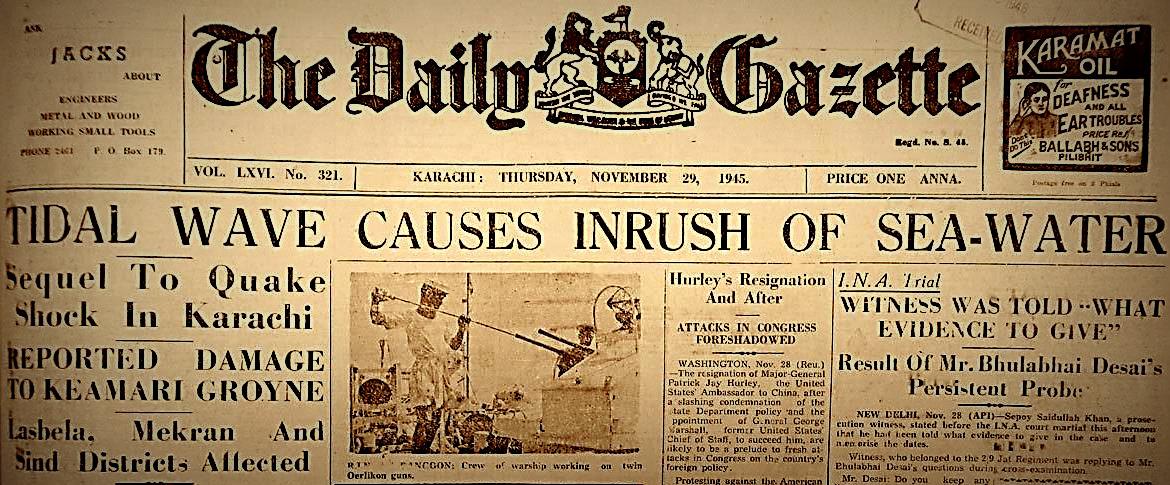
Recognising the hazard posed by the Makran subduction zone, the countries of the northwest Indian Ocean region, namely, India, Iran, Oman and Pakistan, are organising special events to commemorate the 70th anniversary of the Makran Tsunami on 28 November 2015. Front Cover of the Daily Gazette, Karachi: Thursday, 29 November 1945
• The Indian National Center for Ocean Information Services (INCOIS) is organising an exhibition event at their offices in Hyderabad, India.
• The Iranian National Institute for Oceanography and Atmospheric Science (INIOAS) is organising an exhibition event and meeting, inviting universities, research institutes and other organisations as well as the UNESCO Tehran Cluster office and Disaster Management Organisation.
• The Directorate General of Meteorology (DGMET) of Oman is organising an exhibition event during the first week of December.
• UNESCO Office Islamabad, Oxfam GB, NED University, UNDP, National Disaster Management Authority, and Pakistan Meteorological Department are organising an International Conference: “A Step towards Tsunami Resilience” - Commemorating 70th Anniversary of 1945 Makran Tsunami and exhibition in Karachi.
As the memory of the 1945 Makran tsunami fades with the passing of generations, these commemorative events are important to maintain public awareness of the risk of tsunamis in the region. IOC UNESCO has supported the raising of awareness of the Makran hazard through:
• Conducting the project “Communicating the effects of the 1945 Makran tsunami to increase awareness and preparedness of tsunami hazards in the Makran region” with the support of the UN Economic and Social Commission for Asia Pacific (UNESCAP). IOC UNESCO published a booklet on remembering the 1945 Makran Tsunami documenting stories of eye-witness accounts of the 1945 tsunami. The booklet is available in Farsi, Urdu, Arabic as well as English. Further information about the results of this project is available on the Indian Ocean Tsunami Information Centre (IOTIC) website: iotic.ioc-unesco.org/1945makrantsunami/.
• Developing and producing the 1945 Makran Tsunami Exhibition panels in Urdu, Farsi, Arabic and English languages with the support of the IOC UNESCO Indian Ocean Tsunami Information Centre (IOTIC).
• Support UNESCO Islamabad Office in developing awareness rising video to remember the 1945 Makran Tsunami to be aired in Pakistan Televisions in relation to the 70th year commemoration of the 1945 Makran Tsunami.
Twelfth Session of the Intergovernmental Coordination Group for the Tsunami Early Warning and Mitigation System in the North-eastern Atlantic, the Mediterranean and Connected Seas (ICG/NEAMTWS-XII)
The Twelfth Session of the Intergovernmental Coordination Group for the Tsunami Early Warning and Mitigation System in the North-eastern Atlantic, the Mediterranean and connected seas (ICG/NEAMTWS) was hosted by the Geological Survey of Ireland from 16–18 November 2015, Dublin.
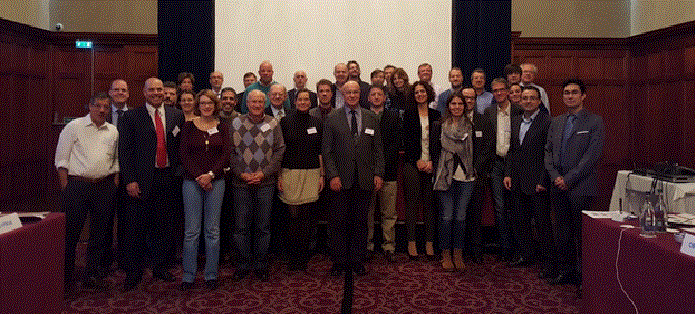
Participants of the ICG NEAMTWS-XII, Dublin, Ireland, Source: IOC-UNESCO
While tsunamis are less frequent in the North-eastern Atlantic, the Mediterranean and connected seas than in the Pacific and Indian Ocean, the risk of loss of lives and economic disaster in the region is high due to strong population density and infrastructure development along its coasts. The ICG/NEAMTWS was established by Assembly of the Intergovernmental Oceanographic Commission (IOC) at its twenty-third session in 2005 by Resolution XXIII-14, with the mandate to coordinate the establishment of a tsunami early warning system for the North-eastern Atlantic, the Mediterranean and connected seas.
Participants reviewed and affirmed the steady progress made in the implementation of the NEAMTWS since its initiation in 2005, particularly the progress achieved by the four Candidate Tsunami Service Providers (CTSPs) in France, Greece, Italy and Turkey. Greece informed ICG/NEAMTWS that its National Observatory of Athens (which acts as a Candidate Tsunami Service Provider) has applied for accreditation. The intention was expressed by France, Italy and Turkey for their respective CTSPs to also apply for accreditation in the next intersessional period.
The Group reviewed the NEAMWave 14 exercise which was conducted from 28-30 October 2014 and its contribution to the implementation of the tsunami warning system for the NEAM region by testing the system in both its up-stream, i.e. tsunami detection, and tsunami alert message delivery, and its down-stream, i.e. the reaction and response components. NEAMWave14, saw a significant increase in the participation of Civil Protection Authorities as compared to NEAMWave 12.
Following the success of the second tsunami exercise for the region, a full-scale exercise named NEAMWave17 is planned in 2017 to test the tsunami readiness of the system and of the Member States.
ICG/NEAMTWS also decided to start conducting quarterly Extended Communication Test Exercises based on a scenario event and encourages Member State Civil Protection Authorities to be involved.
ICG/NEAMTWS recognized the need to continue to exchange information with ICG of the Caribbean Tsunami Early Warning System (ICG/CARIBE-EWS).
The twelfth session of ICG/NEAMTWS was attended by 46 participants from 16 member states and one observer organisation. New officers of ICG/NEAMTWS were elected - Professor Ahmet Yalciner (Turkey) as chair and Dr Anna von Gyldenfeldt (Germany) and Dr Stefano Lorito (Italy) as vice chairs.
The Government of Romania through its National Institute for Earth Physics offered to host the thirteenth session of ICG/NEAMTWS in Bucharest from 26-28 September 2016.
Workshops on Post-IOWave14 Exercise Assessment and Standard Operating Procedures for Tsunami Warning and Emergency Response for India Ocean Countries
ICG/IOTWMS regional training workshops on post-IOWave14 exercise assessment and standard operating procedures (SOPs) were held in Hyderabad, India, 6-10 November 2015, hosted by the Government of India through the Indian Centre for Ocean Information Services (INCOIS). The workshops were attended by twenty-five participants from ten countries, namely: India, Indonesia, Islamic Republic of Iran, Kenya, Malaysia, Maldives, Mauritius, Myanmar, Seychelles and Tanzania. The workshops were conducted by a team of seven trainers from Australia, India, Indonesia, the Indian Ocean Tsunami Information Center and IOC UNESCO.
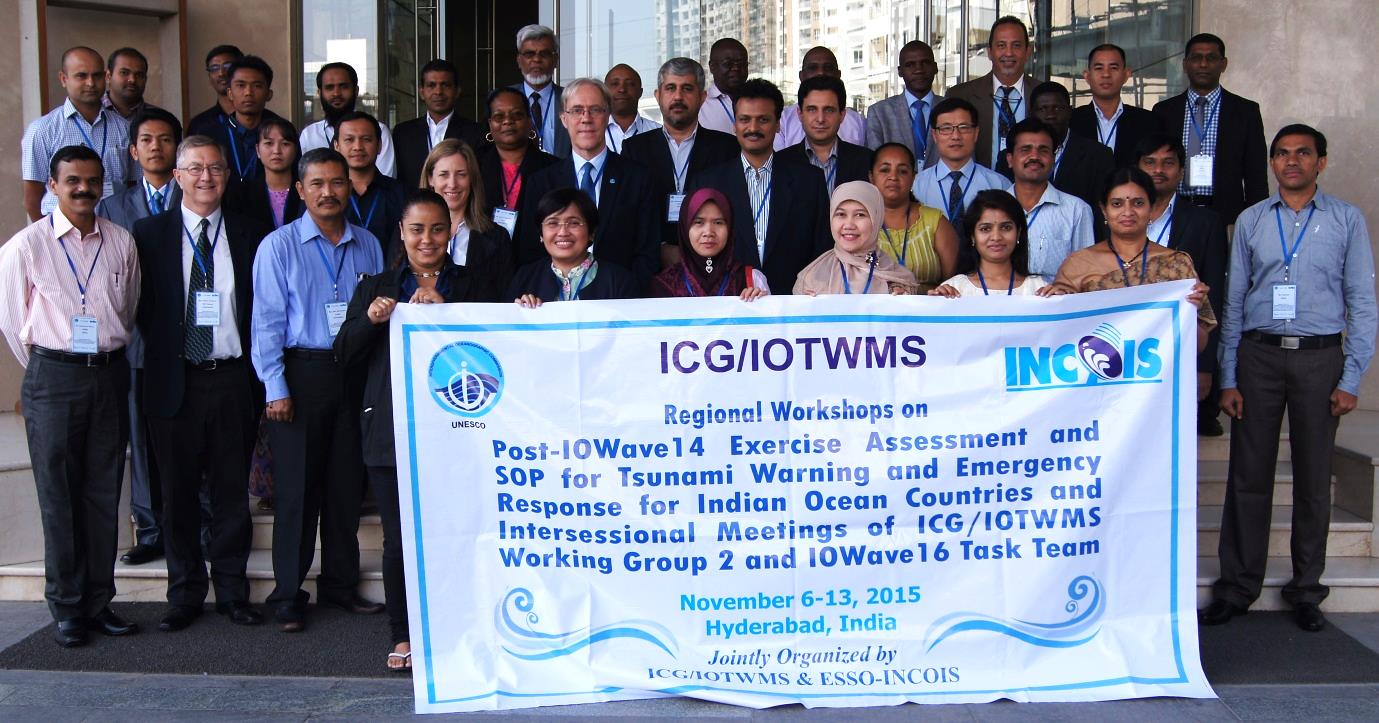
The workshops targeted Indian Ocean countries that intend to participate down to community level including public evacuations in the IOWave16 exercise, which is scheduled for September 2016. The main objective of the workshops was to develop and integrate SOPs between National Tsunami Warning Centres (NTWCs), National Disaster Management Organisations (NDMOs) and Local Disaster Management Organisations (LDMOs).
The workshop programme included lecture sessions, breakout group work, a tabletop simulation exercise and a site visit to INCOIS, one of the three ICG/IOTWMS Regional Service Providers. Lectures and training material were based on manuals and templates developed by IOC UNESCO in collaboration with the NOAA International Tsunami Information Centre (ITIC) since 2008.
The workshops were followed by ICG/IOTWMS intersessional meetings of its Working Group 2 on Tsunami Detection, Warning and Dissemination and the IOWave16 Task Team on 12-13 November 2015.
Más artículos...
El programa sobre tsunamis
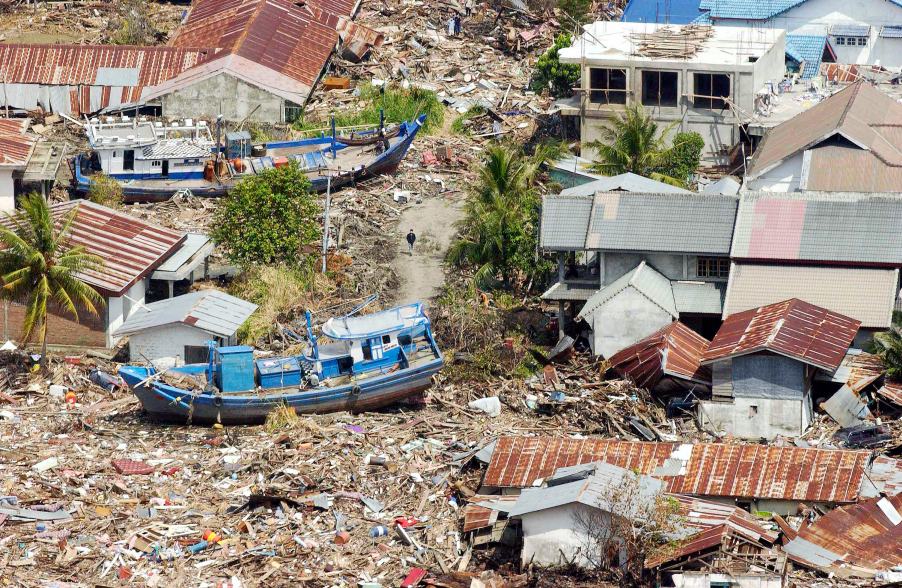
La costa de Indonesia, entre Banda Aceh y Meulaboh, tras el seísmo y tsunami del 26 de diciembre de 2004. Fotografía de Evan Schneider © Foto de Naciones Unidas
La UNESCO presta apoyo a los Estados Miembros con el fin de mejorar sus capacidades de evaluación de riesgos de tsunami, implantar sistemas de alerta temprana y mejorar la preparación de las comunidades amenazadas. La UNESCO colabora estrechamente con instituciones nacionales, y promueve la cooperación interinstitucional y regional. Los centros regionales especializados proporcionan información sobre los tsunamis que, conjuntamente con los análisis efectuados a nivel nacional, sirven para elaborar las alertas al público. Además, la UNESCO promueve metodologías comunitarias mediante el desarrollo de planes de respuesta y campañas de sensibilización, en las que participan en buena medida instituciones docentes y usuarios finales.
Upcoming Events
7 August 2024
19 August 2024
19 - 30 August 2024
Chile