Sea Level Monitoring
TSU/MAB Coastal Hazards Project
Coping with Covid19: Gauging sea level rise in Karachi
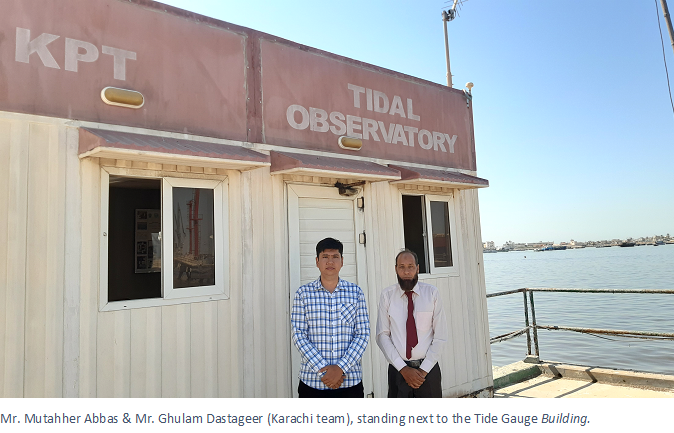
Despite Covid-19 restrictions, UNESCO together with the UK National Oceanography Centre enabled Pakistan to repair the Karachi tide gauge, key instrument to monitoring sea level data for Pakistan and the region.
In operation for over 15 years, the Karachi gauge provides valuable sea level data from an under-sampled region of the world to the Global Sea Level Observing System (GLOSS), coordinated by the UNESCO’s IOC. The gauge’s operation was interrupted for a short period during 2019 and 2020, due to hardware failures.
Support from UNESCO’s Intergovernmental Oceanographic Commission (IOC) and from the UK National Oceanography Centre enabled the Pakistan Hydrographic Department to carry out all the necessary repairs to the Karachi tide gauge despite severe Covid-19 restrictions in place, assuring a continuous monitoring of tides and flow of sea level data for national, regional and global sea level rise modelling.
Coping with Covid19 - Awards Ceremony in Puerto Plata, Dominican Republic, for the winners of the “Tsunami Ready Youth Art Competition in the Caribbean”
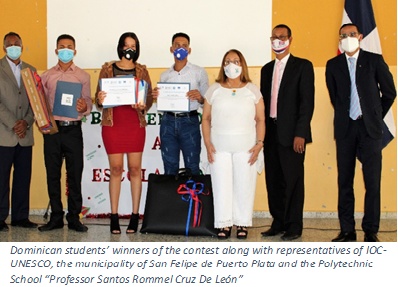
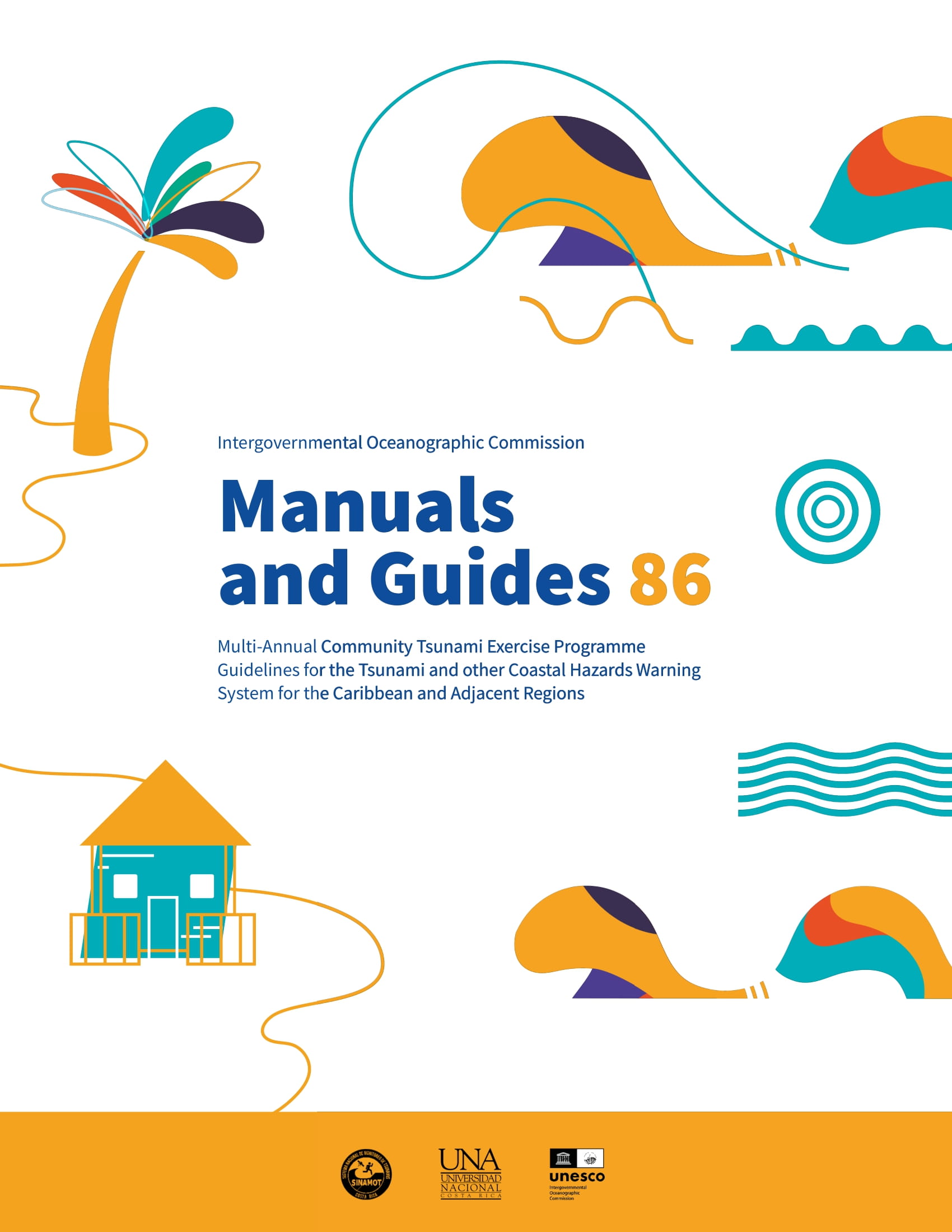
Within the framework of the Union European ECHO funded project "Strengthening Capacities for Early Warning and Response to Tsunamis and other Coastal Threats", the Intergovernmental Oceanographic Commission (IOC) of UNESCO delivered the recognitions and awards to three students from the Polytechnic Professor Santos Rommel Cruz from León of the municipality of San Felipe de Puerto Plata. They were national winners of the Regional Visual Arts Contest for young people “Tsunami Ready”. This activity was postponed due to sanitary measures and restrictions due to Covid-19. With all due measures the activity has now been completed, thans to the perseverance of national and local partners.
Basic SeisComP Training 2020
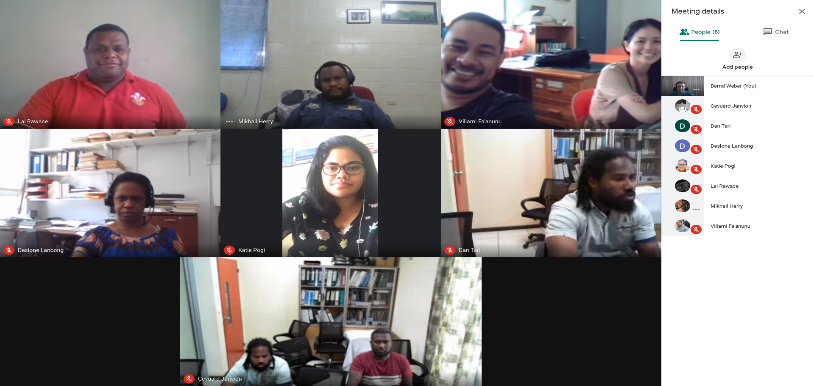
The Oceania Regional Seismic Network (ORSNET) member states completed an 8-days online Basic SeisComP Training from 26th October to 4th November 2020 delivered by gempa GmbH. ORSNET member states were last trained on SeisComP3 by gempa GmbH in 2013. This gap in capacity development was recognized at the 28th Meeting of ICG/PTWS held in Nicaragua in April 2019 under the Working Group 2- Tsunami Detection, Warning and Dissemination through the Fifth Meeting of the Task Team Seismic Data Sharing in the Southwest Pacific and the Seventh Meeting of the Pacific Islands Countries and Territories Working Group on Tsunami Warning and Mitigation held on March 2019 in Noumea, New Caledonia.
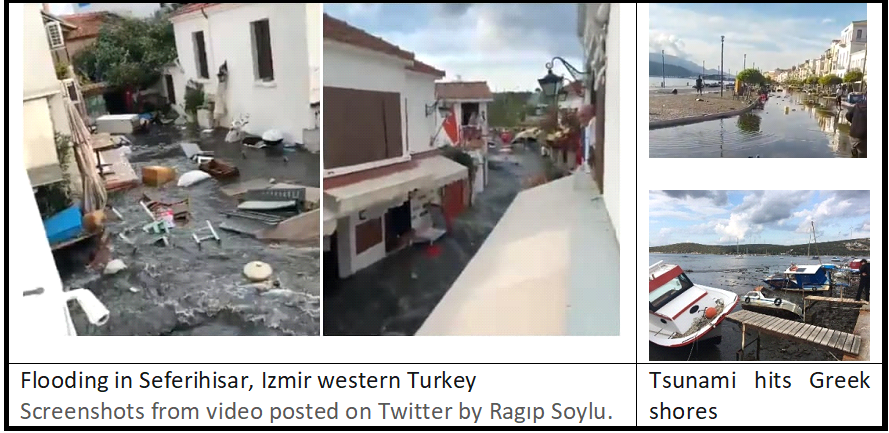
Tsunami hits Greece and Turkey after 7.0 earthquake
On 30 October 2020, a significant tsunami triggered by an earthquake of magnitude 7.0 Mw hit the island of Samos (Greece) and the Aegean coast of the Izmir region (Turkey). The event shed light – once again – on the complexity of warning of locally generated tsunamis of rapid onset which challenged the ability of local authorities and communities at risk to take early action. According to Turkey's Disaster and Emergency Management Authority (AFAD), one of the confirmed victims in Turkey drowned because of the tsunami. This event is a bitter reminder after the wake-up call on 20 July 2017, following the Bodrum (Turkey)-Kos (Greece) tsunami, to increase tsunami preparedness through enhanced sea-level detection networks, education, as well as international cooperation.
5th World Tsunami Awareness Day

5th World Tsunami Awareness
Day (5 November 2020)
5th November was designated as World Tsunami Awareness Day (WTAD) by the United Nations General Assembly in December 2015 through its Resolution A/RES/70/203. The resolution requested that the United Nations Office for Disaster Reduction, in collaboration with relevant organizations of the United Nations system, facilitate the observance of WTAD, starting in 2016.
The 2020 edition of the World Tsunami Awareness Day (WTAD) was jointly organized by UNDRR and the Intergovernmental Oceanographic Commission of UNESCO, in collaboration with other UN and external partners (i.e. UNDP), notably with the sponsorship of the Government of Japan.
The WTAD 2020 was structured as a 30-day “campaign” with three main events focused on Global Target (e) of the Sendai Framework for Disaster Risk Reduction 2015-2030i:

Three key activities:
1) 13 October 2020: online live screening of the 52’ documentary “Tsunamis: Facing a Global Threat” (ZED productions) by French film maker Pascal Guérin showcasing field research activities facilitated by IOC-UNESCO in the aftermath of the 2018 tsunami in Palu, Indonesia. The live streaming was followed by a panel discussion with the film maker and top experts.
2) In November, a series of webinars were organized by the regional IOC teams in charge of coordinating regional tsunami early warning systems, in cooperation with UNDRR regional offices:
3 November – Caribe EWS
4 November – Indian Ocean;
4 November – North Eastern Atlantic and Mediterranean Sea;
4 November – Pacific Island Countries
10 November – Central and South America Pacific Ocean.
This series of webinars focused on the need to connect state-of-the-art scientific expertise with local community preparedness to ensure science-based tsunami local plans are in place including through IOC-UNESCO led Tsunami Ready recognition processes.
3) 5 November: A virtual high-level event during the Third Tsunami Museum Conference showcased how museums contribute to keeping the memory of past disasters and lessons learned alive. The event featured recorded testimonials of tsunami survivors.
More Articles...
- Exercise Indian Ocean Wave 2020
- Going “Tsunami Ready” in the Indian Ocean: a UNESCO Online Lecture Series
- Communities in Odisha State, India receive Tsunami Ready recognition from UNESCO-IOC
- New Information Document Underscores the Growing Coastal Exposure and Need to Continue Building Tsunami Resilience in the North-eastern Atlantic, Mediterranean and Connected Seas region
About the Tsunami Programme
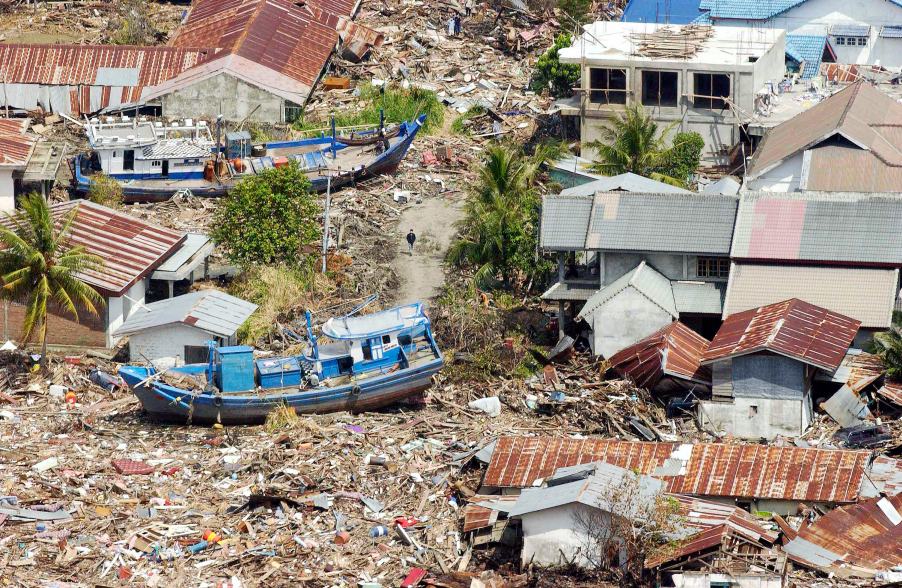
The Indonesian coast, between Banda Aceh and Meulaboh, after the earthquake and the tsunami of 26 December 2004. Photo by Evan Schneider © UN Photo
UNESCO supports Member States in improving capabilities for tsunami risk assessment, implementing early warning systems and enhancing preparedness of communities at risk. UNESCO works closely with national institutions and promotes inter-institutional and regional cooperation. Specialized regional centers provide tsunami information that, together with national analysis, is the basis of the warnings issued for the public. In addition, UNESCO promotes community-based approaches in the development of response plans and awareness campaigns which strongly involve education institutions and end-users.
Upcoming Events
7 August 2024
19 August 2024
19 - 30 August 2024
Chile