Sea Level Monitoring
TSU/MAB Coastal Hazards Project
Ninth meeting of the IOC-UNESCO – ICG/PTWS Regional Working Group in Tsunami Warning and Mitigation System for Pacific Island Countries and Territories
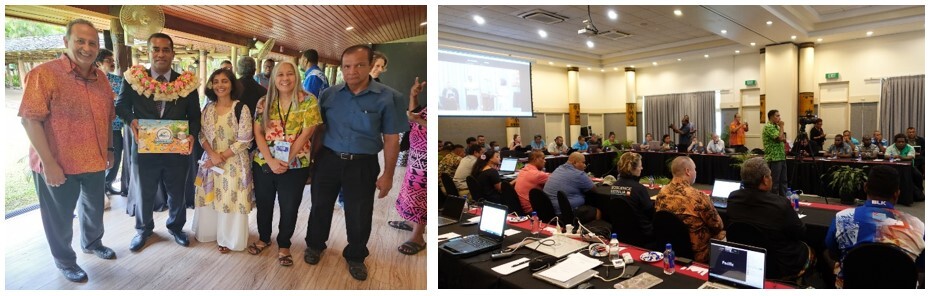
The Ninth Meeting of the Regional Working Group on Tsunami Warning and Mitigation System for Pacific Island Countries and Territories (WG-PICT) was attended by scientific and technical officials from 16 Pacific Islands National Tsunami Warning Centres (NTWC), National Disaster Management Offices (NDMO), and Geological Services from 2-3 February 2023 in Nadi, Fiji.
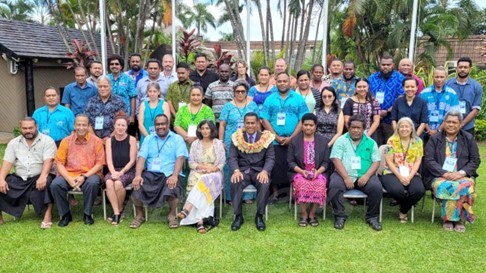
Ms. Nisha, Director of the UNESCO Office for the Pacific States formally welcomed representatives of PICTs and Ms. Esline Garaebiti, Director General of Government of Ministry of Climate Change Adaptation, Meteorology, Geo-hazard, Environment, Energy and Disaster Management and Chair of the WG-PICT delivered her statement on the importance of the regional coordination on strengthening PICT tsunami warning and mitigation system especially on data and information sharing to improve warning and response time for the region.
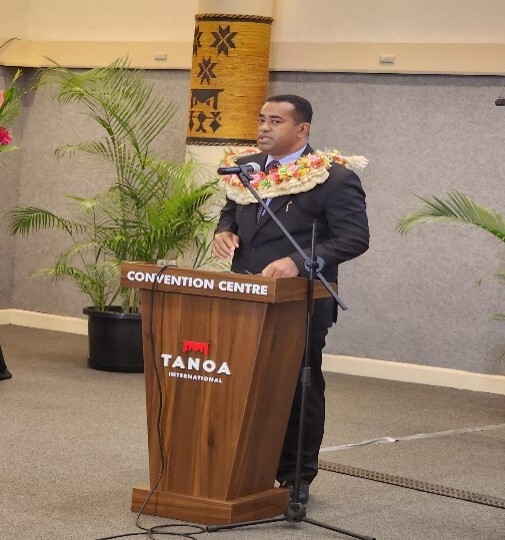
While opening the meeting at the Tanoa Hotel in Nadi, Minister for Lands and Mineral Resources, Mr Filimoni Vosarogo, said that the Pacific cannot address tsunami threats effectively if we continue to work in isolation. He highlighted that regional and international collaboration is the only way to address our limited local capacity to effectively prepare and respond to tsunamis.
“We cannot afford to work in isolation when it comes to dealing with a natural phenomenon such as tsunamis,” said Minister Vosarogo.
Minister Vosarogo underlined that this regional technical meeting is critical to the safety and security of the Pacific Islands Member States and its People. He recalled that, to show their commitment, the Ministers of the 17 Pacific Countries and Territories endorsed the Nadi Declaration in September last year which paves the way for stronger collaborations such as this.
 Times and events are changing and a classic example was the volcanic eruption in Tonga last year known as the Hunga-Tonga Hunga Ha’apai eruption which has added a new dimension to early warning systems for tsunamis around the world because of its far-reaching impacts in the Pacific Ocean, causing surges in Hawaii, Japan and the western coasts of North and South America.
“This event continues to challenge our understanding of the risks posed by tsunamis and the way tsunamis should be monitored and detected to inform risk reduction measures, especially the provision of early warning to safeguard lives and livelihood.”
Minister Vosarogo also conveyed the Fiji Government’s continued commitment with the upgrading of Fiji’s National Seismic network costing the government around $0.9 million.
In addition, he conveyed the Fiji Government’s appreciation to the Intergovernmental Oceanographic Commission of the United Nations Educational, Scientific and Cultural Organization (IOC-UNESCO) who have invested immensely in assisting the Pacific Island countries with their Tsunami Early Warning System.
“The IOC-UNESCO is at the forefront of our efforts as Pacific Islands countries to improve our early warning systems and without them, this event would not be possible so thank you for keeping the Pacific close to your hearts.”
The first day of the meeting commenced with the meeting of the Task Team Capacity Development of the Regional Working Group on Tsunami Warning and Mitigation System for Pacific Island Countries and Territories (WG-PICT).