Sea Level Monitoring
TSU/MAB Coastal Hazards Project
CARIBE WAVE 2016 Regional Tsunami Exercise
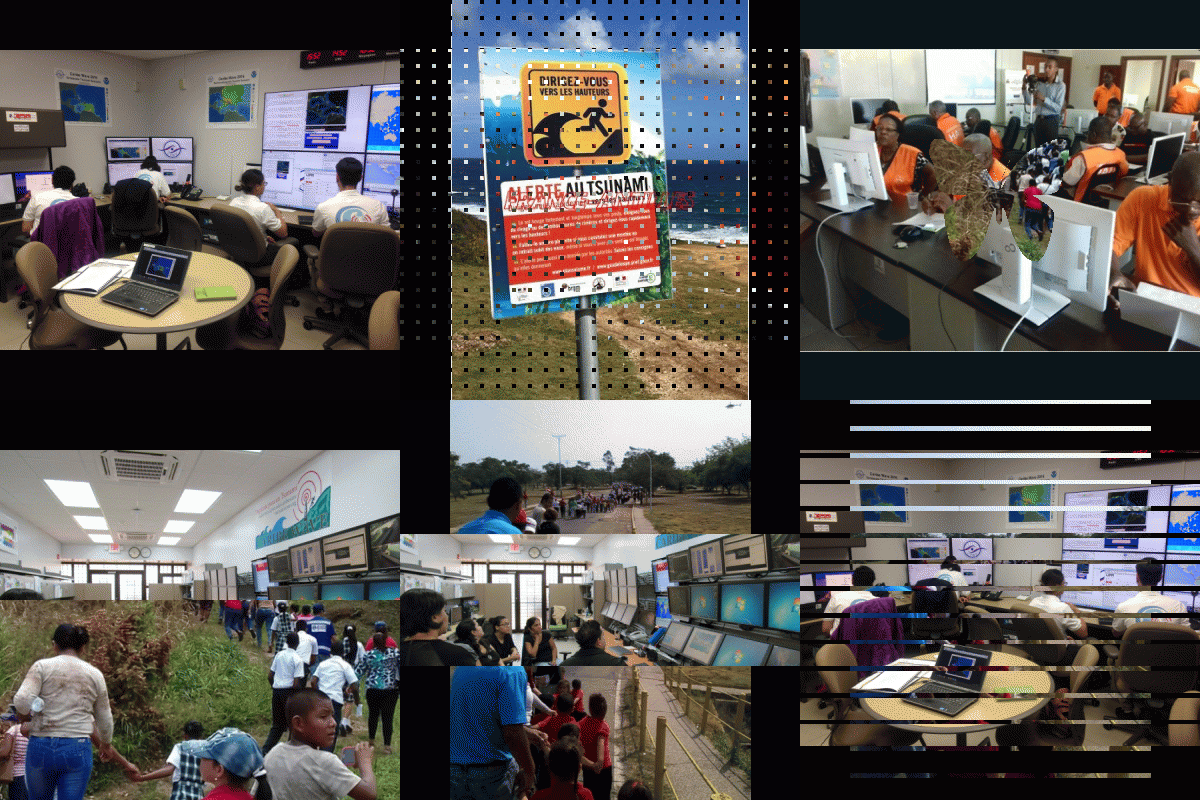
Over one quarter million people from Bermuda thru Brazil and across the entire Caribbean basin participated in the CARIBE WAVE 16 tsunami exercise held on March 17. This represents an increase of 41% from 2015 (191,000 participants). This level of participation makes the CARIBE WAVE 16 exercise the largest international tsunami drill in the world. The participants in the fifth annual regional tsunami exercise hailed from 32 nations and 15 territories and represented a participation rate of almost 100% of all the Members of the UNESCO Intergovernmental Coordination Group for Tsunamis and other Coastal Hazards for the Caribbean and Adjacent Regions (CARIBE EWS).
Registered participants included designated CARIBE EWS Tsunami Warning Focal Points (TWFPs) and National Tsunami Warning Centers (NTWCs), as well as emergency and preparedness organizations, K-12 Schools, government agencies, colleges and universities, healthcare and hotels, among others. According to the registration system hosted by TsunamiZone.org, 270,875 people were registered as of March 18, including over 118,000 in Puerto Rico, 62,000 in Guadeloupe, 37,000 in Venezuela, 21,000 in Martinique, and 14,000 in Grenada. The jurisdiction of the BVI activated 16% or its population with 4613 participants.
CARIBE WAVE 2016 had two scenarios: Venezuela and Northern Hispaniola. The Venezuela scenario simulated a tsunami generated by a magnitude 8.4 earthquake located adjacent to the northern coast of Venezuela with waves of almost 12 meters. The Northern Hispaniola Scenario was based on a magnitude 8.7 earthquake with waves of almost 17 meters forecasted for the shores of Haiti and Dominican Republic. The simulated tsunami messages were disseminated by US Pacific Tsunami Warning Center (PTWC), the CARIBE EWS Tsunami Service Provider. These messages were disseminated mainly over the Global Telecommunication System and Email. Many countries also generated and disseminated their own domestic tsunami warning products for their areas of responsibility.
Sirens, emails, emergency alert systems, text messages, media outlets, NOAA weather radio, and social media were used by many TWFP to further disseminate the messages. In addition to the communication tests, exercises were conducted at various additional levels of magnitudes and sophistication and included seminars, table top exercises, video/web conferencing and drills.
Planning for CARIBE WAVE 16 has taken over a year and was coordinated by a task team led by Dr. Elizabeth Vanacore of the Puerto Rico Seismic Network and facilitated by the US NWS Caribbean Tsunami Warning Program. For the first time TsunamiZone.org, was used to handle the registration of the participants. Registration was available for the first time for all three major languages used in the Caribbean and adjacent regions, English, French, and Spanish. The Exercise Handbook and other information and supporting documents for the exercise will remain posted on different websites including the CTWP (http://caribewave.info).
The exercise was conducted under the framework of the CARIBE EWS, which was established in 2006 after the devastating Indian Ocean Tsunami and the recognition of the high tsunami threat in the Caribbean. Each of the countries and territories will be providing feedback on the exercise, the Enhanced PTWC products and their individual state of preparedness. The results of CARIBE WAVE 2016 will guide future work for this Intergovernmental Coordination Group.
Prepared by: Christa G. von Hillebrandt-Andrade, Manager, NOAA NWS Caribbean Tsunami Warning Program, Mayagüez, Puerto Rico and Elizabeth Vanacore, Task Team Leader CARIBE WAVE 2016, Puerto Rico Seismic Network, University of Puerto Rico at Mayagüez.