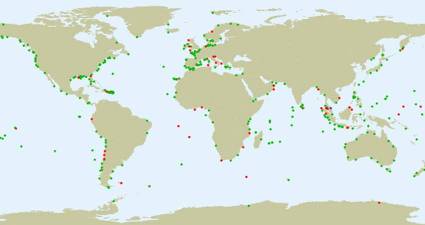
Sea Level Monitoring
TSU/MAB Coastal Hazards Project
Emerging Pilot Tsunami Ready Initiatives: Italy’s Civil Protection Council of Ministers establishes the Italian National Tsunami Ready Board, a first in NEAM Region
To better prepare for tsunamis, there is a need to focus on tsunami education as much as early warning facilities and systems. Currently, there are no established community tsunami recognition programmes in the North-Eastern Atlantic and the Mediterranean and Connected Seas (NEAM) region like in other regions (Caribbean, Indian Ocean and the Pacific). Nonetheless, the Tsunami Ready (TR) pilot programme in the NEAM region is getting traction. Tsunami Ready is a performance-based recognition awarded to coastal communities that have established effective preparation measures to respond, save lives and minimize the loss of property in the event of a tsunami.
In April 2021, under the Intergovernmental Coordination Group (ICG) / NEAMTWS framework, a Tsunami Ready Team was established under the leadership of Working Group 4 (Public Awareness, Preparedness and Mitigation), tasked with coordinating, developing and recommending strategies, actions and an implementation plan for community Tsunami Ready in NEAMTWS. In parallel to this process, several countries, including Italy, France, Greece, Portugal Spain and Turkey have started identifying pilot sites, as well as piloting Tsunami Ready initiatives in NEAM region.
In 2020, Italy, for example launched three TR pilot projects in Minturno in Lazio region, Palmi in Calabria region and Pachino/Marzamemi in Sicily. These municipalities are situated in areas that are characterized with tsunami hazard ranging from high to moderate levels and are suitable sites to test the applicability of TR in the Italian context.
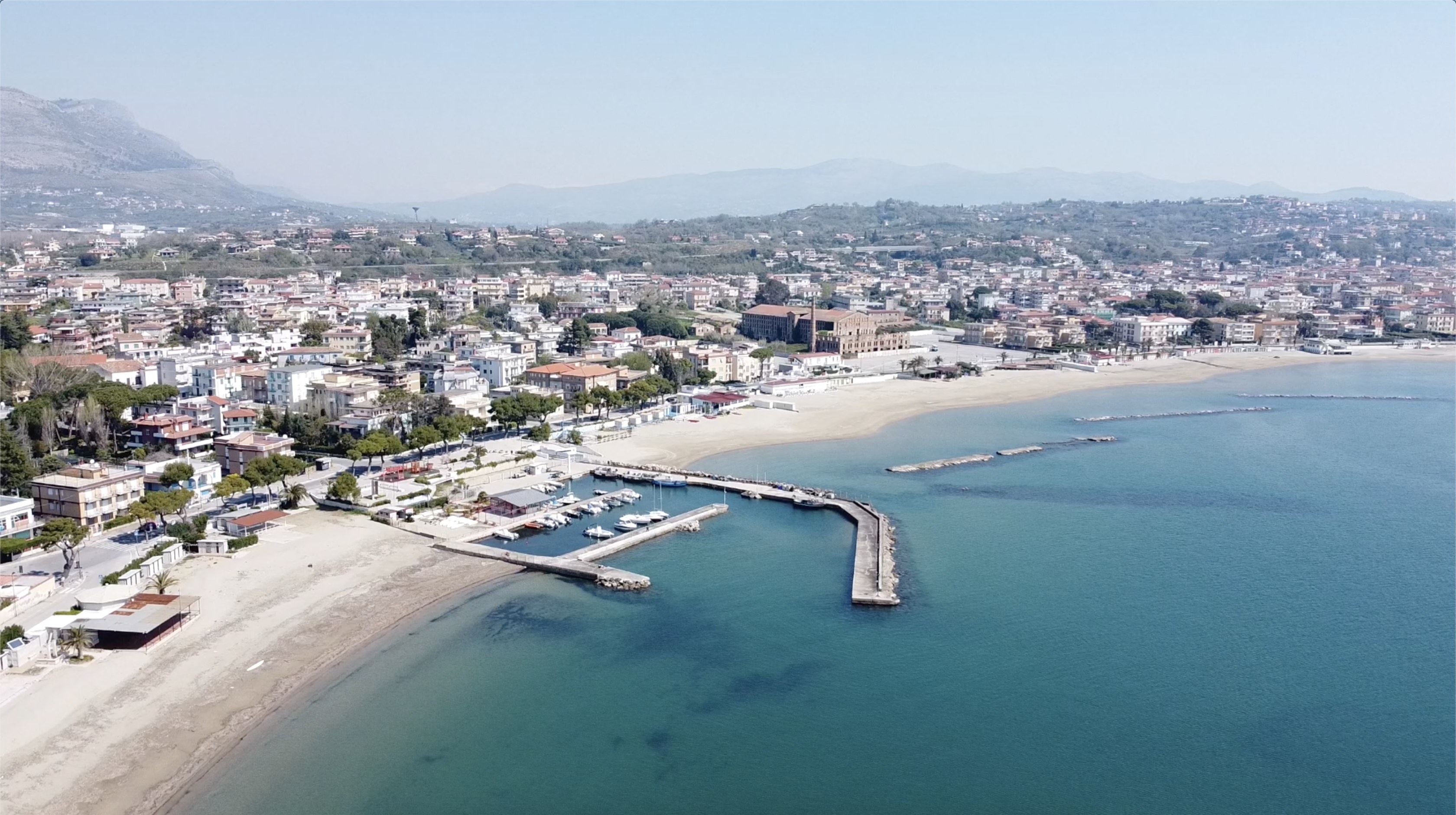
Aerial views of Minturno-Scauri by Paola Rotasso and Riccardo Clemente
CARIBE WAVE exercise continues to promote tsunami preparedness even despite the ongoing pandemic situation
The annual CARIBE WAVE exercise for the Caribbean and Adjacent Regions has been improving and validating tsunami readiness since 2011. The 2021 exercise took place on March 11 in commemoration of the 10th anniversary of the Tohoku earthquake and tsunami in Japan. Despite the ongoing coronavirus emergency implications, the UNESCO IOC Intergovernmental Coordination Group for Tsunami and other Coastal Hazards Warning System for the Caribbean and Adjacent Regions decided to continue with the exercise. The CARIBE WAVE Task Team recommended for countries to plan and execute accordingly, and take into consideration national and CARIBE EWS COVID-19 guidelines.
The exercise included two components, communications from the Pacific Tsunami Warning Center, the Regional Tsunami Service Provider, and evaluation of the tsunami procedures and programs within Member States/Territories. Two scenarios were tested: Jamaica and Northern Lesser Antilles. The first scenario simulated a tsunami generated by a magnitude 8.0 earthquake located along the Enriquillo-Plantain Garden Fault Zone (EPGFZ); the second scenario was a tsunami generated by a magnitude 8.5 earthquake located Northeast of the Leeward Island.
Greek Tsunami Service Provider Announces the Deployment of New Tsunami Information Products
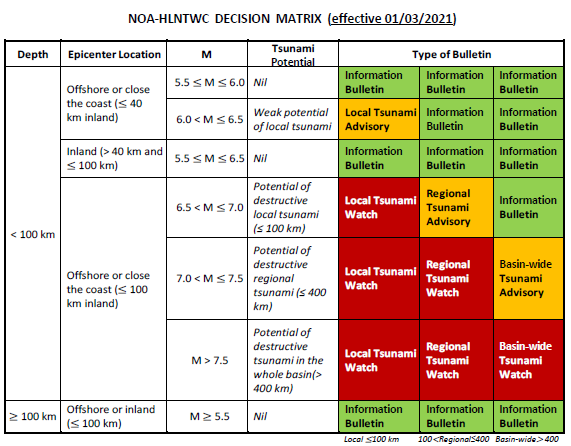
The Greek Tsunami Service Provider NOA-HLNTWC has recently announced that, starting in March, they will be providing enhanced tsunami products to their subscribers in the form of maps. Tsunami Service Providers (TSPs) in the North-Eastern Atlantic, Mediterranean and connected seas (ICG/NEAMTWS), in particular KOERI-TSP (Turkey), have piloted tsunami enhanced products since 2017 in addition to text tsunami bulletins shared to their subscribers. Following the ICG/NEAMTWS developments, NOA-HLNTWC, the Greek TSP, will also provide enhanced tsunami products based on an updated Decision Matrix (DM).
The new DM is a modified version of the official NEAMTWS DM. In the event of an earthquake, the DM defines the alert level at each forecast point depending on the estimated potential of a possible tsunami. Depending on the alert level, different messages are issued by TSPs. An information bulletin (green) is released at the lowest level, followed by a local, regional or basin-wide Tsunami Advisory (orange). The highest level of alert is the Tsunami Watch (red). The DM's new changes, which came into force on 1 March 2021, concern four earthquake magnitude classes where the threshold values have been elevated by one step and an extra earthquake magnitude class has been added.
Tamarindo and Sámara, Costa Rica, recognized Tsunami Ready
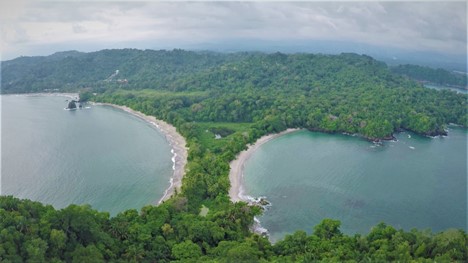
On February 8th, 2021, Tamarindo and Sámara were recognized as Tsunami Ready by the UNESCO Intergovernmental Oceanographic Commission. They joined Ostional and El Coco as Tsunami Ready communities in the Pacific coast of Costa Rica. Their main activities are tourism activities in connection with nature.
Tamarindo is subject to tsunami hazard and at the same time is a high spot of national and international tourism. That is why the touristic sector, grouped at the Integral Development Association (Asociación de Desarrollo Integral de Tamarindo, ADI-Tamarindo), took a very active role during the process of Tsunami Ready recognition. They organized their staff, lead the evacuation plan development, put the evacuation route signs, created a English/Spanish video for tourists and organized the tsunami exercise. Tamarindo performed an online tabletop due to pandemics, on September 2020
In Sámara, all neighborhoods participated, created their own warning dissemination system, and supported the deployment of the tsunami evacuation signs donated by the International Migration Organization (IMO). Sámara Elementary School performed a tsunami evacuation drill as part of the National Earthquake Drill in 2019.
Countries in NEAM region Prepare for the fourth Regional Tsunami Exercise (NEAMWave21)
Countries in the North-eastern Atlantic, Mediterranean and Connected Seas (the NEAM region) will participate in a tsunami test and response exercise from 8 to 10 March 2021. NEAMwave21 will coincide with the 10th commemoration of 11 March 2011 Tohoku Earthquake and Tsunami. The purpose of this exercise is to evaluate local tsunami response plans, increase tsunami preparedness, and improve coordination throughout the region. It is the fourth such international exercise in this region after NEAMWave12 (2012), NEAMWave14 (2014) and NEAMWave17 (2017).
More Articles...
About the Tsunami Programme
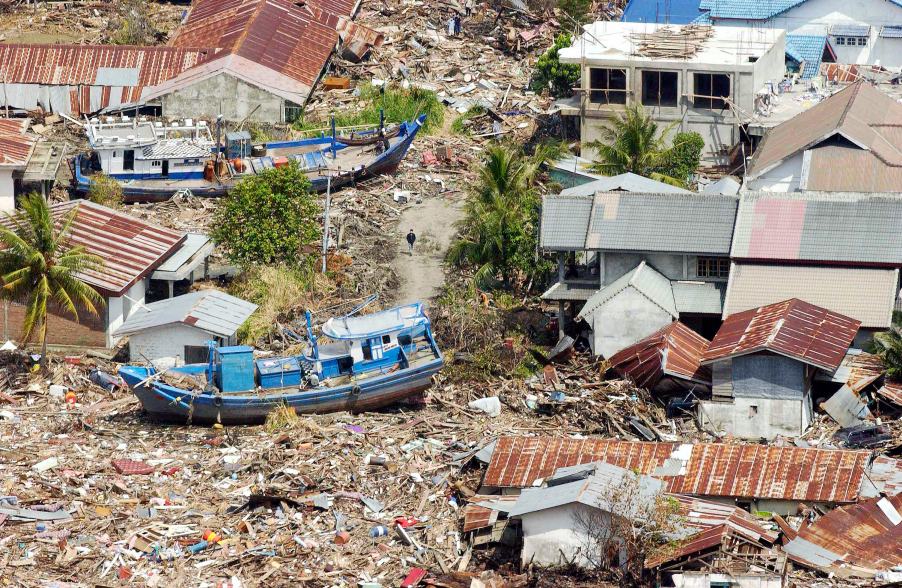
The Indonesian coast, between Banda Aceh and Meulaboh, after the earthquake and the tsunami of 26 December 2004. Photo by Evan Schneider © UN Photo
UNESCO supports Member States in improving capabilities for tsunami risk assessment, implementing early warning systems and enhancing preparedness of communities at risk. UNESCO works closely with national institutions and promotes inter-institutional and regional cooperation. Specialized regional centers provide tsunami information that, together with national analysis, is the basis of the warnings issued for the public. In addition, UNESCO promotes community-based approaches in the development of response plans and awareness campaigns which strongly involve education institutions and end-users.
Upcoming Events
7 August 2024
19 August 2024
19 - 30 August 2024
Chile