
Sea Level Monitoring

TSU/MAB Coastal Hazards Project
Ecosystem services and DRR
In the context of the TSU-MAB Initiative, the role and functions of ecosystem services in the coastal area of the Savegre BR is being explored. The aim of this study is to analyze types of coastal ecosystems and land cover categories, such as mangrove and riparian forest; and to identify and assess the ecosystem services that they provide in relation to disaster risk reduction, addressing specifically tsunami, storm surge, and stream/river flooding from precipitation events.
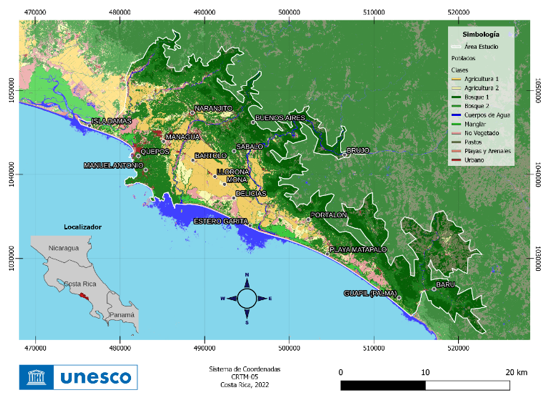
Information about ecosystem services provided by the coastal and marine areas of the Savegre Biosphere Reserve is useful to increase support for safeguarding the multiple benefits provided by these ecosystems, to inform management decisions, to ensure equity in resource use, and to enable evaluation of the consequences of management or policy changes on ecosystem services provided by coastal ecosystems. Quantifying and mapping these benefits will help the Savegre Biosphere Reserve managers and local decision-makers justify the importance of local ecosystems for biodiversity conservation, attract new sources of funding, manage the Biosphere Reserve more effectively, and allocate scarce financial or human resources to the communities that most need them. Moreover, increasing awareness of the benefits provided by these ecosystems can help solicit support for safeguarding them.
The involvement of local stakeholders is key to identify relevant ecosystem services as well as to provide sources of data, information and knowledge that can result in a more robust assessment and ensure that assessment results are used for management and decision-making processes. Furthermore, the outcomes of this study will be shared with local institutions in a designated workshop on nature-based solutions (planned for November 2022) and will support the development of mechanisms to compensate landowners for implementing management practices and nature-based solutions that support disaster risk reduction.