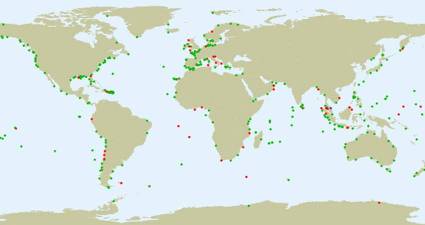
Sea Level Monitoring
TSU/MAB Coastal Hazards Project
Strengthening Tsunami Warning through Regional Collaboration in the North West Indian Ocean
UNESCO-IOC’s project on Strengthening Tsunami Warning in the North West Indian Ocean through Regional Collaboration with funding from the ESCAP Multi-Donor Trust Fund for Tsunami, Disaster and Climate Preparedness marks a milestone as it transitions to the second phase.
The project is underpinned by a programmatic approach designed to establish long-term national working processes while aligning with the targets of the Agenda 2030 for Sustainable Development. Being closely tied with the overall governance of the UNESCO-IOC Intergovernmental Coordination Group for the Indian Ocean Tsunami Warning and Mitigation System (ICG/IOTWMS), the National Tsunami Working Groups, future Tsunami Ready communities, and the associated working processes will be sustained beyond the project period and also replicated in other regions of the Indian Ocean beyond Makran.
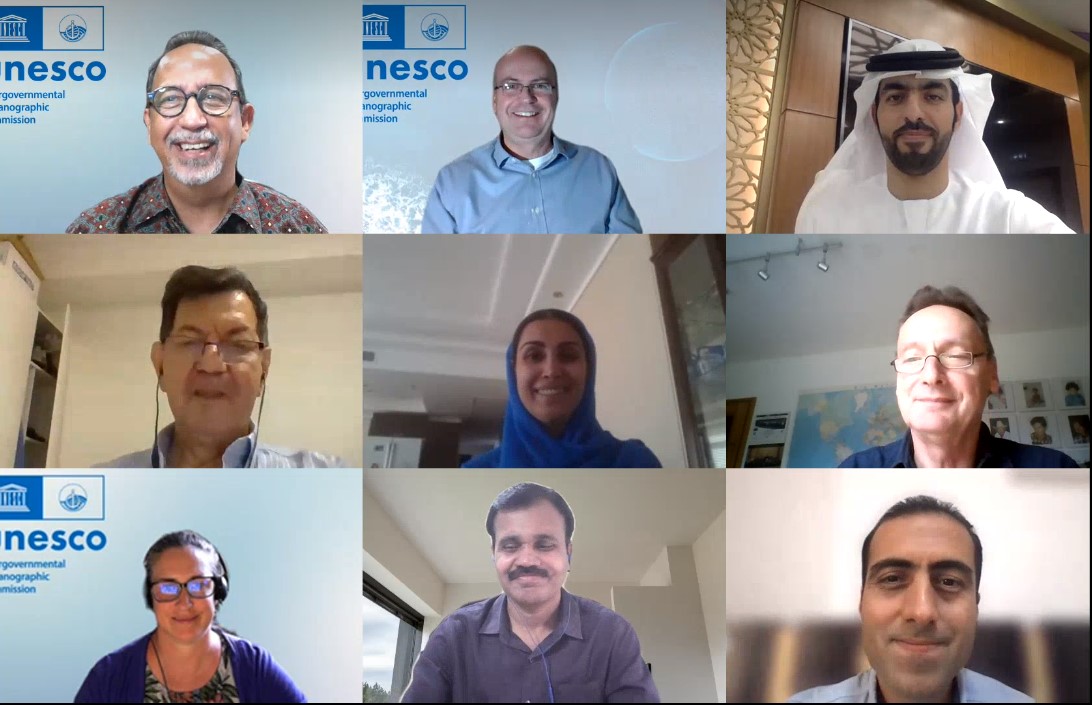
Photo:
Participants and team members discuss tsunami warning chains in North West Indian Ocean countries at the Regional Standard Operating Procedure Workshop for Disaster Management Organisations held online on 12-14 October 2021.
The first phase of the project was implemented between May 2019 and October 2021 with a focus on tsunami risk knowledge and strengthening of national tsunami warning chains. The primary outcomes of Phase 1 are: (a) Better understanding of the tsunami risk in the Makran region based on scientific research; and (b) Improvement of national warning services at the National Tsunami Warning Centre (NTWC) level and the organisation of national warning chains involving NTWCs, Disaster Management Offices (DMOs) and the broadcast media to assure timely warnings and rapid response, with due emphasis on self-protection for near-field tsunami events when a tsunami may arrive in minutes. The establishment of National Tsunami Working Groups with membership across multiple institutions has resulted in project ownership and accountability among national stakeholders including NTWCs, DMOs and the broadcasting media. Pilot coastal communities have been identified and engaged to ensure national tsunami warnings effectively reach the local community level.
The second phase builds on the results achieved and lessons learnt during Phase 1, with a focus now more on community tsunami preparedness. The primary outcomes will be: (a) Development of hazard and inundation maps by enhancing national capacities for tsunami modelling; (b) Development of evacuation plans in line with the requirements of near-field tsunamis; and (c) Finalisation of remaining activities from Phase 1 delayed by the COVID-19 pandemic. As part of Phase 2, selected pilot coastal communities in India, Iran, Pakistan, Oman and United Arab Emirates will begin to be engaged in the UNESCO-IOC Tsunami Ready programme.
The third and final phase of the project has been designed for longer term and sustainable outcomes, including Tsunami Ready certification. These include: (a) Enhancing national tsunami early warning systems in the countries by all stakeholder involved and the public in general; (b) Up-scaling of the tested and validated approaches to support self-protection at local level developed in Phase 1; (c) Developing tsunami risk assessment and development of mitigation strategies looking at a multi-hazard risk management approach and considering risk transfer / financing solutions where appropriate; (d) Strengthening of self-protection arrangements at local level, including establishment of local 24/7 mechanism and warning dissemination technologies, promotion of the development of sub-district and institutional evacuation plans in line with district or city plans, development of strategies to strengthen tsunami awareness and knowledge at community level that includes the public and private sectors, ( e) Strengthening of tsunami emergency response plans as well as response capabilities, and (f) Continuing to strengthen the understanding of the dynamics of seismic and non-seismic generated tsunamis in the Makran Subduction Zone based on research by the science community.