Sea Level Monitoring
TSU/MAB Coastal Hazards Project
The Pacific Tsunami and Warning System Steering Committee meets in Hawai‘i
The Steering Committee for the Pacific Tsunami and Warning System (PTWS) and its various working groups met in Honolulu, Hawaii, USA from 4th to 8th June to discuss progress of work assignments and activities since the 27th Session of the Intergovernmental Coordination Group (ICG) for PTWS held in Tahiti, French Polynesia in March 2017, and to plan for the next ICG Session in 2019.

The meetings were attended by the chairs and co-chairs of PTWS working groups and its task teams, as well as a number of national representatives including heads of tsunami warning centres and disaster management offices from the Republic of Fiji, Solomon Islands and Tonga,
The three PTWS technical working groups – WG 1 – Understanding Tsunami Risk, WG 2 – Tsunami Detection, Warning and Dissemination, and WG 3 – Disaster Management, Preparedness and Reduction, met on 4th and 5th June followed by a meeting of the Regional Working Group on Tsunami Warning and Mitigation in the Pacific Islands Countries & Territories (PICTs) on 6th June. Reports of these meetings along with reports received from other regional WGs and their task teams were presented to the PTWS Steering Committee that met on 7th and 8th June. The outcomes and reports of the meetings are available from the UNESCO - Intergovernmental Oceanographic Commission (IOC) website. It was very encouraging to see Pacific Island Countries and Territories (PICTs) very actively participating and contributing to PTWS programmes and activities, both at regional and Pacific levels.
(Note taken from the UNESCO Office for Pacific States Newsletter April-June 2018, contact: Ms Yi SHi Cette adresse e-mail est protégée contre les robots spammeurs. Vous devez activer le JavaScript pour la visualiser. )
Le programme relatif aux tsunamis – ce qu’il est
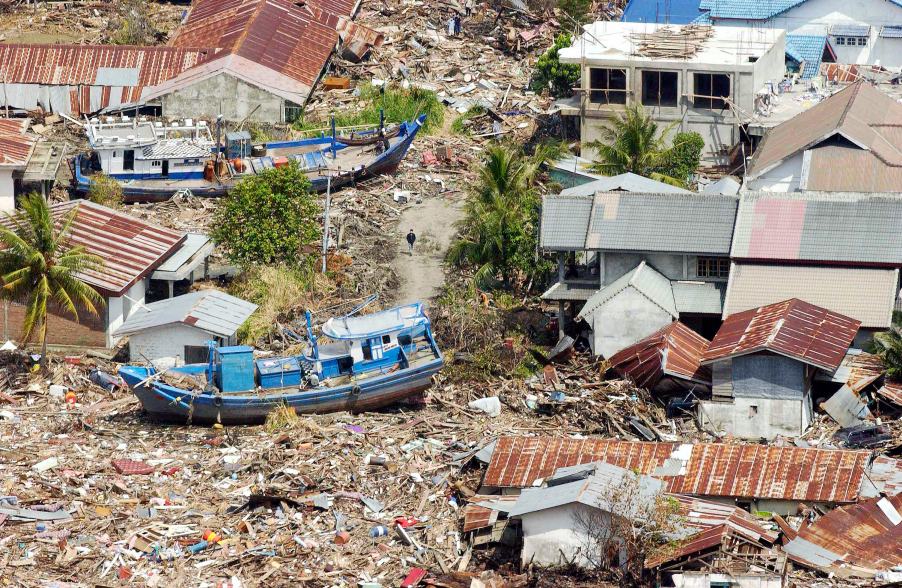
La côte indonésienne, entre Banda Aceh et Meulaboh, au lendemain du tremblement de terre et du tsunami du 26 décembre 2004. Photo Evan Schneider © UN Photo
L’UNESCO aide les États membres à renforcer leur capacité d’évaluation du risque de tsunami, à mettre en œuvre des systèmes d’alerte rapide aux tsunamis et à mieux préparer les populations exposées. Elle travaille étroitement avec les organismes nationaux et favorise la coopération
interorganismes et régionale. Des centres régionaux spécialisés fournissent une information relative aux tsunamis, laquelle, assortie d’une analyse nationale, constitue la base des alertes publiques. En outre, l’UNESCO encourage des démarches fondées sur les populations, à la base, par le biais de l’élaboration de plans d’intervention et de campagnes de sensibilisation qui impliquent fortement les établissements éducatifs et l’utilisateur final.
Upcoming Events
5 - 9 August 2024
Male
7 August 2024
19 August 2024
19 - 30 August 2024
Chile