Sea Level Monitoring
TSU/MAB Coastal Hazards Project
Workshops on Post-IOWave14 Exercise Assessment and Standard Operating Procedures for Tsunami Warning and Emergency Response for India Ocean Countries
ICG/IOTWMS regional training workshops on post-IOWave14 exercise assessment and standard operating procedures (SOPs) were held in Hyderabad, India, 6-10 November 2015, hosted by the Government of India through the Indian Centre for Ocean Information Services (INCOIS). The workshops were attended by twenty-five participants from ten countries, namely: India, Indonesia, Islamic Republic of Iran, Kenya, Malaysia, Maldives, Mauritius, Myanmar, Seychelles and Tanzania. The workshops were conducted by a team of seven trainers from Australia, India, Indonesia, the Indian Ocean Tsunami Information Center and IOC UNESCO.
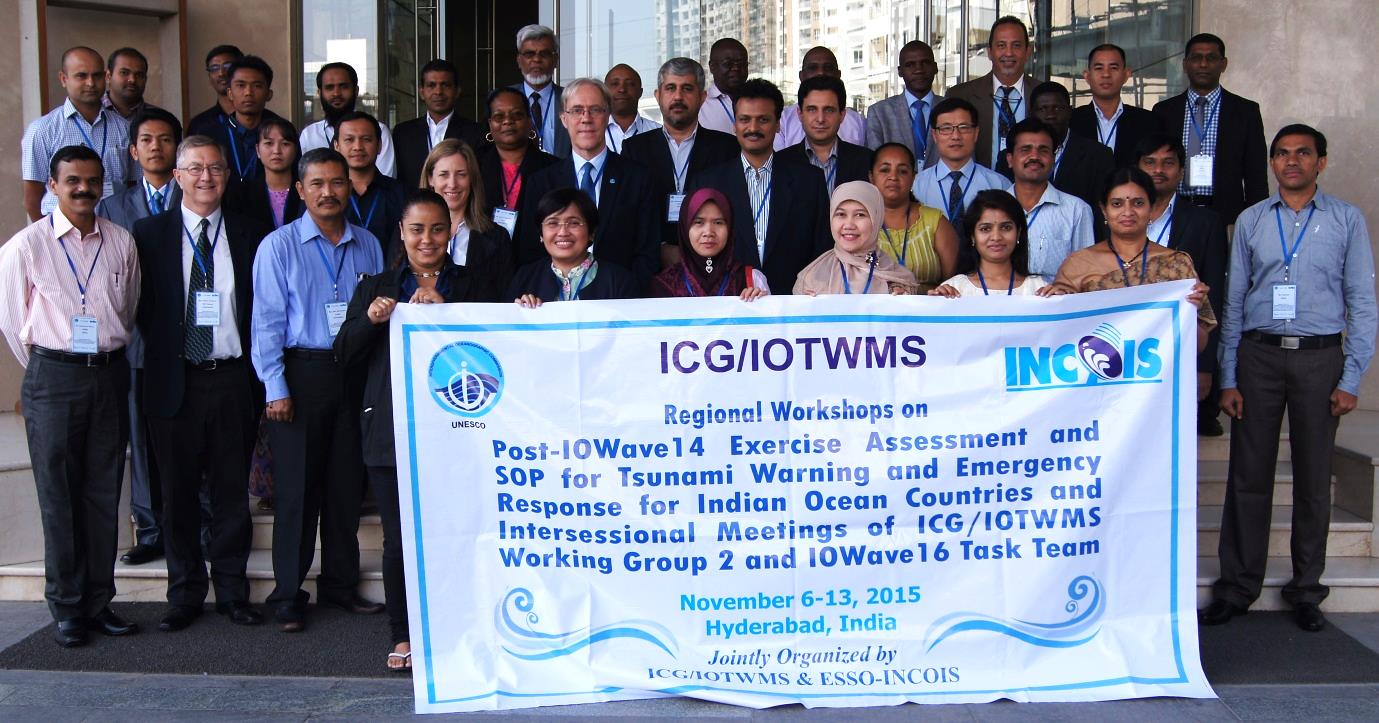
The workshops targeted Indian Ocean countries that intend to participate down to community level including public evacuations in the IOWave16 exercise, which is scheduled for September 2016. The main objective of the workshops was to develop and integrate SOPs between National Tsunami Warning Centres (NTWCs), National Disaster Management Organisations (NDMOs) and Local Disaster Management Organisations (LDMOs).
The workshop programme included lecture sessions, breakout group work, a tabletop simulation exercise and a site visit to INCOIS, one of the three ICG/IOTWMS Regional Service Providers. Lectures and training material were based on manuals and templates developed by IOC UNESCO in collaboration with the NOAA International Tsunami Information Centre (ITIC) since 2008.
The workshops were followed by ICG/IOTWMS intersessional meetings of its Working Group 2 on Tsunami Detection, Warning and Dissemination and the IOWave16 Task Team on 12-13 November 2015.
Revised Guidelines on Tsunami Risk Assessment and Mitigation for the Indian Ocean
The revised Guidelines on “Tsunami Risk Assessment and Mitigation for the Indian Ocean; knowing your tsunami risk – and what to do about it” have been published by IOC UNESCO. The Guidelines are the 2nd edition of IOC Manuals and Guides No. 52, which was first published in 2009. They have been compiled by an international group of tsunami experts with the benefit of new published and unpublished information.
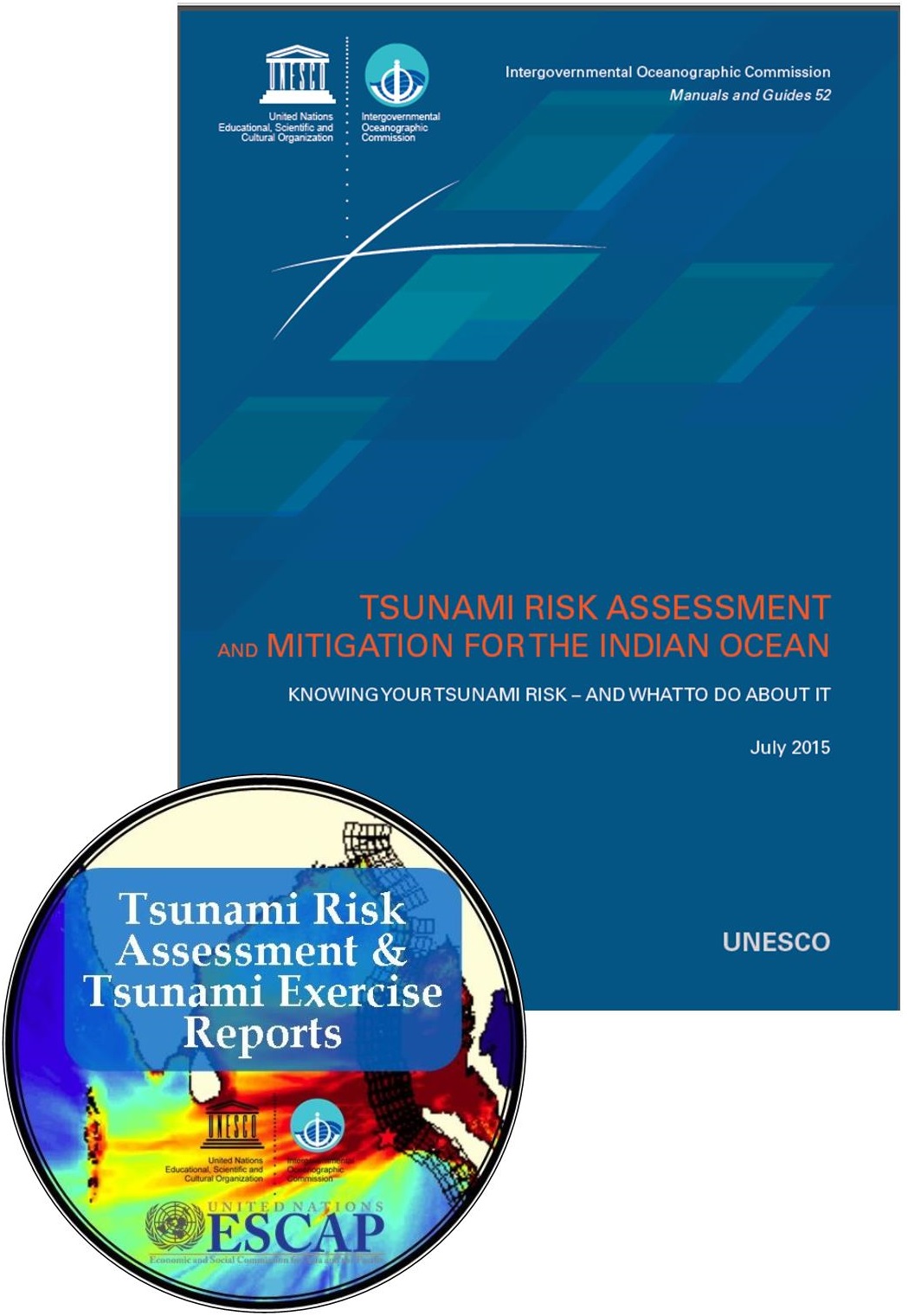
The Guidelines have been prepared as an activity of ICG/IOTMWS Working Group 1 on Tsunami Risk, Community Awareness and Preparedness as part of a project entitled: “Enhancing Tsunami Risk Assessment and Management, Strengthening Policy Support and Developing Guidelines for Tsunami Exercises in Indian Ocean Countries” for which IOC UNESCO secured funding from the UNESCAP Multi-Donor Trust Fund for Tsunami, Disaster and Climate Preparedness in India Ocean and South East Asia Countries. Reports from this project, including the revised Guidelines, are available for download at: http://www.ioc-tsunami.org/trate_reports.
New material includes a chapter reviewing the current and recent initiatives in institutional risk assessment and management with in a disaster risk reduction (DRR) framework and a chapter addressing the rationale and key steps to be followed in the sequence of risk assessment and risk reduction procedures. There is a new chapter on case studies, which provides summary accounts of strengths and weaknesses in the delivery of early warning for the major tsunami events in the Indian Ocean and Pacific Ocean regions since the beginning of 2004. Additionally, there is a new chapter on tools and/or methods associated with tsunami propagation models, post-event surveys, integrating inundation models into land use planning, risk-based land use planning, and community-based disaster risk management.
Creole tsunami awareness videos in Haiti
Dans le cadre du projet DIPECHO "Consolider les capacités haïtiennes de préparation et d'alerte rapide aux tsunamis" (Avril 2013 - Décembre 2014) des documents de sensibilisation ont été élaborés pour compléter le message délivré par les lignes directrices. Trois spots animés ont été développés avec le Comité thématique pour la sensibilisation du public et de l'éducation (CTESP) du gouvernement d'Haïti, en ciblant la communauté scolaire et le grand public. Ces vidéos sont en créole. Le Programme de préparation aux catastrophes de la Commission européenne (DIPECHO) du Service d'aide humanitaire de l'Union européene (ECHO) vise les populations vulnérables vivant dans les principales régions sous risque de catastrophes dans le monde. L'UNESCO et la Commission océanographique intergouvernementale (COI) sont partenaires de DIPECHO.
Tsunami Warning and Mitigation System Factsheets
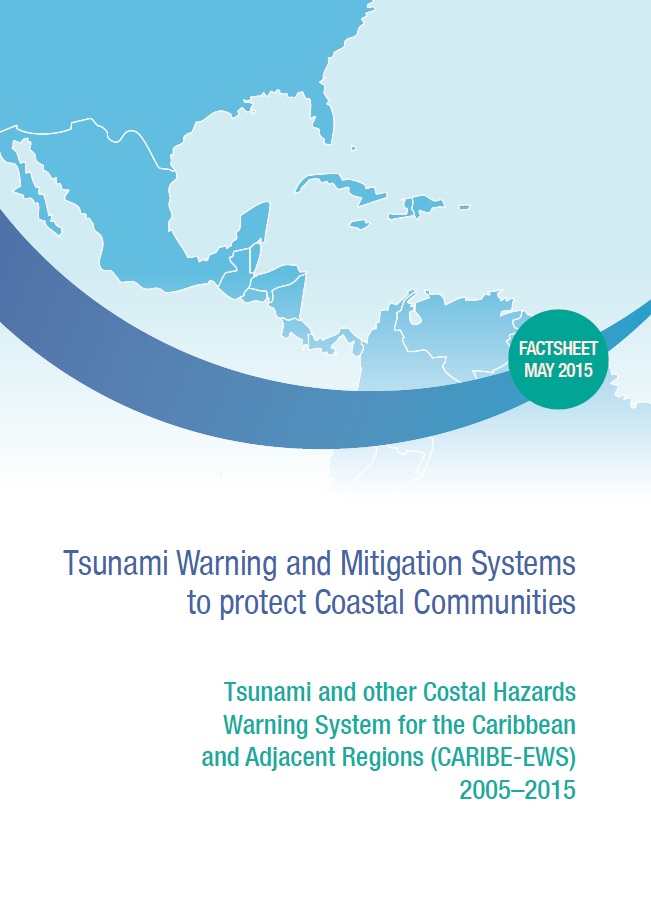
This year (2015) marks the 50th anniversary of the Pacific Tsunami Warning and Mitigation System (PTWS) and the 10th anniversaries of the Caribbean (CARIBE-EWS), Indian Ocean (IOTWS), and North-eastern Atlantic and Mediterranean (NEAMTWS) Tsunami Warning and Mitigation Systems. The latter three systems were established in response to the catastrophic Indian Ocean Tsunami of 26 December 2004, which resulted in the loss of over 230,000 lives and the displacement of over 1.6 million people around the Indian Ocean. In order to capture the current state of these systems and recognise the advancements in end-to-end tsunami warning over the last decade, IOC-UNESCO has published factsheets on the CARIBE-EWS, IOTWS, NEAMTWS, and PTWS.
The factsheets detail the substantial advancements there have been in the four systems since they were established, including the deployment status of earthquake and sea-level networks, the active investments of Member States in establising National Tsunami Warning Centres, and their participation in the coordination of meetings and exercises.The factsheets provide information on the membership, terms of reference, funding and governance of the systems, and details of the detection and monitoring networks, earthquake source zones monitored and summaries of the bulletins issued by the Tsunami Service Providers for each region.
To view the factsheets click on the images below.
CARIBE-EWS IOTWS NEAMTWS PTWS
10th Session of the ICG/IOTWS held in Muscat, Oman, 24-26 March
The 10th Session of the Intergovernmental Coordination Group for the Indian Ocean Tsunami Warning and Mitigation System (ICG/IOTWS-X) has been held in Muscat, Oman, 24-26 March, hosted by the Public Authority for Civil Aviation (PACA) of the Sultanate of Oman. The session was held immediately following the highly successful regional conference on “Reducing Tsunami Risk in the Western Indian Ocean” and the inauguration of Oman’s National Multi-Hazard Early Warning System. The session was opened by the IOC Executive Secretary, Dr Vladimir Ryabinin, and was attended by 73 participants representing 20 IOTWS Member States, 5 UN agencies and other organisations and 17 other observers.
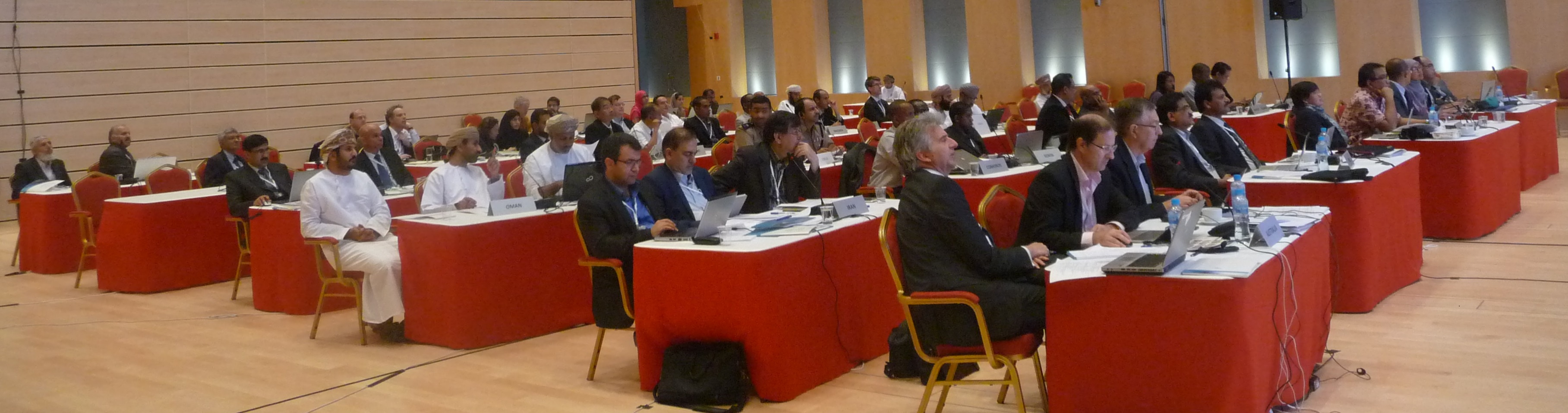
The key outcomes of the session were: 1) the establishment of a sub-regional Working Group for the Northwestern Indian Ocean chaired by Dr Juma Al-Maskari (Oman), 2) the merging of Working Group 1 on Tsunami Risk Assessment and Reduction and Working Group 3 on Tsunami Awareness and Preparedness into and a new Working Group 1 on “Tsunami Risk, Community Awareness and Preparedness” chaired by Dr Harkunti Rahayu (Indonesia), 3) the endorsement of the Terms of Reference of the Indian Ocean Tsunami Information Centre (IOTIC) and 4) the endorsement of the IOTWS Tsunami Service Provider (TSP) Service Definition Document.
The ICG elected new officers for the next intersessional period: the Chair is Dr Srinivasa Kumar (India) and the Vice Chairs are Dr Juma Al-Maskari (Oman) and Prof S.S.L. Hettiarchchi (Sri Lanka).
Full details of the delegates, documents and presentations can be found on the meeting website: www.ioc-unesco.org/iotws-10.
Plus d'articles...
- Une coopération fructueuse sur la réduction des risques de catastrophes (2010-2015) entre l'Office d'Aide Humanitaire et de protection civile de la Commission européenne (ECHO) et l'UNESCO.
- Summary Statement from the IOC-UNESCO – BMKG International Conference to Commemorate the 10th Anniversary of the Indian Ocean Tsunami, Jakarta, Indonesia, 24-25 November 2014
Le programme relatif aux tsunamis – ce qu’il est
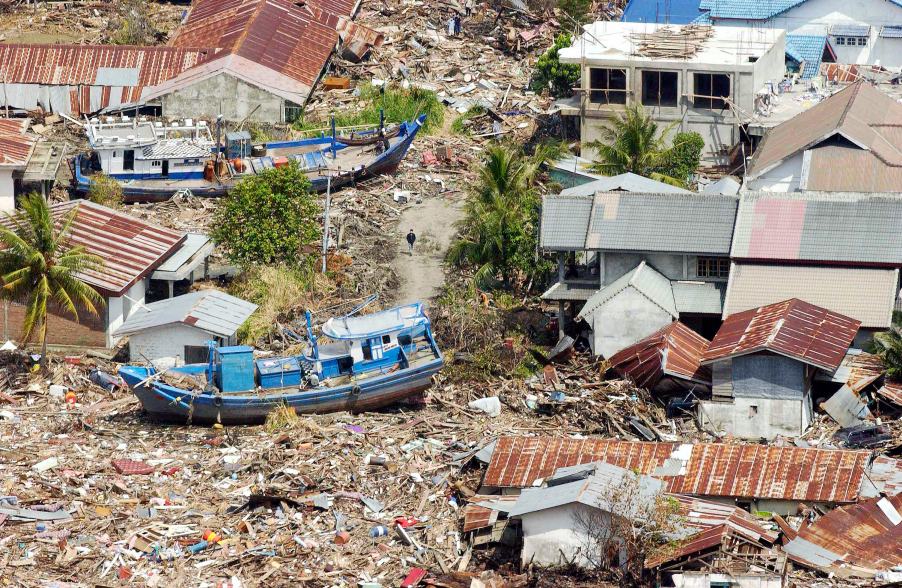
La côte indonésienne, entre Banda Aceh et Meulaboh, au lendemain du tremblement de terre et du tsunami du 26 décembre 2004. Photo Evan Schneider © UN Photo
L’UNESCO aide les États membres à renforcer leur capacité d’évaluation du risque de tsunami, à mettre en œuvre des systèmes d’alerte rapide aux tsunamis et à mieux préparer les populations exposées. Elle travaille étroitement avec les organismes nationaux et favorise la coopération
interorganismes et régionale. Des centres régionaux spécialisés fournissent une information relative aux tsunamis, laquelle, assortie d’une analyse nationale, constitue la base des alertes publiques. En outre, l’UNESCO encourage des démarches fondées sur les populations, à la base, par le biais de l’élaboration de plans d’intervention et de campagnes de sensibilisation qui impliquent fortement les établissements éducatifs et l’utilisateur final.
Upcoming Events
7 August 2024
19 August 2024
19 - 30 August 2024
Chile