Sea Level Monitoring
TSU/MAB Coastal Hazards Project
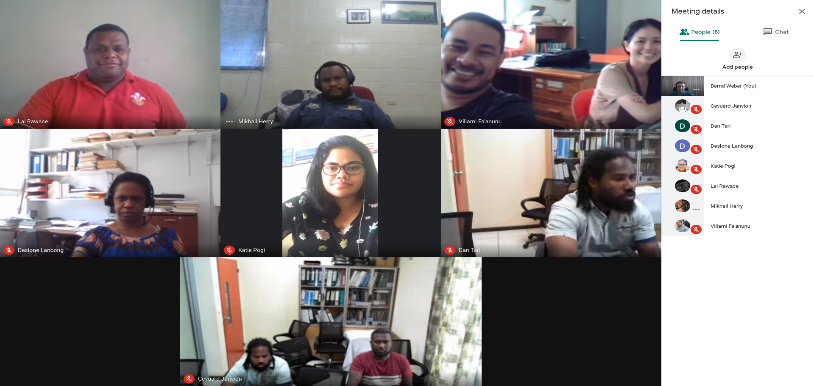
The Oceania Regional Seismic Network (ORSNET) member states completed an 8-days online Basic SeisComP Training from 26th October to 4th November 2020 delivered by gempa GmbH. ORSNET member states were last trained on SeisComP3 by gempa GmbH in 2013. This gap in capacity development was recognized at the 28th Meeting of ICG/PTWS held in Nicaragua in April 2019 under the Working Group 2- Tsunami Detection, Warning and Dissemination through the Fifth Meeting of the Task Team Seismic Data Sharing in the Southwest Pacific and the Seventh Meeting of the Pacific Islands Countries and Territories Working Group on Tsunami Warning and Mitigation held on March 2019 in Noumea, New Caledonia.
In recognition of the decision of the 28th Meeting of ICG/PTWS, IOC-UNESCO coordinated with ORSNET Secretariat, Vanuatu Meteorological and Geohazard Department (VMGD) to collaborate with The Pacific Community (SPC) Pacific Resilience Program (PREP) in supporting ORSNET member states to attend the Basic SeisComP Training. SPC PREP project aims to strengthen early warning, resilience investments, and financial protections of participating countries.
The timely collaboration of IOC-UNESCO, ORSNET and SPC enabled gempa GmbH to adapt their mode of training delivery from face-to-face to online to ensure participants are engaged virtually due to COVID-19 travel restrictions. Papua New Guinea, Solomon Islands, Vanuatu, Fiji, Tonga, and Samoa participated in this first series of Gempa 2020 online trainings. Gempa primarily developed SeisComP3 for seismology (earthquake monitoring) that monitors, processes, and analyse data from instance buoys and tide gauges for Tsunami Early Warning Systems.
Participants Learning Reflections
Deslone Lanbong, PMGO, Papua New Guinea
“The training has given me better understanding on how to use SeisComP3. Learning how to set up a stand-alone seiscomp machine and to be able to run offline playbacks and process events offline as well.”
Dan Tari, Vanuatu Meteorological and Geohazard Division (VMGD), Vanuatu
“This training was beneficial for event analysis, how we can utilise the tools in scolve, scrttv, scmv etc. What I like best on this training is importing stations and data acquisition.”
Mikhail Herry, Rabaul Volcano Obsevatory (RVO), Papua New Guinea
“There are a lot of things to like about this basic training, however, the one that stands out for me is from installing seiscomp, gathering and importing station meta data, preparing the bindings for seiscomp modules and the eventual streaming of real-time seismic data into the freshly installed seiscomp system, data playback was also nice and we were taught an efficient way to do phase picking which would be handy when there is a need to process a lot of earthquakes.”
Laisenia Rawace, Mineral Resource Department, Fiji.
“This training is relevant to the ORSNET operating system focusing on monitoring and analysis of earthquake event. I really like the session on tuning of Seiscomp for local earthquakes monitoring and fdsnws for dataselect, station select, event select, data availability and use record stream for Quake Link and real-time exchange of event parameters.”